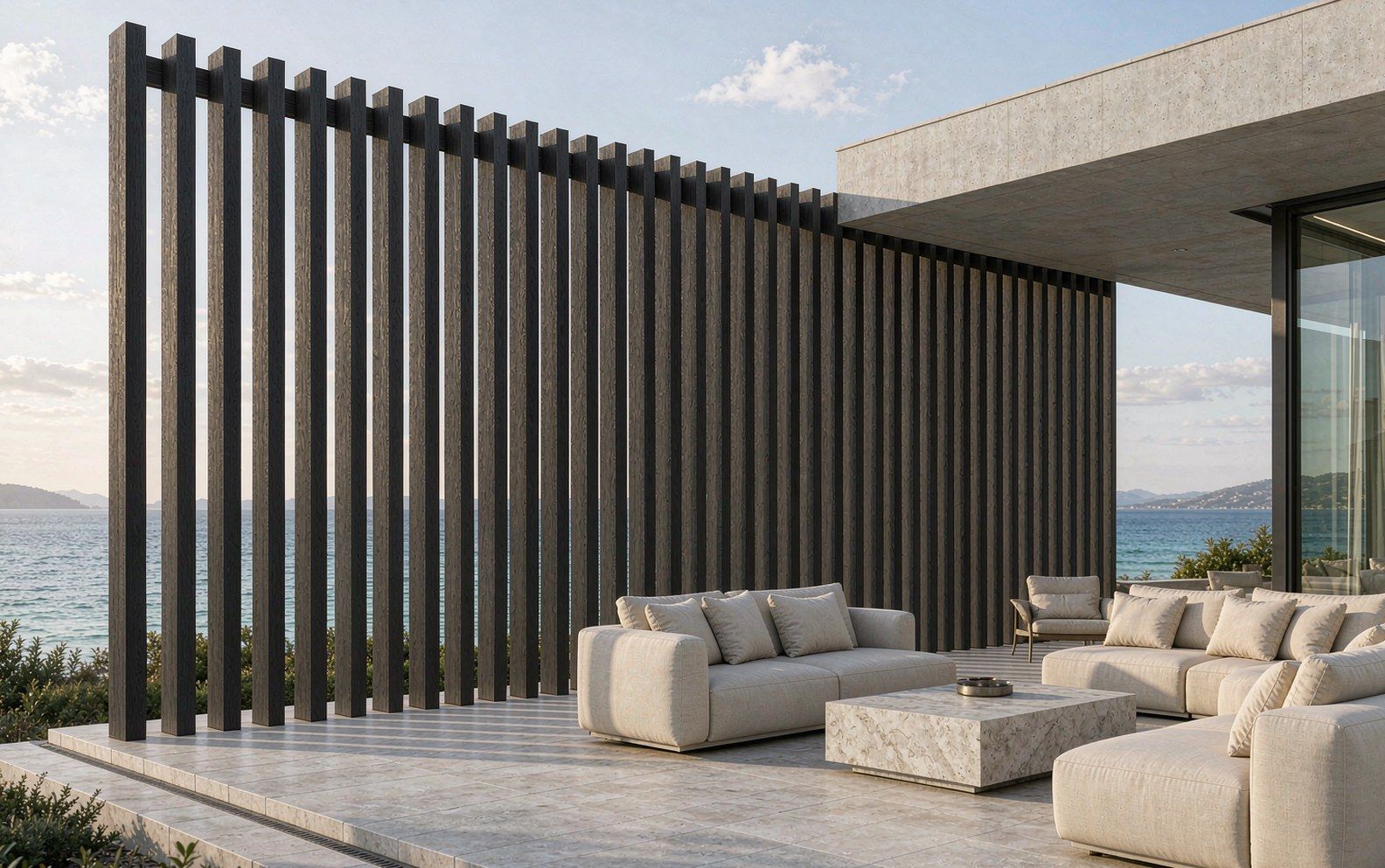
WPC Column Manufacturer: 7 Checks Before You Place Your First Order
21st October, 2026WPC Column Manufacturer: 7 Checks Before You Place Your First Order
WPC columns look simple from the outside: a square or rectangular profile, a wood-grain finish, installed vertically. That simplicity is exactly why sourcing them is riskier than it appears. A column is a visible, structural-feeling element — when the profile warps, the color drifts between batches, or the surface chalks after one summer, every one of your customers sees it at eye level.
If you are sourcing from a WPC column manufacturer for the first time — whether for pergola kits, screen walls, facade accents, or retail SKU expansion — this checklist covers the seven checks that separate a production partner from a profile seller.
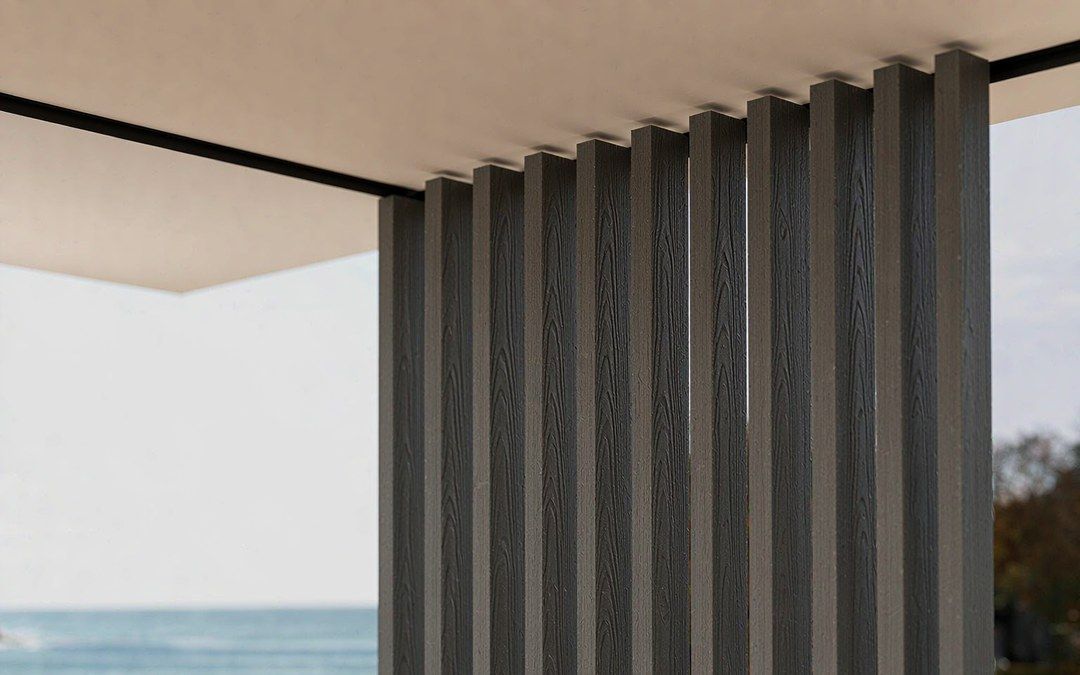
What a Real WPC Column Manufacturer Does (Beyond Extrusion)
Plenty of factories can extrude a plastic profile. Far fewer can support a column program that survives real installations. Before comparing quotes, understand what you are actually buying:
- Formulation control: A manufacturer — as opposed to a trader — controls the blend of PE resin, recycled content, wood fiber, UV stabilizers, and color masterbatch. This is what determines whether the column holds its color and dimensions for a decade or fades in three seasons.
- In-house tooling: Column profiles require dedicated dies and calibration sleeves. A manufacturer with in-house tooling can adjust wall thickness, internal ribs, and tolerances instead of forcing you to accept whatever the die happens to produce.
- Batch consistency systems: For columns, visual consistency matters more than almost any other product line. Two columns installed side by side with a visible shade difference is an instant customer complaint.
- Application engineering: Span recommendations, fixing details, post-to-base connections, and compatibility with cladding or fencing systems from the same supplier.
If a supplier cannot answer formulation and tooling questions directly, you are likely talking to a middleman — and paying for one.
The 7 Checks Before You Order
Check 1: Ask for the material composition in writing
A credible WPC column manufacturer will state the polymer type (PE-based is the standard for outdoor columns because it does not absorb water), the recycled-versus-virgin ratio, and the wood fiber content. If the answer is "all natural, very good quality," walk away. Written composition is also what protects you when a later batch behaves differently — you have something to compare against.
Check 2: Verify UV and weathering performance, not just promises
Columns live in the most exposed part of any build: full sun, driving rain, freeze-thaw cycles. Ask specifically:
- How is UV protection achieved (carbon black, UV inhibitors, co-extruded cap layer)?
- Is there fade-resistance data from outdoor exposure, not just lab notes?
- For cold climates: what happens to the profile after repeated freeze-thaw cycles?
PE-based WPC with zero water absorption avoids the swelling and rotting that destroys wood columns — but only if the formulation and the cap layer (if any) are done correctly.
Check 3: Inspect dimensional tolerance and straightness
Columns are judged by eye and by level. A 2-meter column with a 5mm bow is scrap on site. Ask the manufacturer:
- What straightness tolerance do they guarantee over the full length?
- How are columns stored and shipped to prevent warping before installation?
- What is the acceptable twist over length for hollow profiles?
A quick video call to the warehouse, watching how finished columns are stored — flat, supported, shaded — tells you more than any certificate.
Check 4: Demand batch-to-batch color discipline
This is the check most buyers skip, and the one that generates the most complaints. Require:
- A retained color sample per production batch, archived by the manufacturer
- Your own golden samples, kept from the first approved batch
- A stated policy: no shipment ships without matching the retained sample
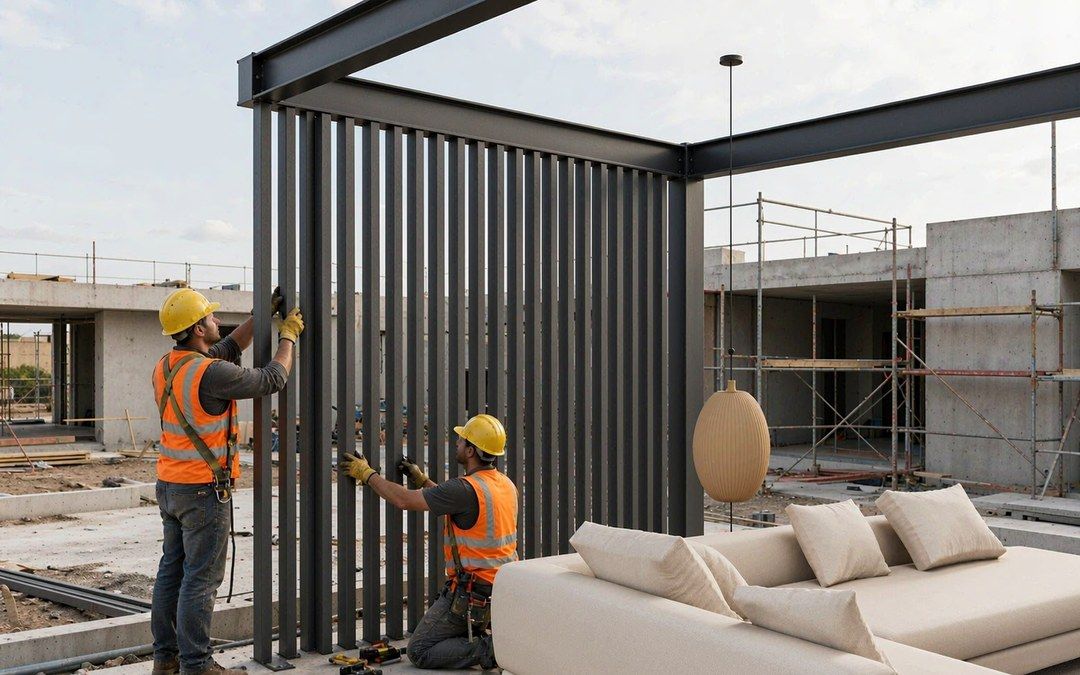
Check 5: Confirm the accessory and connection system
A column program fails at the connections, not the profile. Ask whether the manufacturer supplies (or specifies) compatible post bases, top caps, trim rings, and fixing systems. If the answer is "customer handles that," you inherit the engineering risk. Manufacturers who also produce fencing and cladding systems usually have the connection hardware figured out — one more reason to source from a full-line producer.
Check 6: Test the manufacturer's customization depth
Real manufacturers can modify, not just produce:
- Custom lengths and cutting tolerances
- Custom colors matched to your market (send a physical color target, not a screen photo)
- Embossed grain or brushed surface options
- Private-label packaging
If you plan to build a branded column line, ask about OEM terms early — minimum volumes per color, tooling costs for custom profiles, and lead times. Our guide on OEM and private-label WPC outdoor products explains how these programs are typically structured. It is far cheaper to confirm this before your first order than to switch suppliers after one.
Check 7: Pressure-test logistics and packing
Columns are long, straight products — the profile most easily damaged in transit. Confirm:
- Bundling method and corner protection
- Container loading plan (mixed containers with decking or cladding: are columns loaded last, packed straight, braced?)
- What happens when you open a container and find bowed profiles — who owns that cost?
A manufacturer who exports containers weekly will have a standard answer. A trader will have to "check with the factory."
Where WPC Columns Fit in a B2B Product Mix
For distributors and retailers, columns are a natural adjacency product:
- Pergola and carport kits: columns as the structural-looking vertical element, paired with WPC joists and decking
- Screen and privacy walls: vertical column frames with slat infill — one of the fastest-growing outdoor design categories
- Facade accents: column cladding over steel or concrete posts, matched to composite cladding on the same elevation — see our guide on how to vet a WPC wall cladding manufacturer for the matching facade side
- Fence entries: heavier-post columns at gates and corners, upgrading an ordinary fence line
The margin logic is simple: columns raise the average order value of decking and fencing projects, and they are nearly impossible to source locally in most markets — which is exactly why importer-distributors who add them first win the specification.
Typical Questions to Put in Your RFQ
Rather than accepting a spec sheet at face value, put these questions in writing:
- PE resin and recycled content percentages
- UV package: type and loading of stabilizers, cap layer thickness (if co-extruded)
- Straightness and twist tolerances over standard lengths
- Color retention method and batch-matching policy
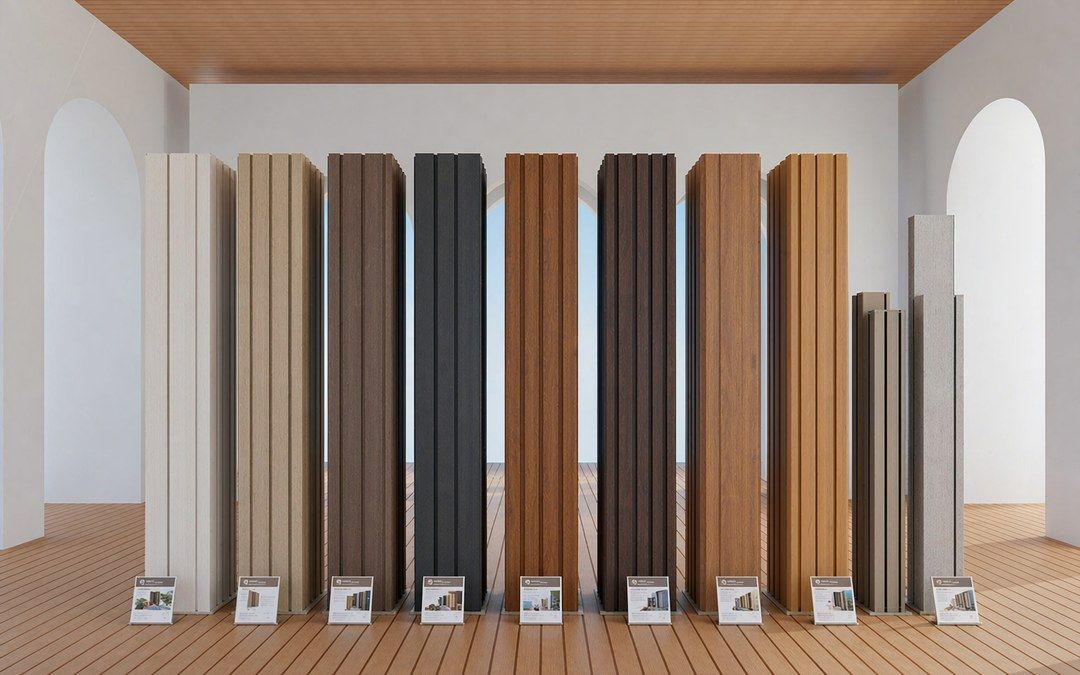
- Standard profiles, wall thicknesses, and available colors
- MOQ per color, lead time, and private-label options
- Connection hardware: supplied, specified, or not available
A manufacturer who answers these precisely is a manufacturer who has shipped before. One who sends a glossy catalog and a price list — without tolerances or formulation — has not.
Why Buyers Consolidate Columns with Their Existing WPC Line
If you already import WPC decking, fencing, or cladding, adding columns from the same manufacturer changes the economics:
- Mixed-container loading fills the space your decking leaves around the perimeter
- One QC standard across the project — columns, cladding, and decking that actually match on site
- One point of accountability for color, weathering, and claims
This is how most successful outdoor product distributors structure their range: a full-line manufacturer for the core program, specialists only where a genuine gap exists.
Meet the Manufacturer Before the Season
If you want to pressure-test a supplier's answers face to face, the Canton Fair remains the fastest way. NatureTough exhibits at Canton Fair Phase 2 (October 23–27, 2026) — you can review column profiles, color libraries, and connection systems in one visit, alongside the full decking, fencing, and cladding lines. Our Canton Fair building materials buyer's guide covers what to prepare before you walk the halls.
FAQ
Q1: What is the typical MOQ for WPC columns from a manufacturer?
MOQs vary by profile and color. Standard profiles in existing colors start lower; custom colors and profiles require tooling and higher minimums. Ask for the MOQ per color, not per order — that is where surprises hide.
Q2: Are WPC columns load-bearing?
Most composite columns in outdoor retail are designed as decorative or light-structural elements cladding a steel or timber core, not as independent structural posts. Always confirm the intended use with the manufacturer and follow local building codes for structural applications.
Q3: How long do WPC columns last outdoors?
A PE-based WPC column with proper UV protection avoids rot, splintering, and insect damage, and quality formulations are engineered for decades of outdoor service. Lifespan depends heavily on the formulation — which is why Check 1 (written composition) matters more than any brochure claim.
Q4: Can I get columns color-matched to my existing cladding stock?
Yes, if you send a physical sample. Manufacturers with in-house color matching can produce a target match; confirm the batch-matching policy before approving production.
Q5: Do manufacturers offer private-label columns for retail programs?
Established manufacturers typically support private-label packaging, branded installation guides, and retail-ready bundling. Confirm minimum volumes and packaging lead times as part of your first RFQ.