One Supplier, Five Product Lines: How to Vet a Full-Line Outdoor Building Materials Manufacturer
22nd October, 2026One Supplier, Five Product Lines: How to Vet a Full-Line Outdoor Building Materials Manufacturer
Most outdoor product distributors build their range the hard way: decking from one factory, fencing from another, cladding from a third, and garden products from whoever quotes lowest that month. It works — until the first warranty claim, the first container of mismatched colors, or the first season when three suppliers ship late and one product line carries the whole quarter.
There is a better structure: consolidate the core range with a single full-line outdoor building materials manufacturer. But consolidation only pays off if the manufacturer can genuinely support every line — which is why vetting a full-line supplier is a different exercise than vetting a single-product factory. Here is the process that separates the real ones from the trading companies with a wide catalog.
What "Full-Line" Actually Means
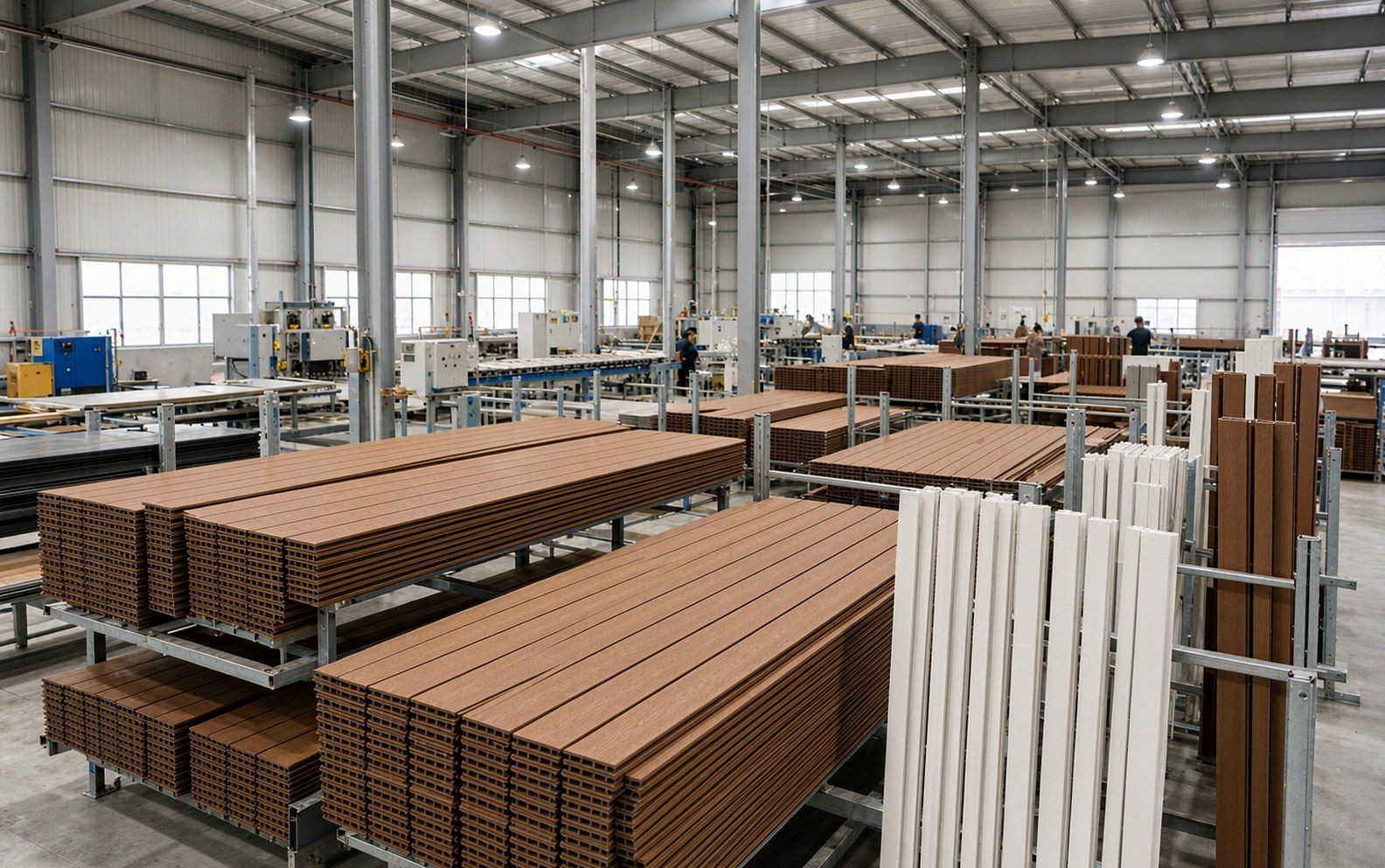
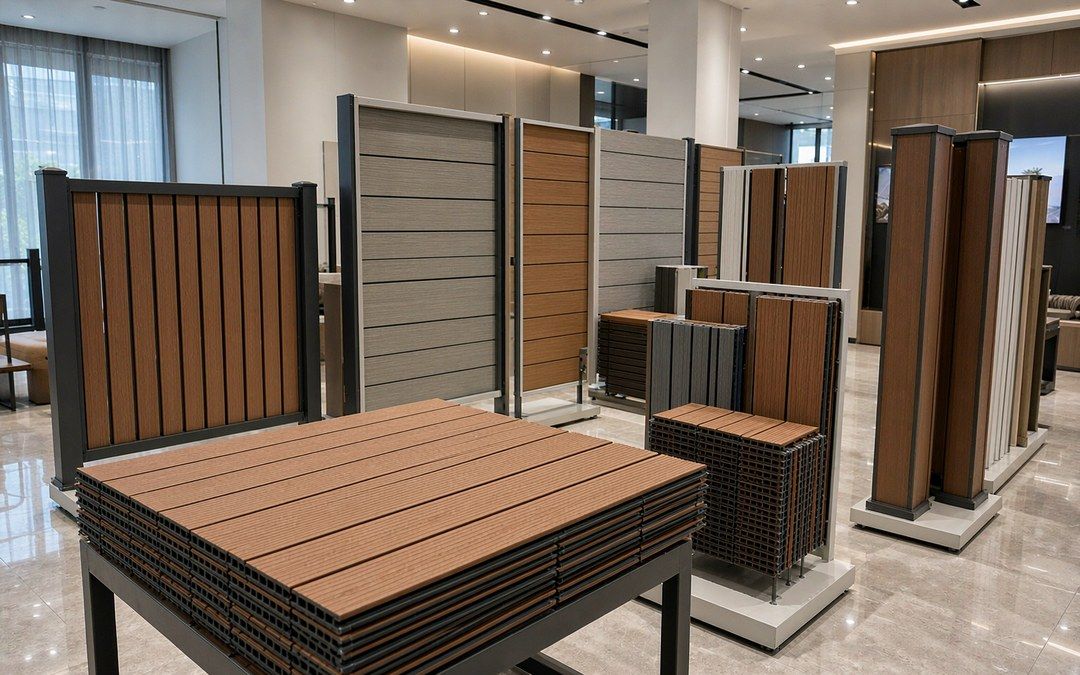
Start by defining the range. A genuine full-line outdoor building materials manufacturer produces — in its own plant, under its own QC — the core WPC categories:
- Composite decking (solid, hollow, co-extruded)
- WPC fencing and screen panels
- Exterior wall cladding
- Structural-look columns and posts
- DIY deck tiles and raised garden beds
Why the distinction matters: when one factory owns all five lines, the formulations share the same PE base, the same color masterbatch system, and the same weathering package. That is what makes cross-line color matching possible — decking, cladding, and columns from the same project actually match on site. Spread across three factories, "teak" becomes three slightly different colors, and your installer absorbs the blame.
Ask any candidate supplier directly: which of these lines run in your own plant, and which do you buy in? A truthful answer here predicts everything else. Buying-in is not always wrong — but you deserve to know whose QC you are depending on.
The Case for Single-Source Consolidation
For a distributor carrying five categories, the math of consolidation shows up in four places:
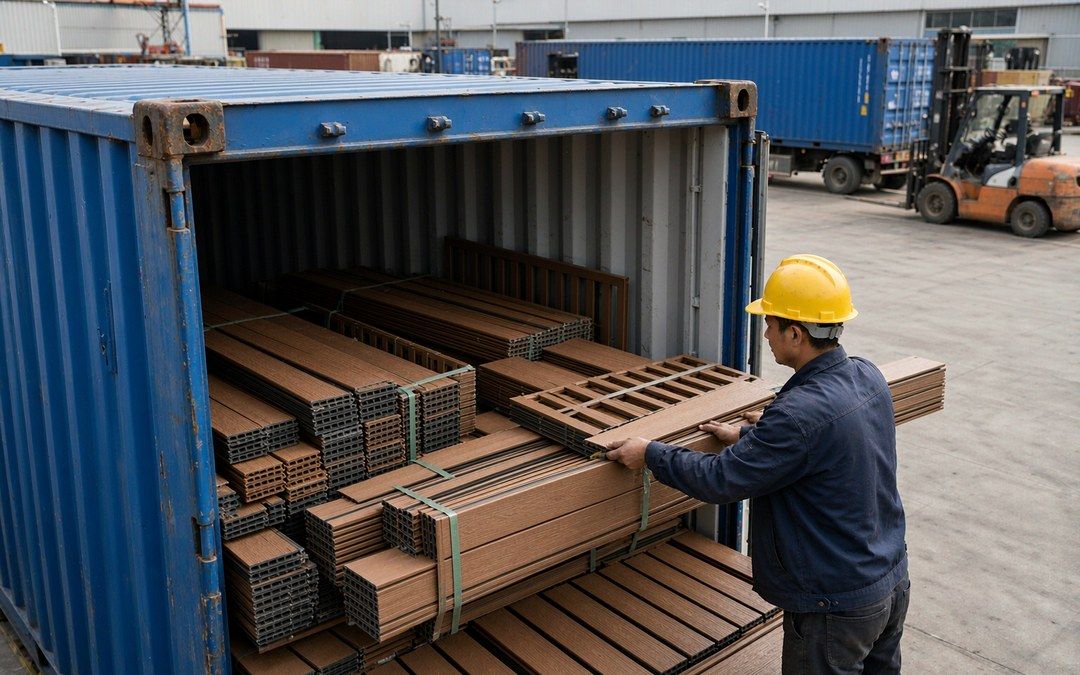
1. Mixed-container economics. Full-line manufacturers load one container with decking, cladding, columns, and deck tiles together — filling the voids that single-product orders waste. Distributors routinely turn two or three partial containers into one full mixed load, cutting per-unit freight.
2. One QC standard. Color, straightness, moisture behavior, and packaging are judged against one specification, not three. Claims stop being a negotiation between suppliers about whose defect it was.
3. One replenishment rhythm. A single production schedule means your fast movers and your adjacency products arrive together. No more decking arriving in March and the matching fence posts in May. Distributors weighing the move to factory-direct sourcing can also review our composite decking distributor program guide for how territory and pricing support typically work.
4. Shared tooling leverage. When your volumes span five lines with one manufacturer, you negotiate private-label terms, custom profiles, and market-exclusive colors from a position of combined volume — leverage you can never get from a single-line supplier.
The risk of consolidation is real too: one supplier, one point of failure. That is exactly why the vetting checklist below matters more for full-line suppliers than for commodity factories.
The 6-Point Vetting Checklist for a Full-Line Manufacturer
1. Confirm in-house production per line — with evidence
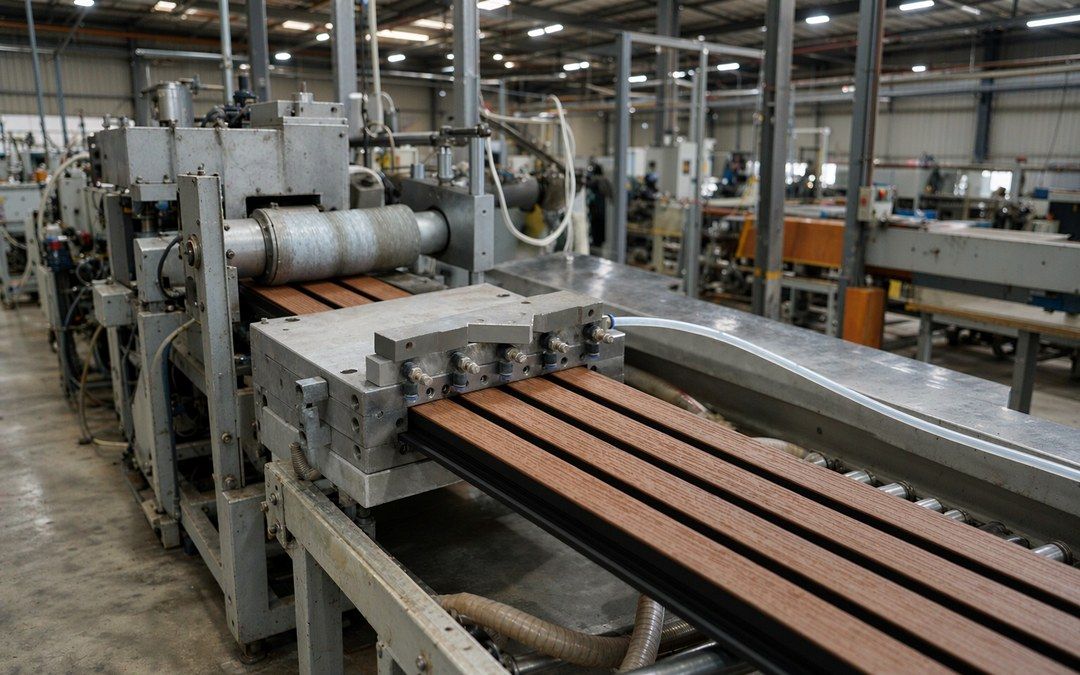
Ask for a production floor walk (live video is fine) covering each line you plan to buy: extrusion for decking and profiles, surface treatment, and the garden products line. The question is not "do you make decking" but "show me the decking line, the cladding line, and the tiles line in the same facility." A manufacturer who hosts this call confidently has nothing to hide.
2. Check the formulation discipline across lines
The whole point of consolidation is shared material science. Ask whether all lines run on the same PE-based, zero-water-absorption formulation family, and what differs between lines (cap layers, fiber loading, UV package). Written answers, line by line. This is also where sustainability claims get tested: post-consumer recycled HDPE content, verified per line — the detail that increasingly decides bids for public and green-building projects.
3. Verify cross-line color matching capability
Ask for physical samples of the same color across two or three lines — a decking board, a cladding panel, a column — produced in the same season. Lay them together. This one test tells you whether the "one QC standard" promise is real.
4. Audit the claim-handling process before you need it
Full-line consolidation fails fastest at the claims stage. Ask: when a defect spans two lines in one container — bowed profiles in one box, color drift in another — who investigates, how fast is the resolution, and what does the remedy look like? Get the process in writing, with a named contact. Manufacturers who export at scale have a standard claims procedure; ask to see it.
5. Test private-label depth across the range
If you plan to build a brand (not just move boxes), the manufacturer must support private label on every line: branded packaging, installation guides, retail-ready bundling — including small-item lines like deck tiles and garden beds, where packaging is half the retail appeal. Our guide on OEM and private-label WPC outdoor products breaks down how these terms work. Confirm MOQs per line per color. A manufacturer with five lines can often consolidate your private-label minimums in ways single-product factories cannot.
6. Pressure-test the mixed-container loading plan
Ask for a real loading plan for a hypothetical order: X units decking, Y fencing kits, Z columns, across one 40-foot container. Look for bracing, weight distribution, and how long profiles are protected. Weekly exporters answer this in an hour. It is the single best proxy for operational maturity.
Private Label and OEM Across a Full Range
For distributors building a brand, full-line manufacturers offer something no single-product factory can: a coherent brand across categories. One color library across decking, fencing, and cladding. One logo treatment across five packaging systems. One technical support channel for your whole outdoor range.
When you evaluate OEM terms, evaluate them across the portfolio: combined-volume pricing tiers, tooling cost sharing for custom profiles, and exclusive color or profile rights for your market. Distributors who negotiate line-by-line consistently leave this leverage on the table.
What to Verify on Logistics and Lead Time
- Lead times per line — and whether mixed orders ship complete or split. "Complete" protects your launch dates; "split" protects your cash flow. Know which you are getting.
- Peak-season capacity: outdoor building materials demand spikes in spring on both sides of the Pacific. Ask how production slots are allocated when every customer wants March delivery.
- Documentation: CE, test reports, and material declarations per line — ask which documents are standard and which cost extra.
The Fastest Way to Vet: Walk the Line
Documents narrow the list; the factory visit closes it. If your shortlist exhibits at a trade show, use it. NatureTough exhibits at Canton Fair Phase 2 (October 23–27, 2026), where the full range — decking, fencing, cladding, columns, deck tiles, and garden beds — sits in one booth (Hall 12.2, F29–33), alongside the team that runs production planning and export QC. Our Canton Fair building materials buyer's guide covers what to bring and what to ask.
FAQ
Q1: Is single-source sourcing riskier than multi-vendor?
Concentration risk is real, which is why vetting depth matters. The mitigation is structural: confirm in-house production per line, keep a qualified second source for your single largest line, and contract clear claims procedures. Distributors who vet properly rarely go back to multi-vendor.
Q2: Can a full-line manufacturer really color-match across decking, cladding, and columns?
Only if the lines share the color masterbatch system and QC standard — which is exactly what Check 3 (physical cross-line samples) verifies before you commit.
Q3: What MOQs should I expect across five product lines?
Expect per-line, per-color minimums rather than one blanket MOQ. A full-line manufacturer can often allocate production so your combined program meets private-label thresholds even when individual lines are small.
Q4: How do mixed containers affect freight cost?
Filling container voids across categories typically reduces per-unit freight meaningfully versus shipping partial single-line containers — and it reduces your inbound handling from three receipts to one.
Q5: Can one supplier support both retail (DIY) and trade (contractor) packaging?
Established full-line manufacturers run both: retail-ready packaged deck tiles and garden beds for store shelves, and bulk-bundled decking and cladding for contractors — from the same production base.