What a Decking Distributor Program Should Include: Territories, Pricing, and Support
10th October, 2026What a Decking Distributor Program Should Include: Territories, Pricing, and Support
Signing with a WPC decking manufacturer is not just a purchasing arrangement — it is a partnership contract. The difference between a distributorship that compounds year over year and one that stalls in season two usually traces back to what was (or was not) written into the program at the start. If you are evaluating decking distributor programs, this guide walks through the five contractual pillars that separate serious manufacturer partnerships from one-sided supply deals: territory, pricing, market support, product supply, and performance terms.
Territory: Exclusivity Is the Whole Point
The first question to ask any manufacturer: who else sells in my area?
- Defined territory: a serious program grants named exclusivity (by state, province, or country) with written boundaries — not "priority status" which is marketing language for nothing.
- Performance-protected exclusivity: exclusivity should come with realistic sales milestones. Be wary of both extremes — no milestones means the manufacturer may carve up your territory later; impossible ones mean you lose protection in year one.
- Channel clarity: does your exclusivity cover e-commerce marketplaces, or only physical distribution? This single clause decides half the modern distribution disputes.
A manufacturer confident in its production capacity writes clean territory terms, because supply — not territory scarcity — is what limits its growth.
Pricing Structure: What Determines Your Real Margin
Distributor pricing is a system, not a discount. Four components decide whether the economics work:
- Tiered price lists: volume breaks that you can actually reach within your market size, published in writing rather than negotiated per order.
- Yearly price stability: WPC raw material costs (polymer and wood fiber) move slower than timber — a good program fixes prices for 12-month windows so you can quote projects with confidence.
- Mixed-container privileges: the right to combine decking, fencing, cladding, and accessories in one shipment is what lets you build a full outdoor category without overstocking any line.
- MAP and floor pricing: brand-side minimum advertised price protections keep your margin from being eroded by other sellers — the clause that proves the manufacturer manages its channel seriously.
Market Support: What the Factory Does After the Container Leaves
The manufacturer's obligation does not end at the port. Programs worth signing include:
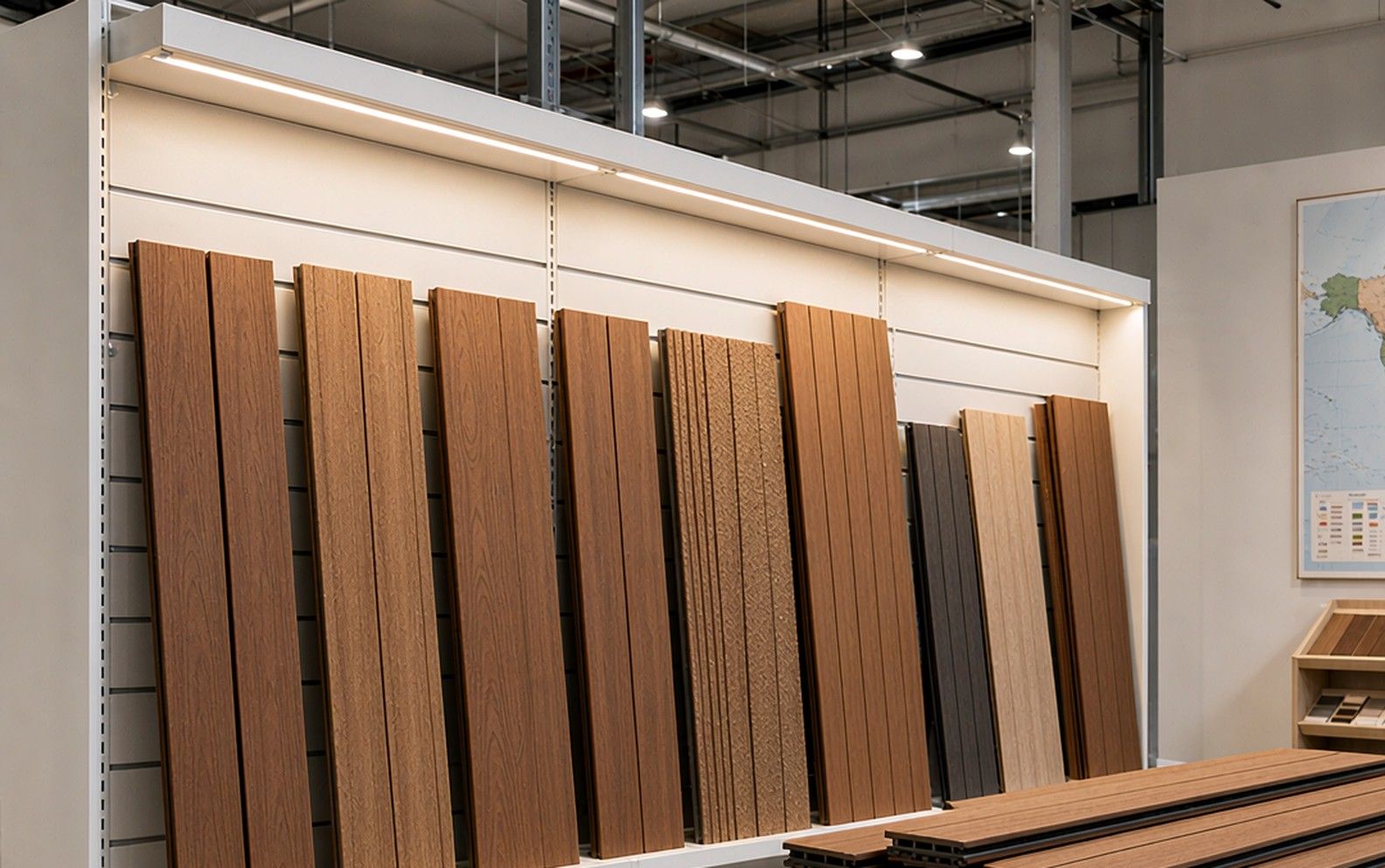
- Sample programs: display boards and sample kits at subsidized cost — composite decking sells through touch, and a distributor without a sample wall starts at a disadvantage.
- Technical documentation: installation guides, movement spacing tables, and load data in your market's language — this is what your contractors will ask for, and your team should never have to improvise answers.
- Co-op marketing: contribution toward local trade shows, showroom materials, or digital campaigns, usually structured as a percentage of annual purchase volume.
- Responsive engineering support: a named contact who answers technical questions in days, not weeks.
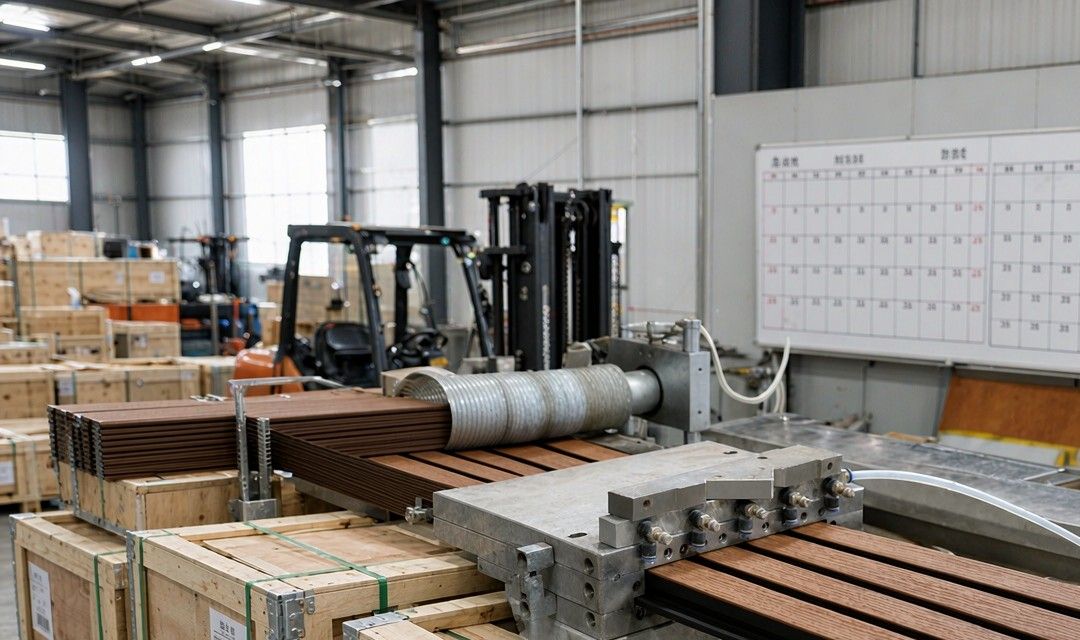
Manufacturers with their own extrusion lines can deliver all four consistently, because documentation and answers come from the same place the boards do.
Product Supply Terms: The Clauses That Protect Your Inventory
[[IMG:3]]
- Batch color consistency commitments: written guarantee that reorders within an agreed window match original shipment color — the clause that decides whether your year-two project matches your year-one installation.
- Lead-time windows: standard lines and custom runs quoted with realistic production schedules, not optimistic ones. A program that quotes 20 days and ships in 35 is costing you jobs.
- Reorder rights: the right to reorder best-selling profiles and colors for an agreed period (18-24 months is reasonable), protecting your inventory planning.
- Quality recourse: a written claims process for manufacturing defects, with defined remedy timelines. Its absence tells you how past claims have gone.
Performance Terms: Read Both Directions
Every serious program includes distributor obligations — annual volume targets, reporting, brand standards. Read these carefully, and treat them as healthy: they signal a manufacturer who protects the whole channel. What should be symmetric is the exit and renewal language:
- Renewal terms that do not reset your territory rights to zero
- Grace provisions for market-wide downturns rather than automatic exclusivity loss
- Clear transition terms (inventory buy-back or sell-through periods) if either party exits
Frequently Asked Questions
What is a decking distributor program?
A partnership contract with a decking manufacturer covering territory rights, pricing tiers, market support, supply terms, and performance obligations — the framework that defines how you build a business on their product line.
How much exclusivity should I expect?
Named geographic exclusivity with realistic performance milestones. "Priority status" without written boundaries is not exclusivity.
What margin can a decking distributor earn?
Margins depend on tier structure and category mix; the leverage points are mixed-container rights, yearly price stability, and MAP protection — ask for all three in writing.
What support should the manufacturer provide?
Subsidized samples, technical documentation in your language, co-op marketing contributions, and named engineering support.
Should distributor obligations worry me?
Realistic volume targets are healthy — they protect the channel. Watch only for asymmetric terms: exit clauses, renewal resets, and downturn provisions that favor the factory in every scenario.
The Bottom Line
A decking distributor program is a business framework, and frameworks reward scrutiny. Demand written territory, transparent pricing tiers, real market support, and symmetric performance terms — manufacturers who operate their own production lines can meet that standard without hesitation, because everything they promise is something they control. Sign on those terms and the partnership compounds; sign on vague promises and you will renegotiate from weakness in year two.
As an experienced WPC outdoor product manufacturer, NatureTough runs a distributor program covering territory protection, tiered factory pricing, sample and marketing support, and batch-consistent supply — explore the decking range your program would be built on.