Recycled Composite Decking: Certifications & Specs to Verify Before You Order
2nd November, 2026Recycled Composite Decking: Certifications & Specs to Verify Before You Order
"Recycled composite decking" is one of the most powerful selling phrases in outdoor building materials — and one of the most loosely used. Every supplier claims their board is sustainable. Few can prove what the board is actually made of, or how it will perform after five summers on a coastal deck.
If you are stocking or specifying recycled composite decking, the difference between a marketing claim and a verifiable product comes down to two things: the certifications the manufacturer can show, and the specifications they will put in writing. Here is how to check both before you place an order.

What "Recycled" Actually Means in Composite Decking
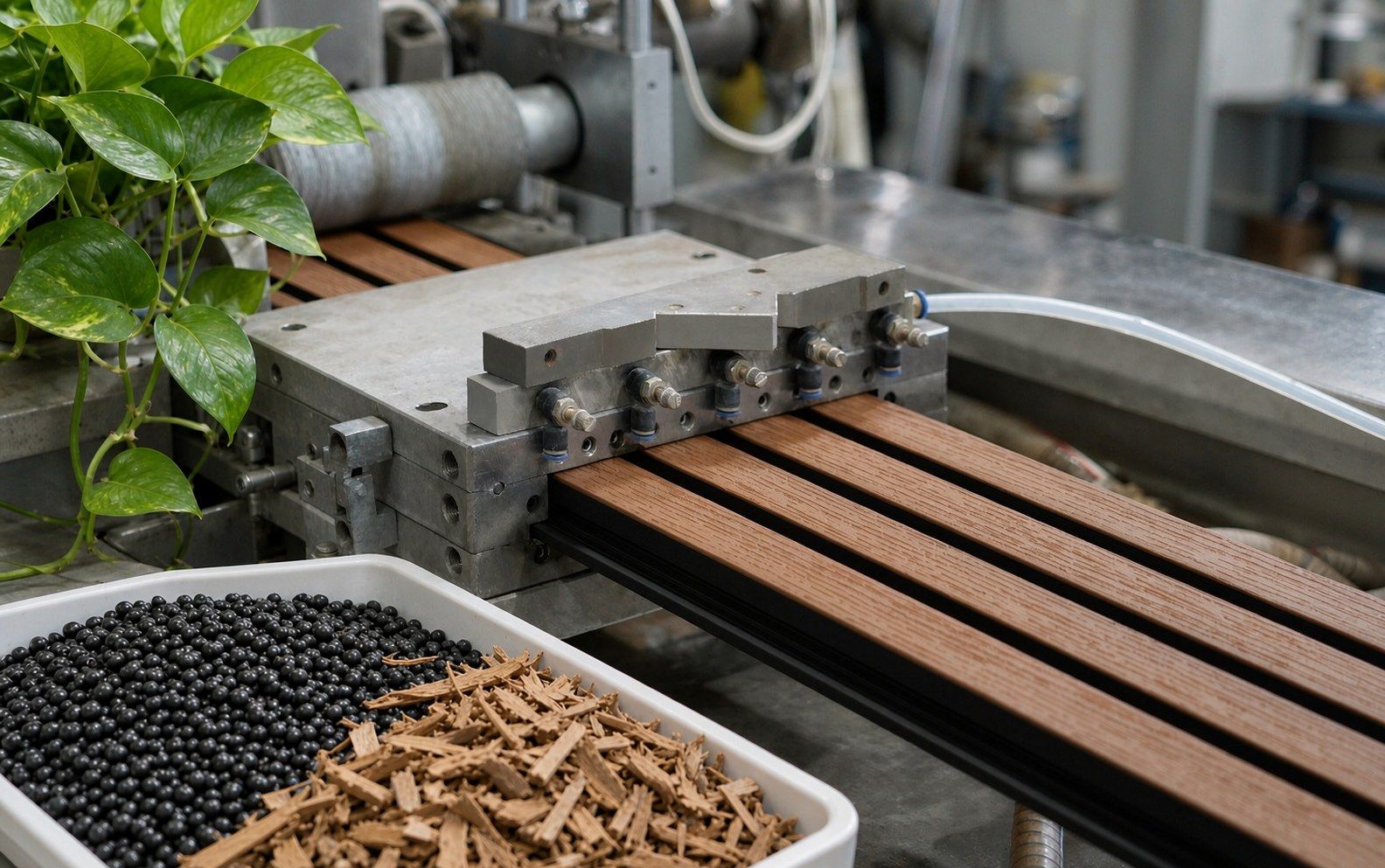
A genuine recycled composite decking board is made primarily from post-consumer recycled HDPE (the plastic from milk jugs, detergent bottles, and film) combined with reclaimed wood fiber. The environmental case is straightforward: the board diverts plastic waste from landfill and reduces demand for virgin materials.
But "recycled" is a spectrum, not a switch:
- Pre-consumer (post-industrial) waste — factory offcuts and regrind — is technically recycled but does not divert consumer waste from landfill, which is the environmental benefit buyers actually pay for.
- Post-consumer recycled content — material recovered from products consumers have used and discarded — is the meaningful measure.
The verification question that matters: can the manufacturer document the post-consumer recycled percentage per product line, in writing? A credible manufacturer answers with a number and, where applicable, third-party test or certification support. One that answers "it's all recycled, trust us" has not done the work.
Certifications to Ask For
Certifications are how a sustainability claim becomes verifiable. When you evaluate a recycled decking supplier, ask which of these they hold — and ask to see the certificate, not just the logo:
Quality and management systems
- ISO 9001 — certifies a quality management system is in place; the baseline for any serious manufacturer
- SGS testing — independent testing of the product's physical performance (color fastness, dimensional stability, wear resistance)
Recycled content and material claims
- Ask for a recycled content declaration that states the post-consumer percentage and the material source. Third-party verification (such as recognized recycled-content certification bodies) is stronger than a self-declaration.
Health and safety
- Ask about formaldehyde content and VOC emissions. Quality recycled composite decking is formulated without formaldehyde and produces zero VOC during production — a verifiable point that matters for indoor-adjacent and green-building applications.
The rule is consistent across every category: a certificate number you can look up beats a logo you cannot. Procurement teams at larger buyers will ask for exactly this, which is why a manufacturer who leads with verifiable documentation saves you work downstream.

The Specs That Determine Real-World Performance
Certifications tell you the board is made responsibly. Specifications tell you how it will behave on a deck. Put these in your RFQ:
1. Density. Composite decking density typically runs around 1.2–1.4 g/cm³ depending on formulation. Density correlates with rigidity and durability — a significantly lower density at the same profile often signals less material and a softer board.
2. Water absorption. The defining advantage of PE-based composite over wood is near-zero water absorption — no swelling, no rot, no freeze-thaw cracking. Ask for the water absorption figure; quality boards are engineered to absorb essentially nothing.
3. Dimensional stability. Thermal expansion and contraction matter for gap and fastener selection. Ask for the coefficient or the manufacturer's stated expansion tolerance over a defined temperature range.
4. UV and fade resistance. Ask how UV stability is achieved — UV inhibitors, color masterbatch, and a co-extruded cap layer are the levers. This is what separates a board that looks new after a decade from one that chalks after two summers.
5. Slip resistance — relevant for pool decks and commercial applications; ask for the test method and rating if your market requires it.
None of these should be accepted as "good enough" on faith. A manufacturer who ships recycled decking at scale has this data on a spec sheet, and will send it.
Recycled Decking and Green Building Standards
Recycled composite decking earns its keep in projects targeting green building certifications, because it contributes to material-and-resources credits:
- Recycled content credits — post-consumer content counts toward materials credits in major green building rating systems
- Durability and lifecycle — a 20-plus-year board that needs no annual sealing or staining reduces long-term material turnover
- Formaldehyde-free, zero-VOC — supports healthier building environments and documentation requirements
For specifiers, the practical point is documentation: the project team will need the manufacturer's recycled content declaration and test reports to claim the credits. Confirm the supplier can produce them before you commit to a specification.
The Pre-Order Verification Checklist
Before you place a recycled decking order, confirm the supplier can provide:
- Post-consumer recycled content percentage, in writing, per product line
- ISO 9001 / SGS certificates with verifiable numbers
- Formaldehyde-free and VOC declaration
- Spec sheet: density, water absorption, dimensional stability, UV package, slip rating
- Batch color-match retention policy and physical samples
A manufacturer who supplies all of these on request is one you can defend to your own customers — and to a procurement team that asks hard questions.

Why Verification Matters for Your Bottom Line
Recycled composite decking is not just an environmental choice — it is increasingly a purchasing criterion. Architects, developers, and ESG-conscious retailers ask for proof of recycled content the same way they ask for a fire rating. Suppliers who can document it win specifications; suppliers who cannot get eliminated in the first round.
This is also why the strongest decking programs tie the sustainability story to verifiable manufacturing. For the broader view of how a manufacturer backs its green claims across the range, see our guide on sustainable outdoor building materials for architects — and if you are evaluating private-label opportunities on recycled lines, OEM and private-label WPC products covers the terms.
FAQ
Q1: What is the difference between recycled and reclaimed in decking?
Recycled content typically refers to post-consumer plastics (HDPE) reprocessed into the board's core; reclaimed wood fiber is recovered wood. Ask the manufacturer to break out both sources, and always confirm the post-consumer plastic percentage — that is the landfill-diversion measure that matters.
Q2: Is higher recycled content always better?
Not automatically. Higher recycled content strengthens the environmental case and can lower raw material cost, but only if the formulation maintains performance. The board's density, water absorption, and UV resistance are the performance tests — recycled content is the sustainability test. Verify both.
Q3: How do I verify a recycled content claim?
Request a written declaration stating the post-consumer percentage and material source, and ask whether it is third-party verified. Recognized recycled-content certification is stronger than a self-declaration, and a verifiable certificate number beats a logo.
Q4: Does recycled composite decking count toward green building credits?
It can contribute to materials-and-resources credits through recycled content, durability, and low-emitting material criteria — but the project team needs documentation. Confirm the manufacturer can supply the declaration and test reports before specifying.
Q5: Is recycled composite decking as durable as non-recycled composite?
Yes, when formulated correctly — the recycled HDPE core is the same polymer family as virgin PE and, properly engineered, delivers equivalent water resistance and dimensional stability. The durability question is about formulation and the cap layer, not the recycled origin of the plastic, which is why the spec sheet matters more than the label.