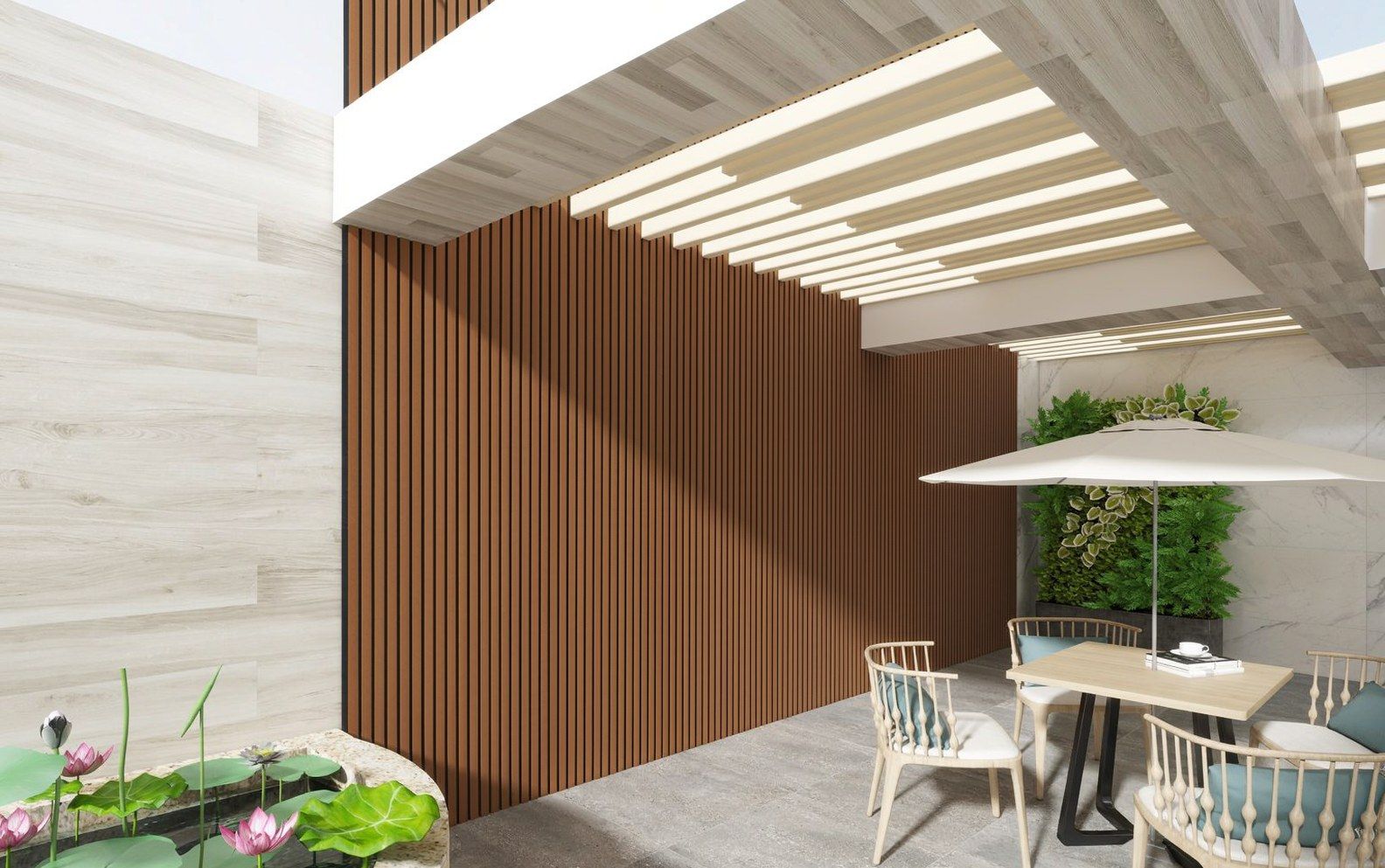
Exterior Wall Cladding Supplier: 7 Checks Before Your First Order
16th November, 2026Exterior Wall Cladding Supplier: 7 Checks Before Your First Order
Most facade problems are not cladding problems — they are supplier problems. The right panel, ordered from the wrong exterior wall cladding supplier, still arrives late, in inconsistent color batches, with no trim profiles to finish the corners. Choosing a supplier is a different exercise from choosing a product: you are not just buying boards, you are buying a supply chain that has to keep your projects moving.
If you are consolidating your cladding sourcing — or evaluating a supplier for the first time — these are the seven checks that separate suppliers who protect your projects from suppliers who complicate them.
Why the Supplier Matters More Than the Spec Sheet
A spec sheet tells you what the board is. A supplier determines what happens after you sign the purchase order:
- Whether the color matches across batches — a facade is only as good as its consistency
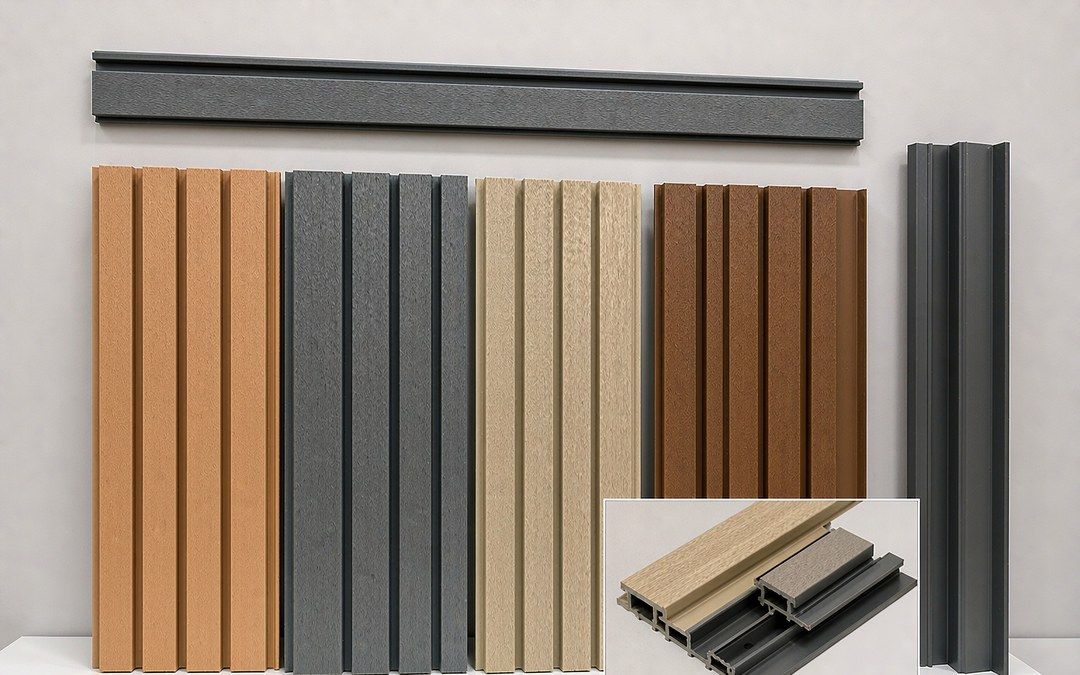
- Whether trim, corner, and fixing profiles arrive with the boards — a cladding system is not a board, it is a kit
- Whether a replacement order ships in weeks or quarters — the moment a project needs emergency stock
- Whether documentation exists when a client or inspector asks — recycled content, test reports, certificates
This is why experienced buyers vet the supplier as carefully as the product. The seven checks below are how.
The 7 Checks
1. Certifications and Verifiable Documentation
Ask for the certificate numbers, not the logos:
- ISO 9001 — the baseline for quality management
- SGS or equivalent third-party testing — color fastness, dimensional stability, wear
- Recycled content declaration — post-consumer percentage and material source, in writing
A supplier who provides verifiable numbers on request has shipped enough to know the questions are coming. One who answers with "we're certified" has not.
2. System Completeness — Trims, Corners, Fixings
The single most common sourcing failure is ordering boards and discovering the trim profiles, corner pieces, and concealed fixings are separate SKUs with separate lead times. Before your first order, map the full system:
- Reveal trim, corner trim, starter strips, weep trims
- Concealed vs exposed fixing options, and the matching screws/clips
- Ventilation accessories for rainscreen cavity construction
A supplier who stocks the complete system from one factory is a supplier who understands how cladding is actually installed. For the underlying approach, see our guide to exterior wall cladding for commercial facades.
3. Recycled Content and Sustainability Claims
Recycled composite cladding is increasingly a specification requirement, not a nice-to-have. Verify:
- Post-consumer recycled HDPE percentage per product line
- Formaldehyde-free and zero-VOC formulations
- Whether the supplier can produce documentation for green building credits
Claims without documents will not survive a procurement review. Our recycled composite decking certifications guide covers how to test these claims in detail — the same verification logic applies to cladding.
4. MOQ Structure and Lead Times
Cladding MOQs behave like decking MOQs: usually per color per profile, not per order. Confirm before committing:
- "Is the MOQ per order, per profile, or per color per profile?"
- Standard versus custom color lead times
- Lead time for a full system order — boards plus trims plus fixings together
Lead time on a complete system order is the number that matters; boards alone will always look faster.
5. Sample Policy and Batch Color-Matching
Never approve a facade from a digital image. Ask for:
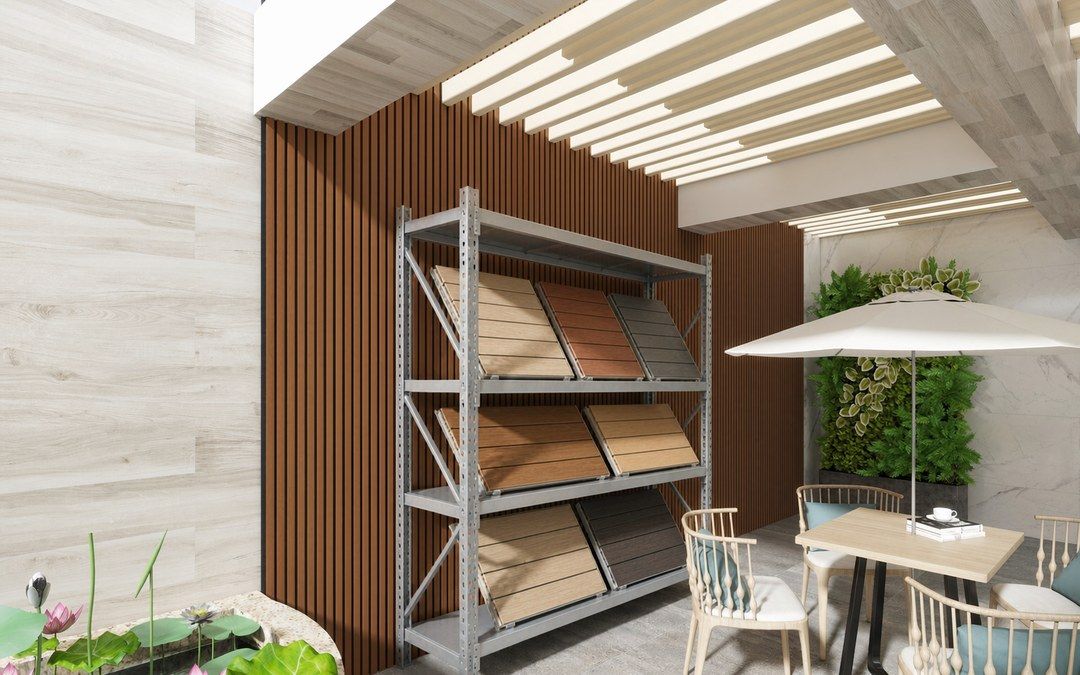
- Physical sample boards in your exact colors and profiles
- Batch color-match retention — whether the supplier keeps a reference batch to match re-orders
- Tolerance documentation — what color deviation is acceptable between production runs
Batch color-match retention is the detail that separates mature suppliers from traders. Without it, a re-order six months later can arrive a visibly different shade.
6. Manufacturing Depth and Capacity
A supplier who is a factory-backed operation can answer capacity questions a trading company cannot:
- Annual production capacity per line
- Whether multiple product lines (decking, cladding, columns) share the same facility — a sign of integrated manufacturing
- How production scheduling handles peak season
This is also where full-line manufacturers earn their keep: if your cladding project pulls in decking or columns, one supplier with integrated capacity is one logistics relationship instead of three.
7. After-Sales and Replacement Terms
Facades get damaged — during construction, in storms, in accidents. Before your first order, establish:
- Replacement terms for damaged or defective boards
- Whether replacements ship with the original batch color-match
- Response commitment for documentation requests after delivery
A supplier who commits to replacement terms in writing is a supplier who expects to still be around for your next project.
How to Use These Checks in an RFQ
Put all seven in your first request for quotation. The quality of the answers tells you more than the price:
| Check | What a Strong Answer Looks Like |
|---|---|
| Certifications | Certificate numbers, third-party test reports attached |
| System completeness | Full BOM: boards, trims, fixings, accessories |
| Recycled content | Written declaration with post-consumer percentage |
| MOQ structure | Per-color-per-profile MOQ stated explicitly |
| Samples | Physical samples plus batch color-match policy |
| Capacity | Capacity figures per line, integrated facility detail |
| After-sales | Written replacement and documentation terms |
A supplier who answers all seven precisely has done this before. A supplier who answers with a single price has not.
Where This Fits in Your Sourcing Strategy
For distributors and contractors sourcing exterior wall cladding, the supplier decision is a portfolio decision. Cladding rarely travels alone — it shares projects with decking, fencing, and columns. Suppliers who can cover the whole outdoor building materials range simplify procurement, consolidate logistics, and give you one accountable partner when something goes wrong.
The seven checks above are deliberately supplier-focused — they test the operation, not the brochure. Run them once, and your second and third orders become routine.

FAQ
Q1: What is the difference between a cladding supplier and a manufacturer?
A manufacturer produces the boards; a supplier gets them to you — with the right documentation, the complete system, and the logistics to arrive on schedule. The best suppliers are factory-backed manufacturers. The seven checks above test both dimensions at once.
Q2: How many cladding suppliers should I evaluate?
Two to three is the practical range. Enough to benchmark price and terms, few enough to give each a real evaluation. Run all seven checks on each — the answers, not the price, will make the decision.
Q3: What is a realistic MOQ for exterior wall cladding?
It varies by supplier and profile. Expect per-color-per-profile minimums rather than a single order MOQ, and always ask which structure the quote assumes before comparing prices.
Q4: How do I verify recycled content claims?
Request a written declaration stating the post-consumer percentage and material source, and ask whether it is third-party verified. A verifiable certificate number beats a logo.
Q5: What should I do about color consistency across re-orders?
Insist on a batch color-match retention policy in writing: the supplier keeps a reference batch and documents acceptable deviation between runs. Without it, re-orders can drift visibly — the most common facade complaint there is.