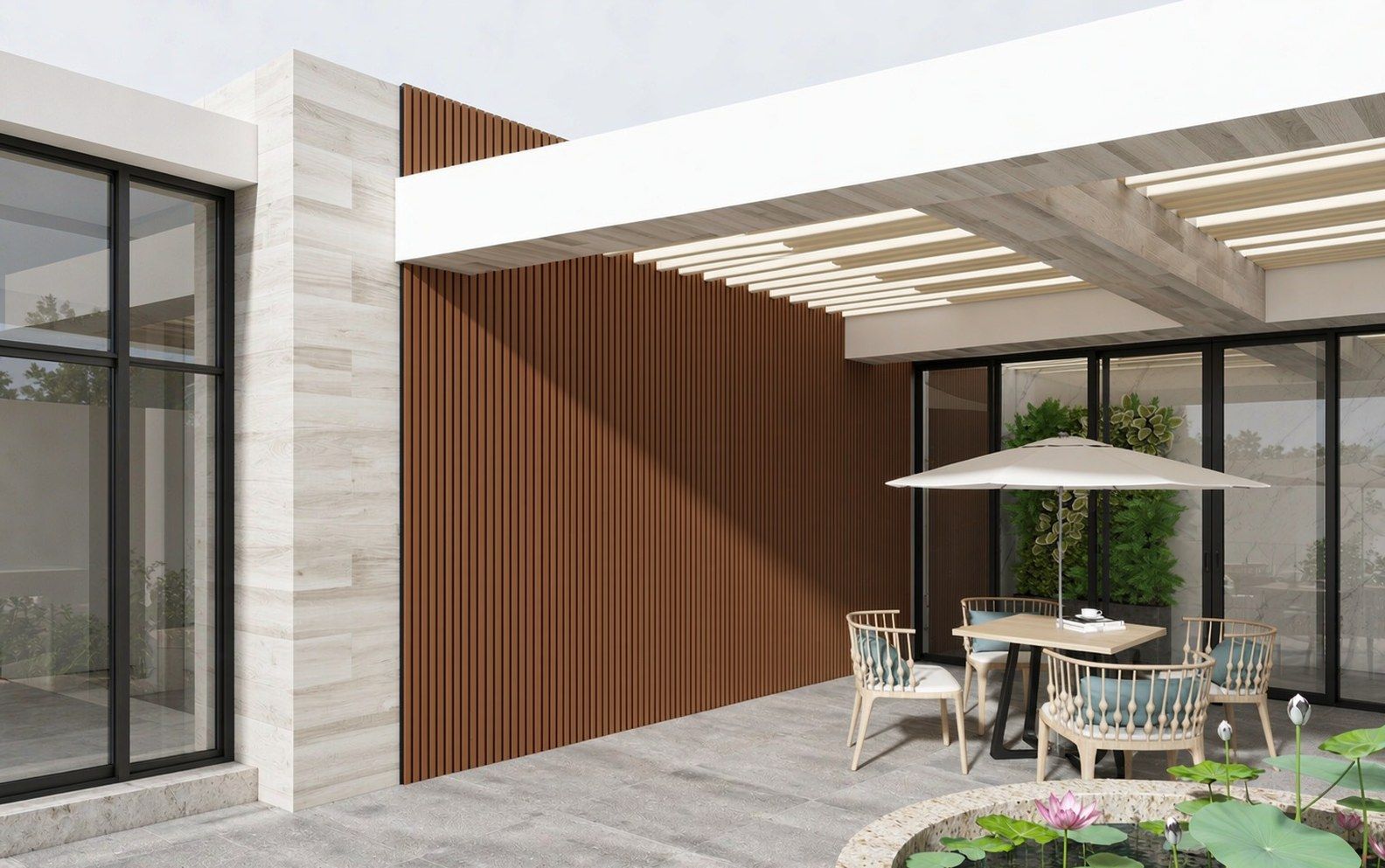
Types of Exterior Wall Finishes: 7 Options Compared for Modern Homes and Commercial Projects
4th November, 2026Types of Exterior Wall Finishes: 7 Options Compared for Modern Homes and Commercial Projects
Every building eventually answers the same question: what goes on the outside? The types of exterior wall finishes you choose determine how the building weathers, how much maintenance it demands, and the first impression it makes on everyone who walks past. This guide compares the seven most common options in North American construction and renovation — and explains where modern composite materials fit in.
What Is an Exterior Wall Finish?
An exterior wall finish is the outermost functional and decorative layer applied to a building's structure. It does three jobs at once:
- Protection — shields the structure from rain, UV, freeze-thaw cycles, and wind
- Aesthetics — defines texture, color, and architectural character
- Longevity of the building envelope — manages moisture so the structure behind it stays sound
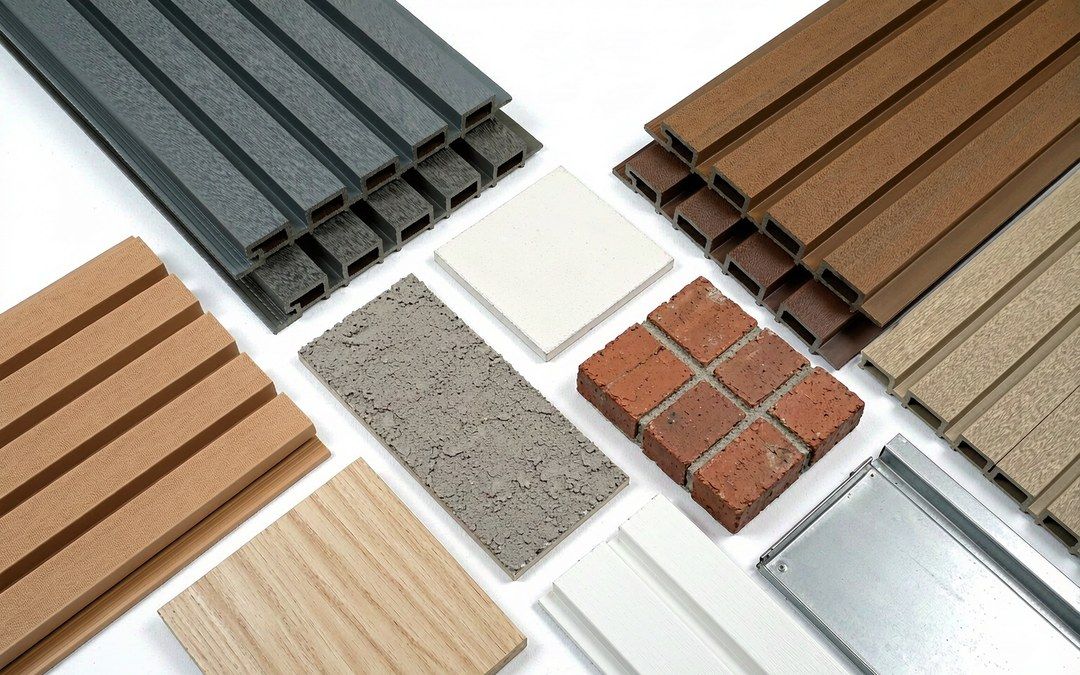
The main types below range from thin coatings (paint, render) to full rain-screen systems (cladding panels). The right choice depends on climate, budget, style, and how much maintenance the owner is willing to take on over the next 15–25 years.
The 7 Main Types of Exterior Wall Finishes
1. Paint and Coatings
The simplest finish: a protective film applied directly to masonry, concrete, or siding.
- Best for: budget refreshes, commercial touch-ups, color changes without construction
- Watch out for: repainting cycles typically every 5–10 years; trapped moisture if the wrong paint is used on masonry
2. Render / Stucco
A cement- or lime-based coat troweled onto walls, stucco is a staple across warm, dry regions of North America.
- Best for: Mediterranean and Spanish-revival styles, seamless monolithic look
- Watch out for: cracking with ground movement or freeze-thaw; requires skilled application and periodic patching
3. Brick and Stone Veneer
Thin layers of real or manufactured masonry bonded to the wall.
- Best for: premium residential and commercial facades, timeless curb appeal
- Watch out for: higher installed cost, heavier than panel systems, mortar maintenance in harsh climates
4. Timber Cladding
Natural wood boards bring warmth and grain that no other material truly replicates.
- Best for: cabins, modern-organic architecture, accent sections
- Watch out for: the maintenance contract — staining, sealing, and graying are ongoing commitments; in humid regions, moisture management is critical
5. Vinyl Siding
The default choice in much of North American tract housing: lightweight PVC panels at a low installed cost.
- Best for: cost-driven residential projects and quick renovations
- Watch out for: fading over time, brittleness in extreme cold, limited premium aesthetics
6. Metal Panels (Aluminum, Steel, Corten)
Engineered panel systems with sharp, contemporary lines and high structural performance.
- Best for: modern commercial and industrial buildings, accent rainscreens
- Watch out for: higher cost, denting on thin gauges, and thermal expansion detailing
7. WPC / Composite Cladding
Wood-plastic composite panels combine recycled wood fibers with polymer resins into boards that read as timber but behave like a modern engineered material.
- Best for: homeowners and developers who want the wood look without wood maintenance; coastal, humid, and freeze-thaw climates
- Watch out for: quality varies significantly between manufacturers — board density, UV stabilizers, and fixing systems determine long-term performance
Quick Comparison
| Finish Type | Typical Lifespan | Maintenance Level | Aesthetic Direction | Weather Resistance |
|---|---|---|---|---|
| Paint / coatings | 5–10 yrs | High (repaint cycles) | Flexible, low texture | Moderate |
| Render / stucco | 20–30+ yrs | Medium–High | Classic, seamless | Moderate (climate-sensitive) |
| Brick / stone veneer | 50+ yrs | Low | Premium, traditional | High |
| Timber cladding | 15–25 yrs | High | Warm, organic | Moderate (needs care) |
| Vinyl siding | 20–40 yrs | Low | Basic residential | Moderate |
| Metal panels | 30–50 yrs | Low | Modern, industrial | High |
| WPC composite cladding | 20–25+ yrs | Low | Wood-look, contemporary | High |
(Lifespan figures are typical industry ranges for guidance only — actual performance depends on product quality, climate, and installation.)
How to Choose Between Exterior Wall Finish Types
Start With Your Climate
Rain-heavy and freeze-thaw regions punish finishes that absorb water (render, low-grade timber). Coastal zones add salt spray to the equation. In these climates, non-porous systems — composite cladding, metal, or well-detailed masonry — hold their appearance longest with the least intervention.
Match the Finish to the Building's Story
A modern farmhouse may combine render volumes with composite wood-look accent walls. A commercial retrofit may use metal plus WPC cladding for a clean but warm identity. The strongest facades usually mix two or three finish types deliberately — not one material everywhere.
Price the Whole Lifecycle, Not Just the Material
Timber cladding may look cheaper at purchase than composite — until you add 20 years of staining labor. Paint is the cheapest day one and the most expensive by year 15. For each option, estimate: installed cost + maintenance hours + expected replacement cycle.
Check What's Behind the Panel
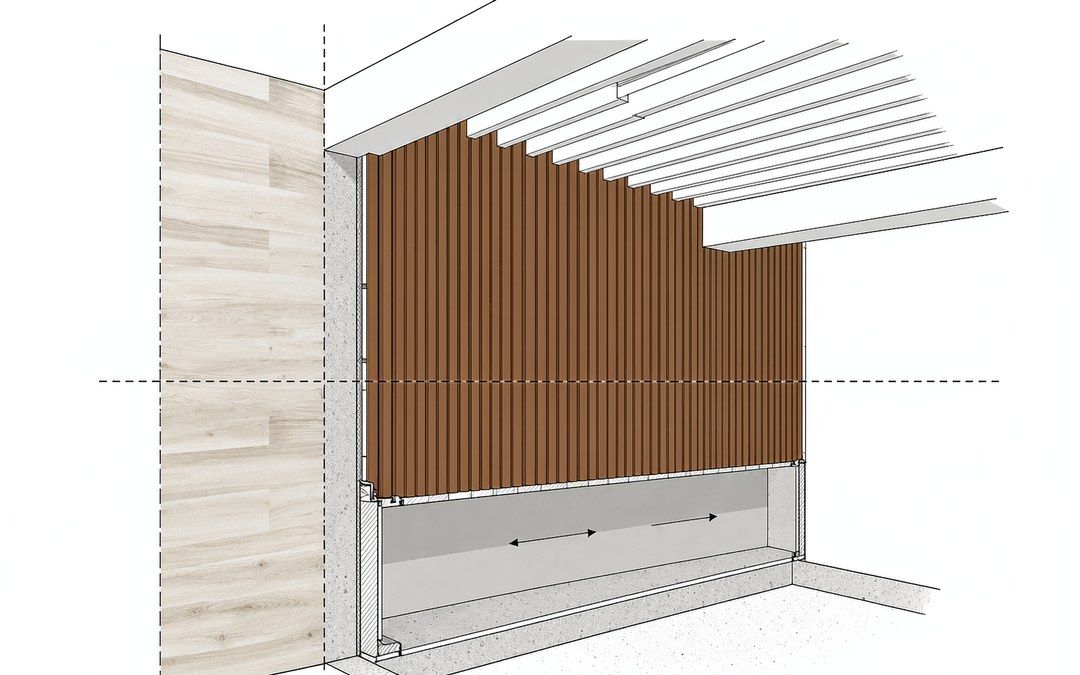
Modern cladding works as a rainscreen system: panels fixed to a ventilated cavity that manages moisture behind the facade. Whatever finish type you choose, ask how the system handles ventilation, drainage, and fixing — this is where cheap products and good ones genuinely diverge.
Where Composite Cladding Fits in the Modern Mix
Among the types of exterior wall finishes, WPC cladding has grown fastest in recent years because it directly attacks the weaknesses of its alternatives:
- Wood aesthetics without wood maintenance — color is engineered into the material, with grain textures that vinyl and metal can't replicate
- Non-porous core — no rot, no termite appetite, no swelling from moisture
- Recycled content — supports green building narratives for sustainability-focused projects
- Complete systems — matching trims, corner profiles, and fixings from one supplier
For renovation projects and new builds alike, designers increasingly use composite as the accent layer that gives a facade warmth, while relying on render or metal for the primary volumes.
Frequently Asked Questions
What is the most durable exterior wall finish?
Properly installed masonry and high-quality metal systems typically last the longest. Among wood-look options, quality WPC cladding offers a strong durability-to-maintenance ratio.
What is the cheapest exterior finish?
Paint is the cheapest short-term; vinyl siding is the cheapest cladding-level option. Lifecycle cost — maintenance included — often tells a different story.
Can you combine finish types on one building?
Yes, and the best facades usually do. Mixing render, metal, and composite accents is a standard approach in contemporary design.
Is composite cladding suitable for wet climates?
Quality WPC cladding is non-absorbent at the material level, which makes it well suited to rain-heavy and humid regions. Verify the specific product's test documentation with your supplier.
The Bottom Line
There is no single "best" exterior wall finish — there is the right finish for your climate, building type, and maintenance appetite. Use the comparison above to shortlist two or three types, then evaluate specific products within each on system design and documented performance.
Ready to build? Compare WPC cladding for your next project — how to choose the right wall cladding. For wholesale pricing, get a factory quote.