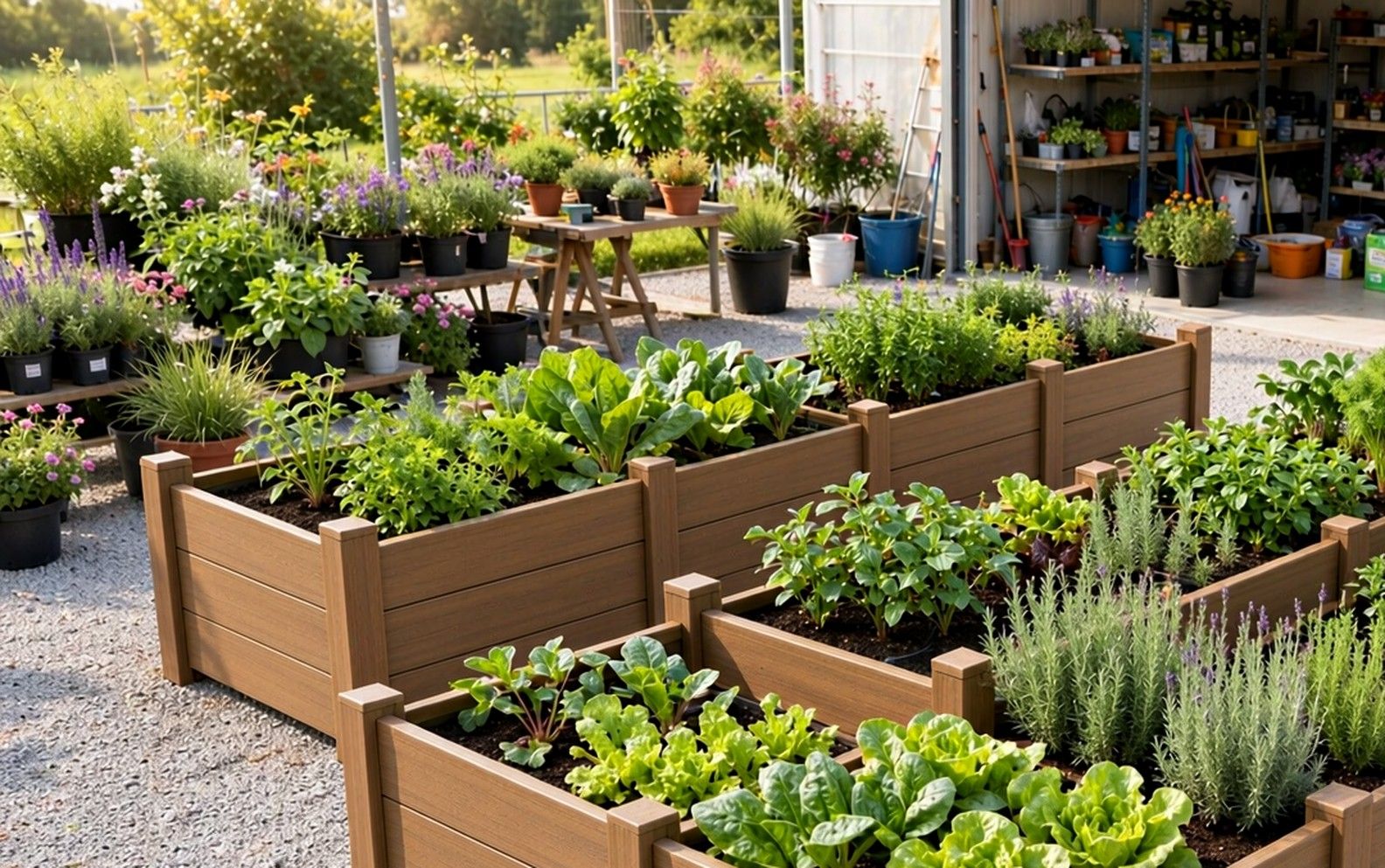
WPC Raised Garden Bed Manufacturer: Sourcing Guide for Garden Centers and Landscapers
12th October, 2026WPC Raised Garden Bed Manufacturer: Sourcing Guide for Garden Centers and Landscapers
Raised garden beds made from wood-plastic composite have become one of the fastest-moving categories in garden retail — durable, splinter-free, and immune to rot in ways timber kits never were. For garden centers, landscapers, and municipal buyers, the question is no longer whether to stock composite beds, but who to source them from. This guide covers what a WPC raised garden bed manufacturer should provide, and the checks that separate production-ready suppliers from catalog sellers.
Why Composite Garden Beds Are a Category Worth Stocking
Three demand drivers explain the category's growth from the retail side:
- Season-proof inventory: composite beds do not warp, rot, or splinter in display stock or yard storage the way timber kits do — lower shrinkage, fewer write-offs
- Consumer pull: the gardening boom keeps renewing, and "no maintenance" is the top purchase driver after size
- Margin structure: kits with corner posts, panels, and hardware sell as systems, with attach-rate accessories (matching trellises, edging) that plain lumber cannot match
The category rewards suppliers who treat it as a product line, not a side SKU — which is exactly where the manufacturer choice matters.
Check 1: System Design, Not Loose Panels
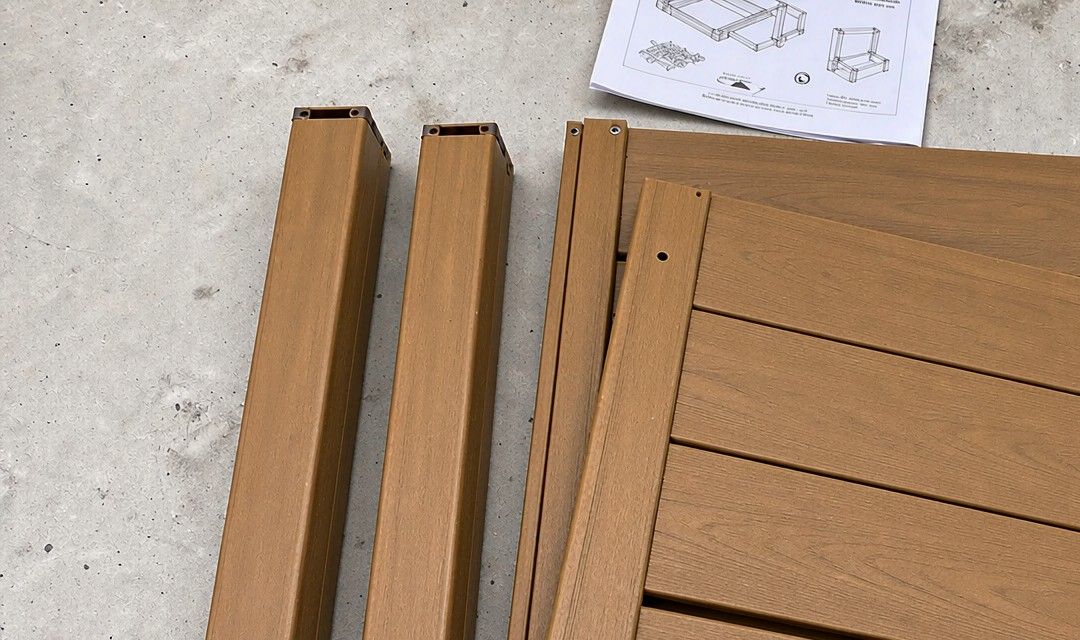
A quality raised bed ships as an engineered kit:
- Corner posts and panels that assemble without cutting or special tools — the assembly experience is what customers review
- Modular sizing: heights and footprints that stack into a coherent display and fulfill different garden sizes from one system
- Hardware included and corrosion-rated: galvanized minimum; stainless for coastal retail regions
Ask for the assembly instructions before ordering. If they read like an apology, the kit will generate returns.
Check 2: Formulation for Ground Contact and Irrigation
Garden beds live in permanent contact with wet soil — the harshest environment in the outdoor category:
- Documented water absorption figures for the board line
- UV-stabilized formulation: beds sit in full sun all season
- Soil-safe composition: buyers increasingly ask about what leaches into vegetable gardens; manufacturers with documented, safe polymer and fiber content answer this with confidence
Check 3: Kit-Level Batch Color Consistency
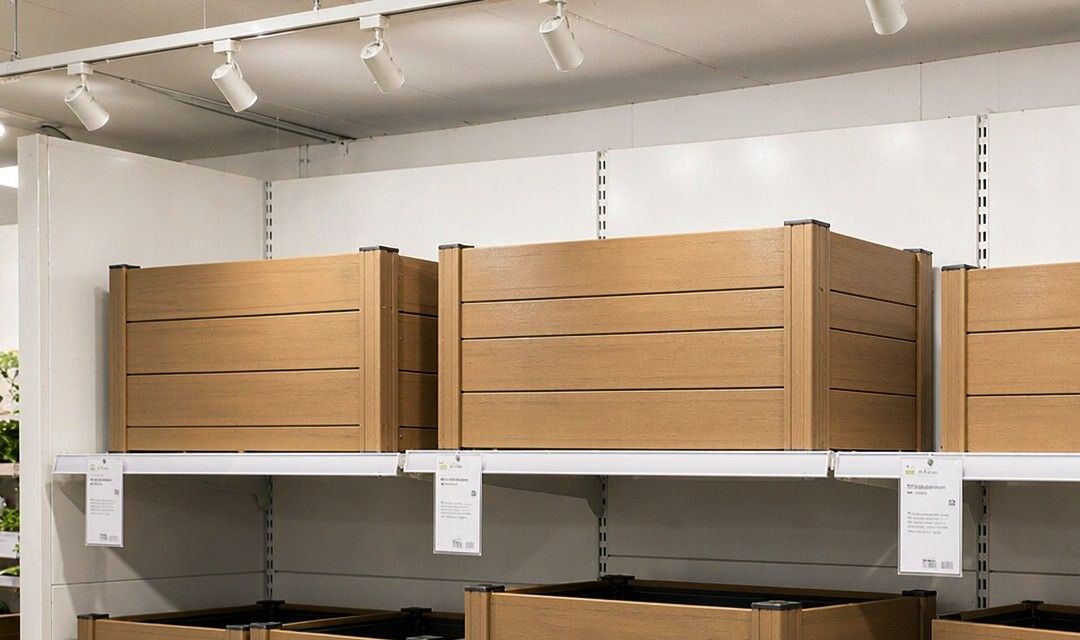
A display wall of garden beds shows color variation instantly. Single-run production for full orders, numerical batch tolerance across runs, and a written matching commitment for reorders — the same terms that matter in fencing and cladding, applied to your spring stock.
Check 4: Season-Ready Lead Times
Garden retail is calendar-driven: stock lands in late winter for spring sales. A manufacturer quoting realistic production windows — and confirming the calendar for your order size — protects your season. Ask for:
- Lead-time tables for standard colors vs custom runs
- Production slot confirmation for spring orders placed in Q4
- Mixed-container rights to combine beds with decking, fencing, and cladding in one shipment
Check 5: Retail-Ready Packaging and Displays
[[IMG:3]]
- Compact flat-pack design that ships efficiently and assembles in minutes in-store
- Branded cartons with clear kit contents and assembly guides
- Display programs: sample corner posts and panel sections that let customers touch the material — the single strongest sales aid in this category
Check 6: Documentation Package
- Line-specific certifications (CE or regional equivalents) naming the garden bed line
- Load and soil-volume specifications per size, for landscapers quoting jobs
- Assembly instruction templates in your retail language, ready for reprint
Frequently Asked Questions
What should a raised garden bed manufacturer provide?
Engineered kits with hardware, documented formulation for ground contact, batch color consistency, season-protected lead times, retail-ready packaging, and line-specific certifications.
What MOQ applies for garden center stocking?
Manufacturers running continuous production support mixed containers — beds combined with other outdoor lines — at moderate minimums; ask for the mixed-container option to test the category.
Can beds be customized for a retail brand?
Yes — colors, engraved logos, and branded packaging are standard OEM options with vertically integrated manufacturers.
How do composite beds compare to timber kits for retail?
No rot or splinter returns, season-proof display stock, and system pricing with accessory attach rates — against a modestly higher unit cost that the warranty story supports.
The Bottom Line
Sourcing composite raised beds is a systems decision: kit engineering, ground-contact formulation, batch consistency, and calendar-protected supply. Manufacturers with their own extrusion lines deliver all four and can customize for your brand as the category grows.
As an experienced WPC outdoor product manufacturer, NatureTough manufactures raised garden bed systems with documented formulations, batch-consistent colors, and mixed-container supply for garden centers and landscapers — explore the garden bed range.