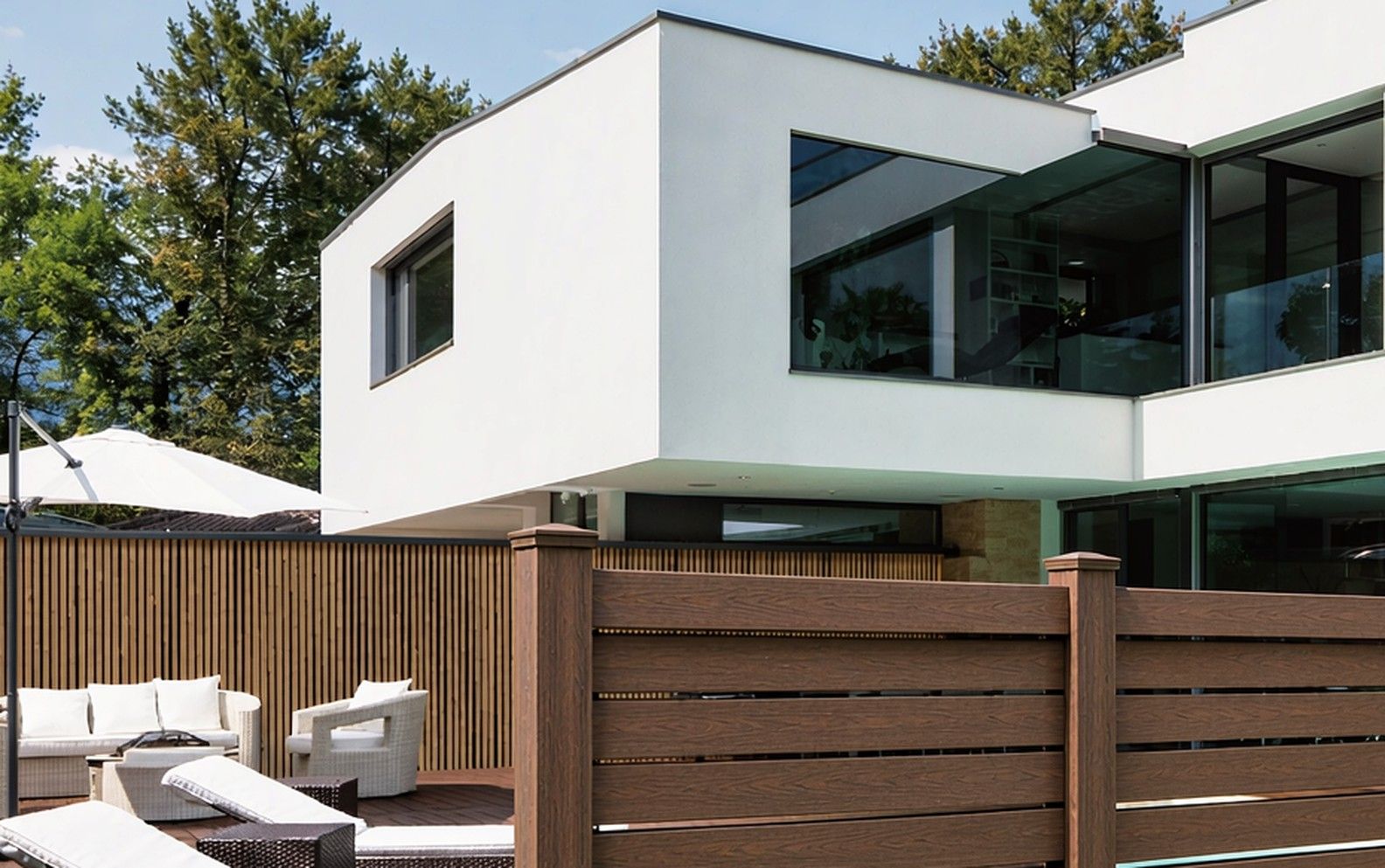
WPC Fence Panels Buying Guide: 1500mm vs 1800mm Waterproof Privacy Fences
14th September, 2026A fence used to be a simple decision: wood rots, metal rusts, and vinyl fades. Today, homeowners and contractors are switching to WPC (Wood-Plastic Composite) fence panels — a material that combines the natural warmth of wood with the weather-proof durability of modern engineering. If you have been researching options such as an 1800mm waterproof WPC fence or a 1500mm eco-friendly WPC fence panel, this guide breaks down everything you need to know before buying.
What Is a WPC Fence?
WPC fencing is made from a blend of recycled wood fibers and polyethylene (PE) plastic, extruded into panels, boards, and posts. The result is a fence that looks like timber but behaves very differently:
- Zero water absorption. Unlike wood, the PE matrix in quality WPC does not soak up moisture. No swelling, no warping, no freeze-thaw cracking.
- Built-in UV resistance. Color pigments and UV inhibitors are embedded throughout the composite — not sprayed on the surface — so the fence keeps its tone year after year.
- Pest-proof by chemistry. Termites, carpenter ants, and rodents have no appetite for plastic-based composite. No chemical treatments required.
- Sustainable by origin. The wood fiber content comes from recycled sources, making WPC fencing one of the more circular choices in outdoor building materials.
For homeowners, that translates into one thing: weekends without a paintbrush.
1500mm vs 1800mm: Which Fence Height Do You Need?
The two most common WPC fence panel heights are 1500mm (about 5 feet) and 1800mm (about 6 feet). The right choice depends on what your fence is actually for.
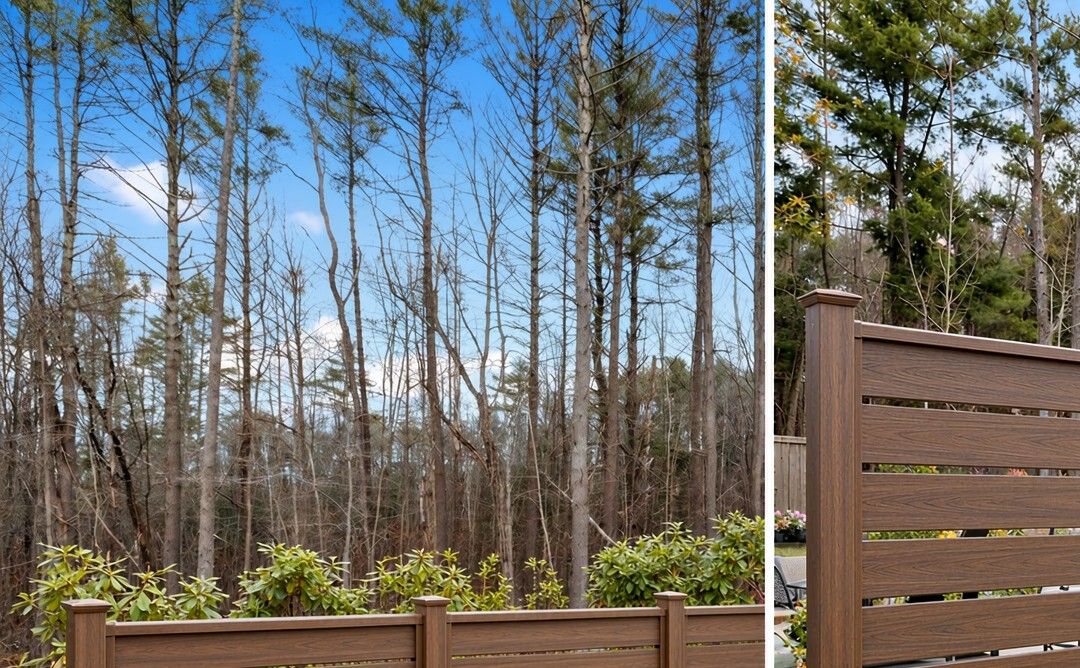
Choose 1500mm fence panels when:
- You want a boundary, not a fortress. A 1500mm WPC fence clearly marks property lines and contains pets and children while keeping the yard visually open.
- Front yards and curb appeal matter. Many neighborhoods look best with a fence that doesn't hide the house. Lower panels also let more sunlight into gardens — a real advantage if you grow plants along the boundary.
- Local codes cap front-yard height. Many North American municipalities limit front-yard fencing to roughly 4–5 feet. Always check your local building department before ordering.
- Wind exposure is a concern. Shorter panels catch less wind load, which matters for exposed properties and simplifies post engineering.
Choose 1800mm fence panels when:
- Privacy is the priority. An 1800mm WPC fence panel blocks the sightline of neighbors and passersby, which is exactly what most backyard and patio enclosures call for.
- You are screening something unsightly. Compost areas, HVAC units, or a neighboring apartment block — a 6-foot barrier handles all of it.
- Noise reduction helps. While no fence is soundproof, a tall, dense, gap-free composite panel does a meaningfully better job of buffering street noise than a low or slatted fence.
- You want to define an outdoor room. Landscape designers increasingly use 1800mm fencing to create intimate garden rooms and hot-tub enclosures — the sense of enclosure changes how the space feels.
Practical tip: many homeowners mix heights — 1500mm at the front and sides, 1800mm across the back or around the patio zone. Because WPC systems use matching posts, rails, and color finishes, the transition looks deliberate, not patched together.
Waterproof Performance: What a Waterproof WPC Fence Actually Means
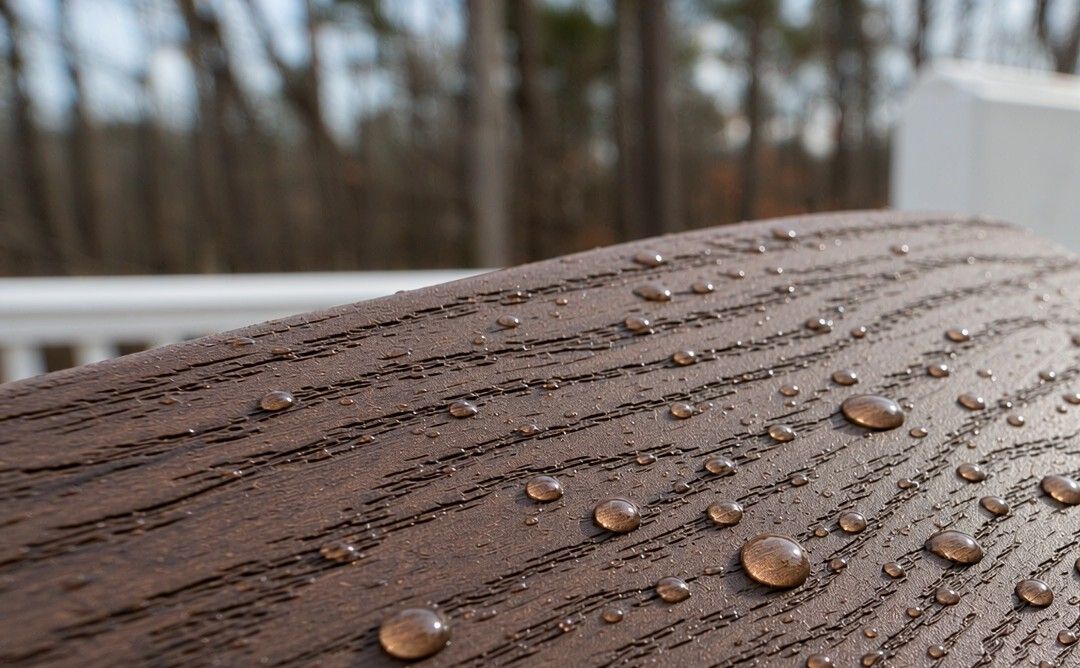
The phrase waterproof WPC fence shows up in a lot of product listings, so it is worth being precise about what it means — and what it doesn't.
A quality WPC fence panel is waterproof at the material level: the composite itself does not absorb water. Rain, sprinklers, and snowmelt run off the surface. There is nothing to swell, no pores for mold to root in, and no grain for rot to travel along.
This is fundamentally different from:
- Treated wood fencing, which resists rot for a few years but eventually takes on water at cut ends, fastener holes, and ground-contact points.
- Cheap composites, which may use high filler ratios that leave the surface porous and prone to staining and mildew.
When comparing products, ask suppliers about water absorption rates and look for closed-loop extrusion manufacturing, which produces dense, consistent panels without weak spots. Dense, non-porous WPC surfaces also repel everyday stains — BBQ sauce, wine, lawn chemicals — where soap and water are usually all the cleaning you will ever do.
The Natural Aesthetic Advantage
One of the strongest reasons buyers move from vinyl to WPC is looks. Vinyl reads as plastic; WPC reads as wood — because at its core, it partly is.
Modern WPC fence panels are available in wood-tone finishes that carry the grain, depth, and color variation of natural timber. Unlike stained cedar, that color is engineered into the material:
- No annual re-staining or repainting
- No patchy graying as one board weathers faster than its neighbor
- Consistent color from panel to panel, which matters visually on a long fence line
For design-conscious projects, a durable, natural-aesthetic WPC fence delivers the warm, organic backdrop that landscapers want, minus the maintenance contract that comes with real wood.
Sustainability: The Recycled Wood Fiber Story
WPC fencing is one of the few building materials where the eco-friendly label is structural, not decorative. The wood fiber in composite panels typically comes from recycled sources — sawdust, offcuts, and recovered wood that would otherwise be waste — combined with recyclable polyethylene.
Choosing a sustainable, recycled wood-fiber WPC fence means:
- Diverting waste from landfill into a decades-long service life
- Reducing demand for pressure-treated lumber, which relies on chemical preservation processes
- Avoiding repeated replacement cycles — the greenest fence is often the one you buy once
If your project has sustainability targets — LEED-adjacent landscaping, corporate ESG commitments, or simply a personal standard — ask suppliers for documentation of their recycled content and material sourcing.
Installation: Easier Than You Might Think
WPC fence systems are designed for straightforward, modular installation:
- Set posts in concrete at standard spacing, checking alignment as you go.
- Attach rails or mounting brackets to the posts.
- Slot panels into place — most systems use tongue-and-groove or stackable board profiles that click or slide together without visible fasteners.
- Cap and finish with matching top rails or caps for a clean edge.
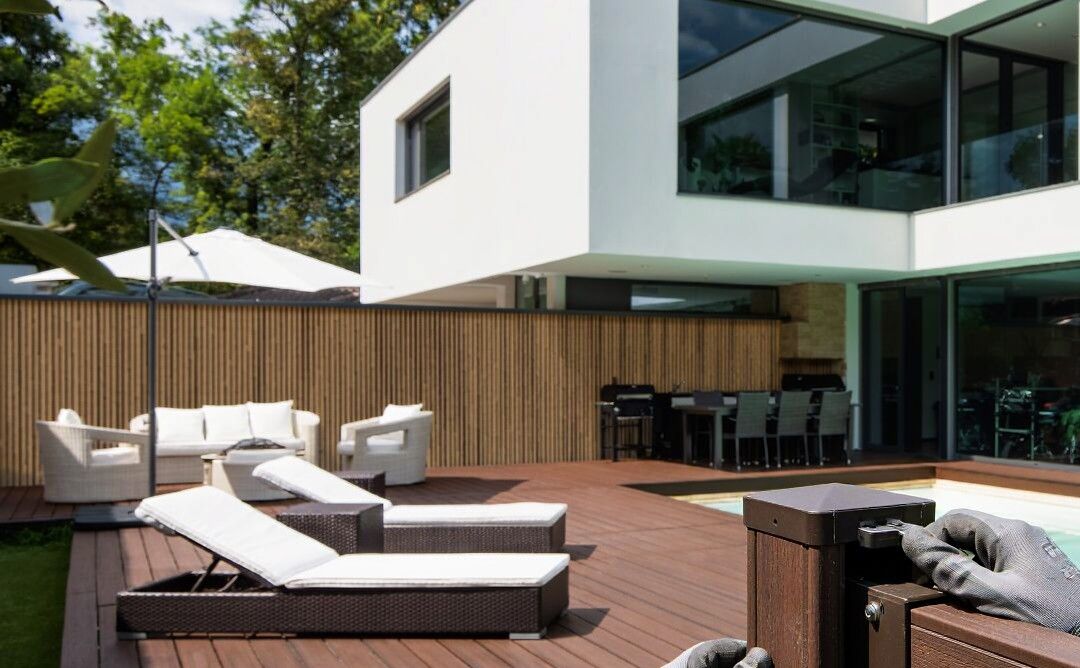
Two things worth knowing before you start:
- Allow for thermal movement. Like all composites, WPC expands and contracts slightly with temperature. Follow the manufacturer's gap recommendations at panel joints — this is the single most common installation error.
- Ground contact is more forgiving than wood, but a gravel board or slight clearance at the bottom edge extends service life and improves drainage after heavy rain.
For DIYers comfortable with a post-hole digger and a level, a 1500mm garden fence is a realistic weekend project. Longer 1800mm privacy runs benefit from an extra pair of hands on panel placement.
Maintenance Comparison: WPC vs Wood vs Vinyl
- Wood fence: annual sealing or staining required; high rot risk; common insect damage; grays without treatment; pressure washing plus chemicals to clean; repaint or replacement every 5–10 years.
- Vinyl fence: no sealing or rot; no insects; can yellow or become brittle over time; soap-and-water cleaning.
- WPC fence: no sealing or staining; no rot; no insects; UV-stabilized color throughout the panel; soap-and-water cleaning; no repaint cycle.
The honest trade-off: WPC panels typically cost more upfront than basic treated lumber. Over the life of the fence — factoring in stain, labor, and replacement boards — the math usually lands firmly in WPC's favor, especially in wet, coastal, or high-UV climates.
Frequently Asked Questions
Is a WPC fence really waterproof?
The composite material itself does not absorb water, so panels do not swell, warp, or rot. Properly installed systems shed rain and snowmelt effectively.
Which height is better for privacy, 1500mm or 1800mm?
For blocking neighbor sightlines, 1800mm is the standard choice. 1500mm suits boundaries, front yards, and open garden designs.
Can I install WPC fence panels myself?
Yes — modular panel systems make DIY installation practical for straightforward runs. Verify local height regulations and call utility-locate services before digging.
How do I clean a WPC fence?
Mild soap, water, and a soft brush. Avoid abrasive pads and high-pressure washing at close range.
Is WPC fencing eco-friendly?
The wood fiber content is typically recycled, and the long service life avoids the replacement cycle of wood fencing. Ask your supplier for recycled-content documentation.
The Bottom Line
If you are choosing fencing for a wet climate, a low-maintenance lifestyle, or a design that should still look intentional in ten years, WPC fence panels deserve the top of your shortlist. Pick 1500mm panels for open, garden-friendly boundaries; choose 1800mm panels where privacy is the point. Either way, look for high wood-fiber content from recycled sources, closed-loop extrusion, and UV-stabilized color — the three markers of a panel that will still look new long after the neighbors have re-stained their cedar fence. Twice.
As an experienced WPC outdoor product manufacturer, NatureTough provides reliable WPC fencing, decking, and exterior wall panel solutions for global markets.