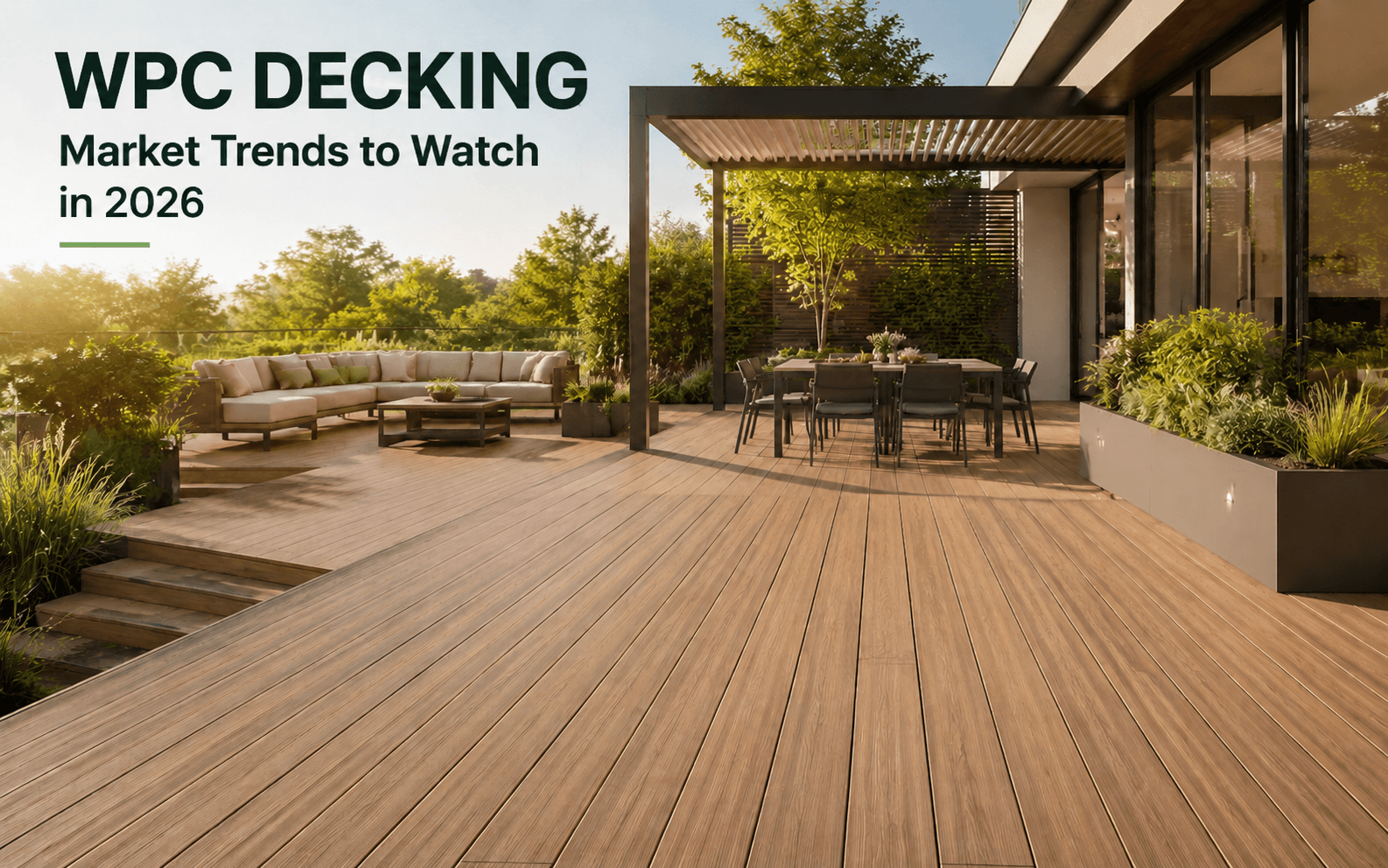
WPC Decking Market Trends to Watch in 2026
21st August, 2026Outdoor spaces are no longer treated as secondary areas around a property. In 2026, homeowners, architects, contractors, and commercial developers are designing decks, terraces, balconies, pool surrounds, and garden pathways as functional extensions of indoor living.
This change is creating new opportunities for WPC decking.
Combining the natural appearance of wood with the practical advantages of composite materials, wood plastic composite decking has become an increasingly attractive option for residential landscaping, hospitality projects, commercial developments, and public outdoor spaces.
According to a 2026 market report, the global wood plastic composite market is projected to grow from USD 7.7 billion in 2025 to USD 8.64 billion in 2026. Demand is being supported by outdoor landscaping applications, recycled material availability, residential construction, and the growing preference for low-maintenance building products.
Here are the most important WPC decking market trends to watch in 2026.
1. Sustainable Decking Moves into the Mainstream
Sustainability is no longer a niche selling point. It is becoming a standard consideration for homeowners, developers, retailers, and building-material distributors.
Buyers are paying closer attention to:
- Recycled content
- Responsible material sourcing
- Product lifespan
- Maintenance requirements
- Packaging and transportation efficiency
- Environmental certifications
- End-of-life recyclability
WPC decking fits naturally into this shift because it can incorporate recycled wood fibers and recycled plastics. It also provides an alternative to frequent timber replacement, staining, painting, and chemical treatment.
However, buyers are becoming more informed. General environmental claims are no longer enough. Manufacturers and suppliers should clearly communicate material composition, recycled-content percentages, testing standards, production controls, and relevant certifications.
In 2026, transparent sustainability information will increasingly influence purchasing decisions, especially for commercial projects and environmentally conscious consumers.
2. Low-Maintenance Outdoor Living Drives Material Choices
Modern consumers want outdoor spaces they can enjoy without spending every season sanding, staining, sealing, or repainting the floor.
This makes low maintenance one of the strongest drivers behind the growth of WPC decking.
Compared with conventional wood decking, quality composite decking is designed to offer greater resistance to common outdoor challenges such as moisture, rot, insects, splintering, and surface deterioration. Routine cleaning is generally simpler, while periodic protective coating is usually unnecessary.
These advantages are particularly valuable for:
- Busy homeowners
- Rental properties
- Hotels and resorts
- Restaurants and cafés
- Swimming-pool areas
- Coastal developments
- Public landscaping projects
The market conversation is therefore moving beyond initial product price. Buyers are increasingly evaluating the total cost of ownership, including maintenance labor, surface treatments, repair frequency, and expected service life.
For suppliers, explaining long-term value can be more persuasive than competing on the lowest purchase price alone.
3. Natural Wood Looks Become More Sophisticated
Early composite decking products were sometimes easy to identify because of repetitive patterns, artificial colors, or highly uniform surfaces. Product expectations are much higher in 2026.
Buyers increasingly want WPC decking that provides the warmth and visual character of timber while retaining the durability of a composite material.
Popular visual directions include:
- Natural oak and teak tones
- Warm walnut and cedar colors
- Weathered driftwood finishes
- Soft brown and greige palettes
- Low-gloss surfaces
- Multi-tonal wood grain
- Embossed textures with less visible repetition
Rather than selecting one uniform color for an entire space, designers are also combining complementary tones. A darker border may frame a lighter central deck, while contrasting boards can define steps, walkways, dining areas, or lounge zones.
Realistic texture, controlled color variation, and coordinated accessory systems will become important points of differentiation in the WPC decking market.
4. Multi-Zone Decks Replace the Single-Purpose Platform
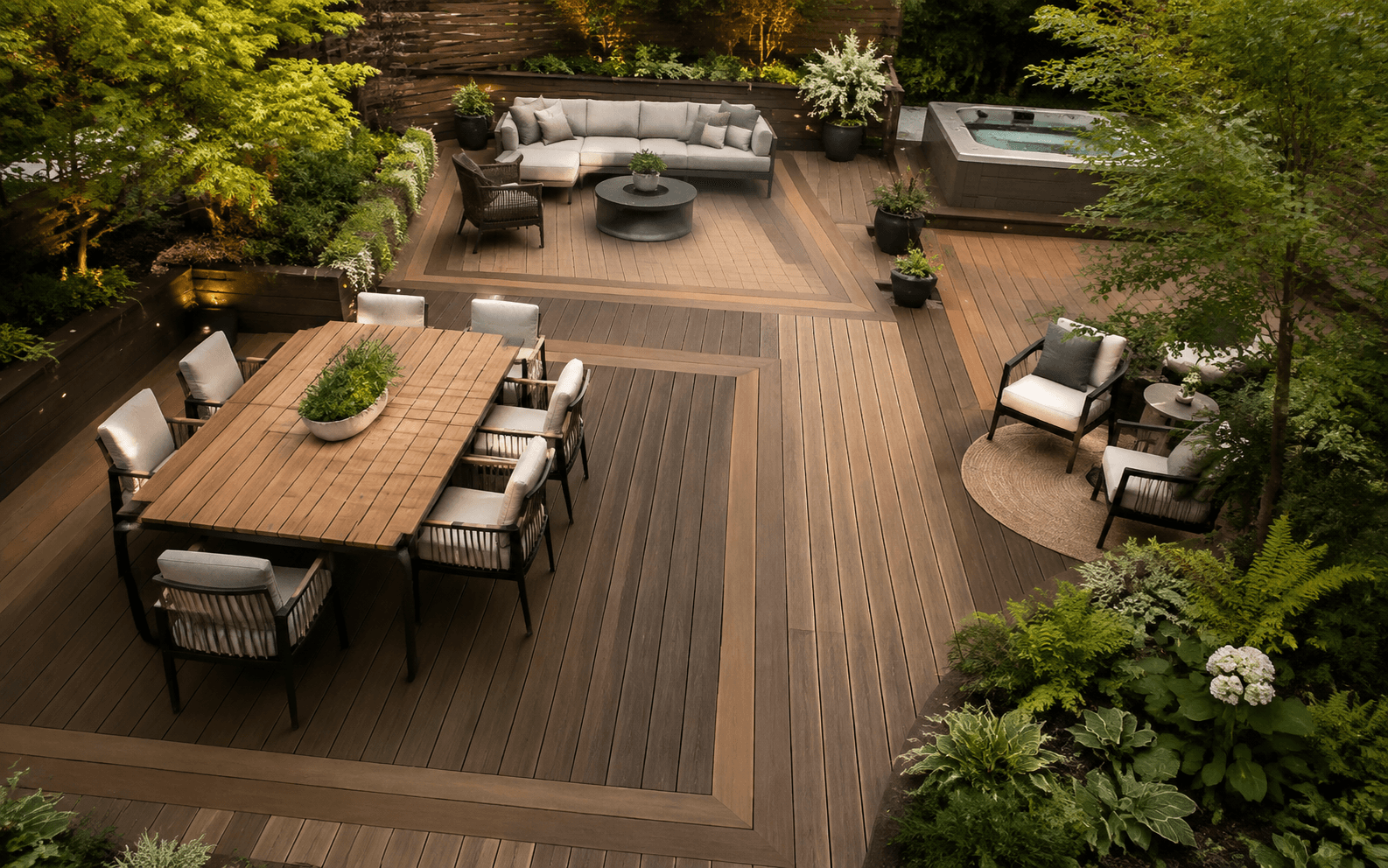
One large rectangular deck is giving way to more flexible outdoor layouts.
Current outdoor-living forecasts indicate increasing interest in multi-zone spaces designed for different activities. A single project may include separate areas for dining, cooking, relaxing, entertaining, exercise, or wellness.
WPC decking supports this trend through variations in board direction, color, profile, and installation pattern. Designers can visually divide a space without constructing solid walls or permanent barriers.
5. Outdoor Wellness Spaces Continue to Expand
Outdoor areas are increasingly designed to support rest, recreation, and personal well-being.
Homeowners are adding meditation corners, yoga platforms, hot tubs, outdoor showers, saunas, cold-plunge areas, and quiet seating spaces surrounded by plants. Hotels and wellness resorts are making similar investments to create more memorable guest experiences.
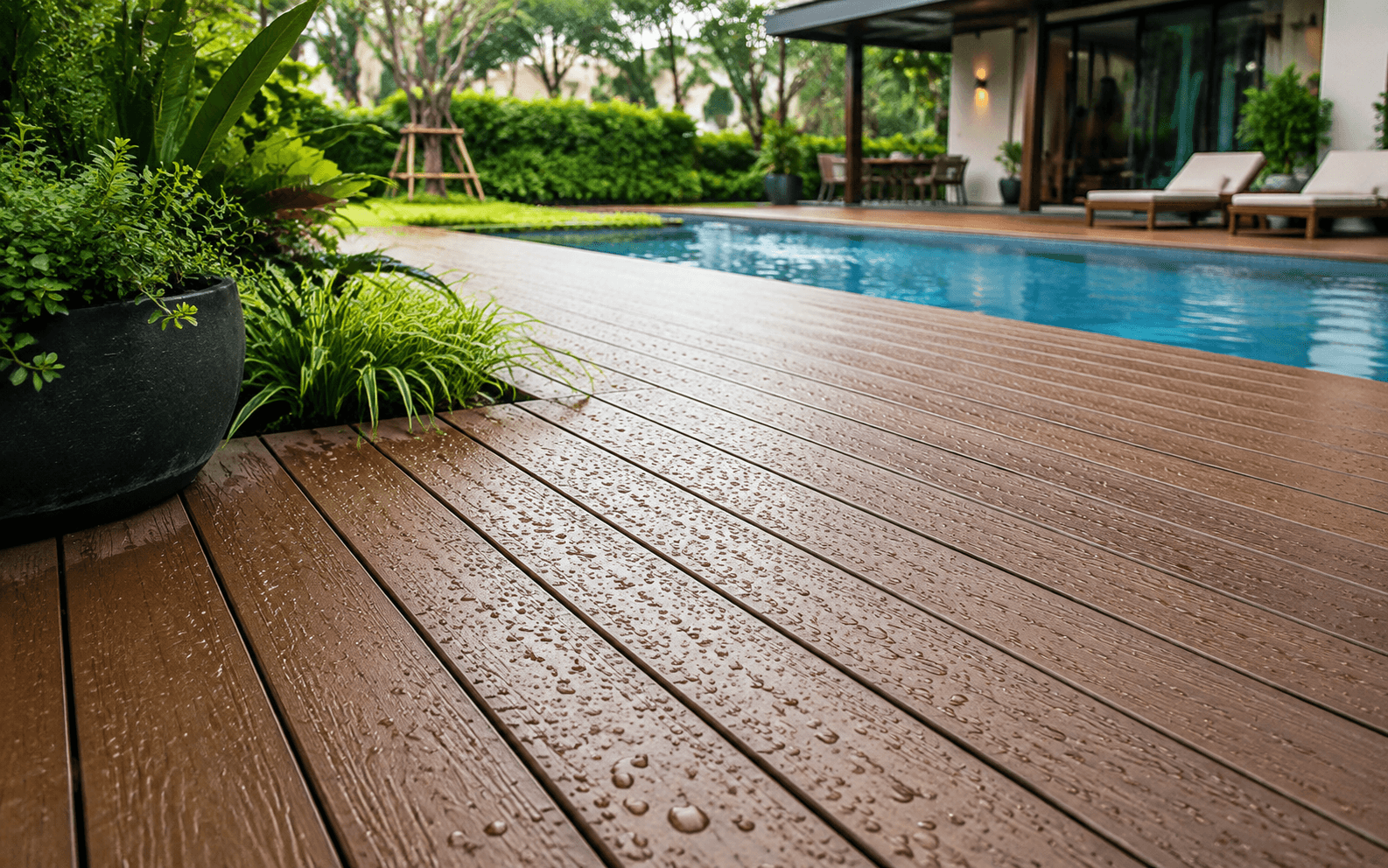
These environments require flooring that balances visual warmth with practical outdoor performance. WPC decking can help create a natural-looking foundation while reducing concerns associated with splinters, frequent refinishing, and moisture exposure.
For wet or poolside applications, buyers should still review technical factors such as:
- Slip-resistance test results
- Drainage and ventilation
- Surface temperature
- Board spacing
- Substructure requirements
- Local building regulations
Manufacturers that provide application-specific technical guidance will be better positioned to serve this growing segment.
6. Quick Installation Becomes a Competitive Advantage
Labor availability and project timelines remain important concerns across construction and landscaping markets. As a result, contractors and distributors are placing greater value on systems that simplify installation.
Demand is growing for:
- Standardized board profiles
- Adjustable pedestal solutions
- Modular deck tiles
- Clear installation manuals
- Installation videos
- Coordinated trims and accessories
- Efficient packaging for job-site handling
DIY-friendly products are also expanding the potential market. Interlocking WPC deck tiles can appeal to renters, apartment residents, and homeowners who want to update balconies or compact patios without undertaking a complete structural decking project.
In 2026, ease of installation is not simply a technical benefit. It is a marketing advantage that can reduce labor costs, shorten project schedules, and improve the customer experience.
7. Performance Requirements Become More Application-Specific
As WPC decking enters a wider range of projects, buyers are asking more detailed technical questions.
Residential garden decking, pool surrounds, coastal walkways, rooftop terraces, and high-traffic commercial spaces do not have identical performance requirements. Product selection must account for the local environment and intended application.
Important considerations may include:
- UV and color-fade resistance
- Water absorption
- Slip resistance
- Load performance
- Fire classification
- Thermal expansion
- Stain resistance
- Scratch resistance
- Warranty coverage
This trend favors manufacturers that offer clearly differentiated product ranges and reliable test documentation.
A hotel contractor may prioritize commercial wear performance, while a homeowner may focus on appearance and easy maintenance. A coastal project may require greater attention to moisture, ventilation, fasteners, and corrosion-resistant accessories.
Suppliers that match specifications to real applications can build more trust than those relying only on broad product claims.
8. Dark Accents and Warm Earth Tones Shape Deck Design
Outdoor color palettes are becoming warmer and more expressive.
Cool gray remains relevant, particularly in contemporary architecture, but many buyers are moving toward natural browns, sand tones, warm taupe, cedar, walnut, and charcoal accents. These colors coordinate easily with landscaping, stone, brick, black metal railings, and modern outdoor furniture.
High-contrast detailing is also becoming more popular. For example, dark fascia or border boards can frame a warm wood-look deck, while black railing can create a cleaner architectural outline.
For retailers and distributors, offering a balanced color collection is increasingly important. The strongest ranges will combine dependable core colors with a smaller number of trend-led finishes suitable for premium or design-focused projects.
9. WPC Decking Expands Beyond the Backyard
Decking demand is no longer limited to traditional backyard terraces.
In 2026, composite decking is being considered for a much wider selection of spaces, including:
- Front porches
- Entrance platforms
- Rooftop terraces
- Balconies
- Courtyards
- Garden walkways
- Pool surrounds
- Outdoor dining areas
- Waterfront spaces
- Hospitality and commercial landscapes
This expansion reflects a broader change in how people use exterior areas. Even small outdoor spaces are expected to provide comfort, visual appeal, and everyday functionality.
For WPC decking suppliers, this creates opportunities to organize marketing content by application. Showing how a product performs in a rooftop, poolside, coastal, garden, or commercial setting can be more effective than presenting product specifications without context.
What These Trends Mean for WPC Decking Buyers
The best WPC decking product is not determined by color alone. Buyers should evaluate the complete system and the conditions in which it will be installed.
Before selecting a supplier, consider asking:
- What is the decking made from?
- Does the supplier provide independent test reports?
- Which profile is suitable for the intended application?
- How does the product respond to moisture and temperature changes?
- What substructure and spacing are required?
- Are matching trims, fascia, clips, and accessories available?
- What does the warranty cover?
- Can the supplier provide samples or project references?
- Are OEM colors, profiles, lengths, and packaging available?
- What quality-control procedures are used during production?
These questions are especially important for importers, wholesalers, builders, and project contractors purchasing WPC decking in volume.
Frequently Asked Questions About WPC Decking
What is WPC decking?
WPC decking is an outdoor flooring product manufactured from a combination of wood fibers, thermoplastics, additives, and pigments. It is designed to provide a wood-like appearance with lower routine maintenance than traditional timber decking.
Is WPC decking suitable for outdoor use?
Yes. WPC decking is commonly used for gardens, terraces, balconies, pool surrounds, pathways, and commercial outdoor areas. The correct product profile and installation system should be selected according to the climate and application.
Does WPC decking require regular painting or staining?
Most WPC decking does not require the periodic painting, staining, or sealing normally associated with natural timber. Regular cleaning and proper installation remain important.
Is WPC decking environmentally friendly?
WPC decking can contain recycled wood and plastic materials and may help reduce demand for virgin timber. Environmental performance varies by manufacturer, so buyers should review material composition, production practices, certifications, and expected product lifespan.
How should I choose a WPC decking supplier?
Look for consistent quality control, relevant test reports, clear installation guidance, dependable warranty terms, application experience, color consistency, accessory availability, and responsive technical support.