What Is WPC Decking? Materials, Benefits and Applications
4th August, 2026What Is WPC Decking? Materials, Benefits and Applications
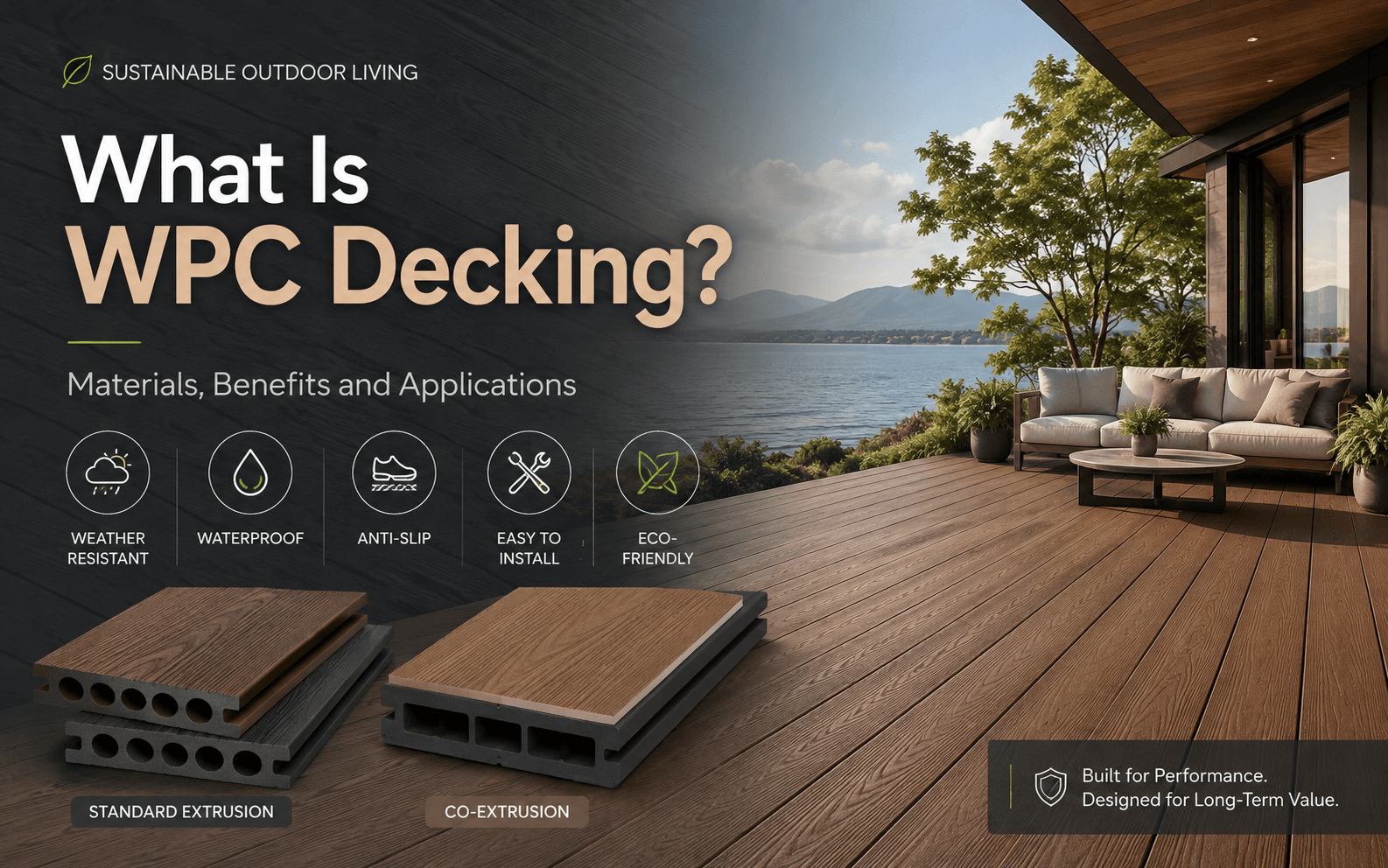
WPC decking has become a popular outdoor flooring solution for gardens, patios, balconies, pool areas and commercial landscaping projects.
Compared with traditional timber, WPC decking offers a more consistent appearance, lower maintenance requirements and a wide range of colors and surface finishes. These advantages make it attractive not only to homeowners, but also to distributors, wholesalers, importers, retailers and project contractors.
This article explains what WPC decking is, how it is made, its main benefits and where it can be used.
What Is WPC Decking?
WPC stands for wood-plastic composite.
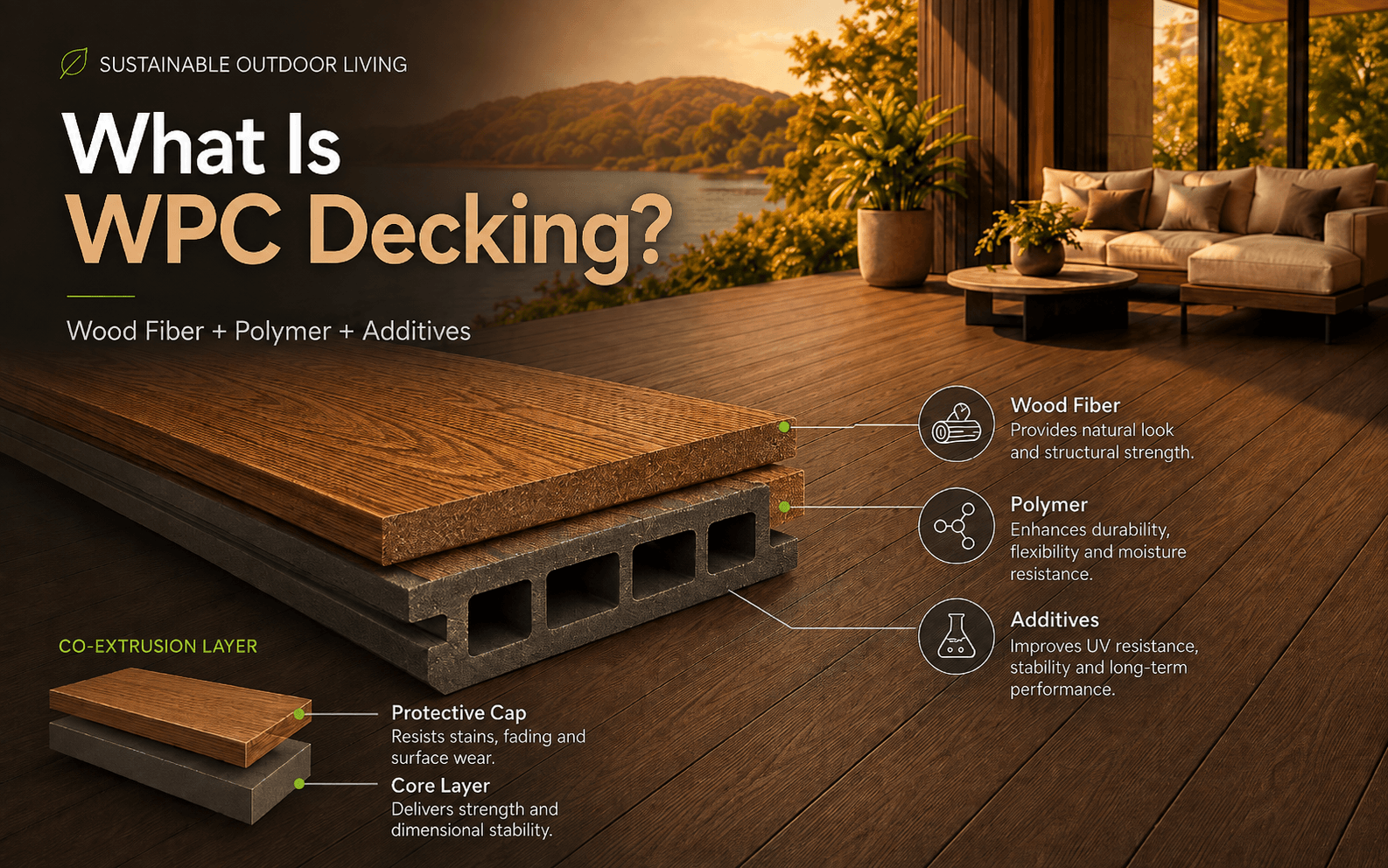
WPC decking is a composite outdoor flooring material generally made from wood-based fibers, thermoplastic polymers and functional additives. These materials are mixed and formed into decking boards through an extrusion process.
The finished product combines the natural appearance of wood with the moisture resistance and manufacturing consistency of plastic-based materials.
Unlike natural timber, WPC decking does not usually require regular painting, staining or oiling. It is designed for outdoor use and can maintain a consistent appearance with relatively simple cleaning.
WPC decking is available in different profiles, including hollow and solid structures, as well as traditional extrusion and co-extrusion products.
Extrusion vs. Co-Extrusion WPC Decking
There are two common types of WPC decking: extrusion decking and co-extrusion decking.
Extrusion Decking
Traditional extrusion decking is produced as one composite structure.
It is usually a cost-effective choice for residential patios, garden decks, walkways and general outdoor flooring applications.
Extrusion decking can be manufactured with different surfaces, including brushed textures, grooves and wood-grain patterns. Your catalog includes light wood grain, dark wood grain and brushed surface options, allowing buyers to build product collections for different markets.
Co-Extrusion Decking
Co-extrusion decking includes a composite core and an additional protective polymer surface layer.
This protective cap helps improve resistance to moisture, fading, stains, scratches and daily wear. It can also create a more realistic wood-grain appearance.
Your co-extrusion decking uses a full-capping structure and offers double-surface and double-color designs. The catalog highlights 360-degree capping, wear resistance, easy cleaning, realistic wood grain and resistance to mildew, scratches, weather and moisture.
For distributors, co-extrusion decking is often suitable for premium product ranges, while traditional extrusion decking can serve more price-sensitive markets.
Main Benefits of WPC Decking
Low Maintenance
Natural timber decking often requires painting, sealing or oiling.
WPC decking generally needs only regular cleaning to remove dust, leaves and outdoor dirt. This can reduce long-term maintenance work for property owners, hotels, contractors and commercial operators.
Weather and Moisture Resistance
WPC decking is designed for outdoor environments and offers good resistance to rain, humidity and changing weather conditions.
Your product range is positioned with benefits such as weather resistance, anti-corrosion, waterproof performance and toughness.
However, correct installation, ventilation and drainage are still important. WPC decking should not be treated as a replacement for a complete waterproofing system.
Anti-Slip Surface Options
Many WPC decking boards feature grooved or brushed surfaces that help improve grip.
This is particularly useful for poolside areas, garden paths and other moisture-prone environments. For example, the JE35-2 profile in our catalog features anti-slip grooves and is recommended for poolside and wet outdoor areas.
Consistent Appearance
Natural wood varies in grain, knots and color.
WPC decking is manufactured under controlled conditions, making it easier to maintain consistent dimensions, colors and surface finishes across larger orders.
This is especially important for importers, retailers and distributors that need stable product collections and repeat-order consistency.
Multiple Colors and Finishes
WPC decking can be produced in a wide range of outdoor colors, including teak, coffee, chocolate, light gray, silver gray, dark coffee and black.
Surface options may include brushed finishes, grooved textures and realistic wood-grain patterns.
Double-sided decking gives buyers additional flexibility. One side may feature a wood-grain finish, while the other side uses a brushed or grooved surface.
Easy Installation
WPC decking is commonly installed on keels or joists using clips, screws and starter fasteners.
The modular board structure can make installation faster and more consistent than many traditional site-built timber systems.
Our catalog provides a complete installation system, including keels, end caps, expansion screws, clips, starter clips and nails.
This makes it easier for distributors and project buyers to purchase a complete decking solution instead of sourcing accessories separately.
Hollow vs. Solid WPC Decking
Hollow decking contains internal chambers, while solid decking has a denser internal structure.
Hollow WPC Decking
Hollow profiles are commonly used because they offer a balance between strength, product weight and cost.
They are suitable for many residential patios, gardens, walkways and light-commercial spaces.
Our catalog includes multiple round-hole and rectangular hollow profiles. Some models are designed to balance strength and light weight, while wider profiles are recommended for larger outdoor surfaces.
Solid WPC Decking
Solid decking is generally heavier and may be selected for applications requiring a more substantial board structure.
However, the right choice should depend on the supporting system, traffic level, installation span and local project requirements rather than weight alone.
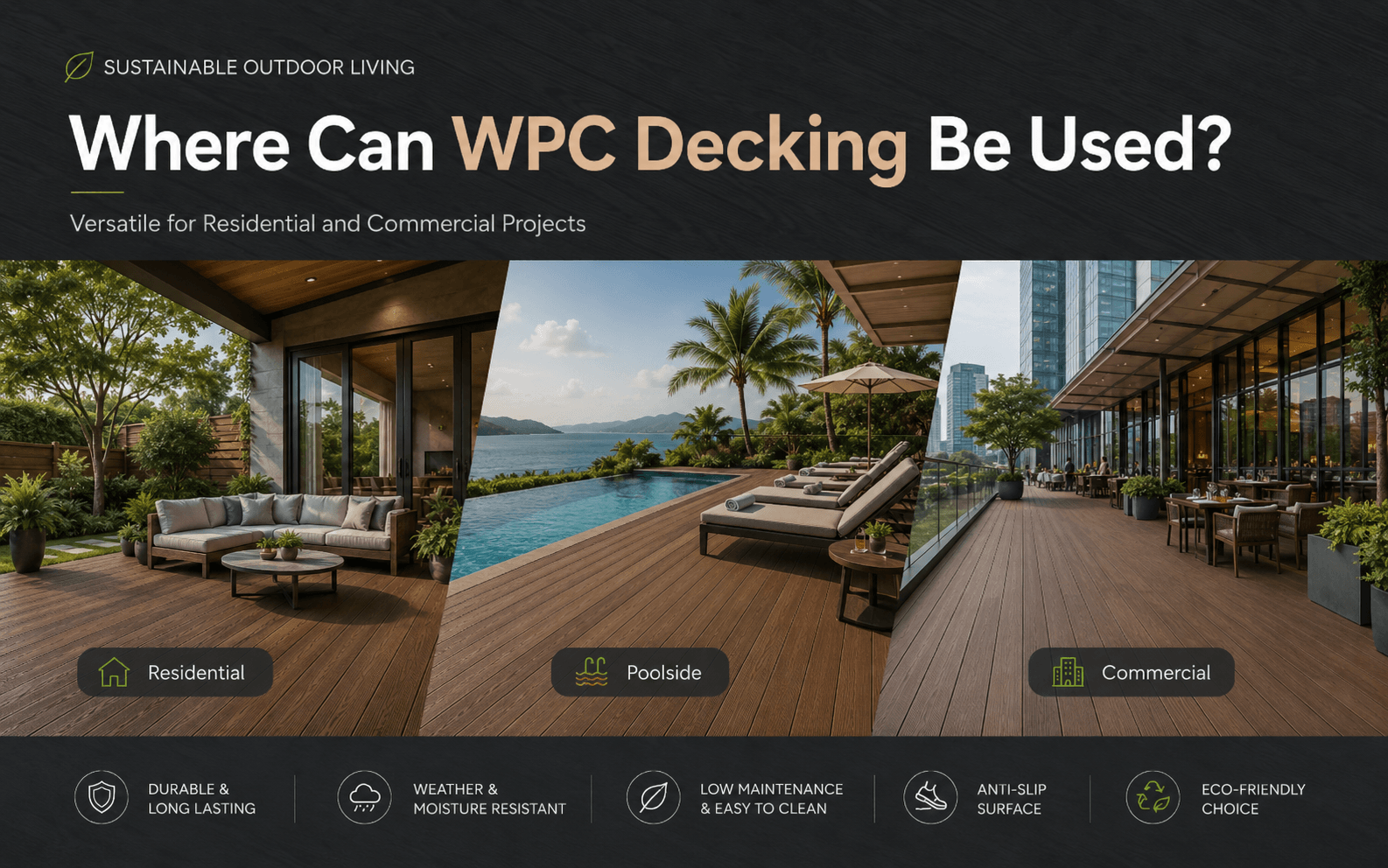
Common Applications of WPC Decking
1. Patios and Gardens
WPC decking is widely used for residential patios, backyard seating areas, garden paths and barbecue spaces.
Its wood-like appearance helps create a warm outdoor environment while reducing routine maintenance.
2. Balconies and Rooftop Terraces
WPC decking can be installed on balconies and rooftop terraces when the supporting structure, drainage and ventilation are properly designed.
Lightweight hollow profiles may be especially useful for projects where product weight and handling efficiency are important.
3. Swimming Pool Areas
Anti-slip surface options and resistance to outdoor moisture make WPC decking suitable for pool surroundings.
Buyers should select the correct texture and confirm local slip-resistance and installation requirements.
4. Hotels and Resorts
Hotels and resorts use WPC decking for outdoor dining spaces, pool areas, walkways, villas and landscaped terraces.
For these projects, consistent color, easy cleaning and repeatable supply are important purchasing factors.
5. Commercial and Landscaping Projects
WPC decking can also be used for restaurants, parks, viewing platforms, pedestrian paths and other outdoor commercial spaces.
Wider or stronger profiles may be selected for larger areas or locations with higher foot traffic. Your JE04-1 model, for example, is described as a wider profile designed for larger outdoor spaces and high-traffic areas.
How Should Professional Buyers Choose WPC Decking?
Distributors, importers and project contractors should evaluate more than product color and unit price.
Important factors include:
- Extrusion or co-extrusion structure
- Board width and thickness
- Hollow-core design
- Weight per meter
- Surface texture
- Color consistency
- Recommended joist spacing
- Matching accessories
- Packaging and container loading
- Testing and compliance documents
- OEM and private-label options
Physical samples should be reviewed before placing a large order. Buyers should check the board surface, edges, wood-grain pattern, color difference and overall structural consistency.
Conclusion
WPC decking is a practical outdoor flooring material that combines wood-based fibers with thermoplastic materials.
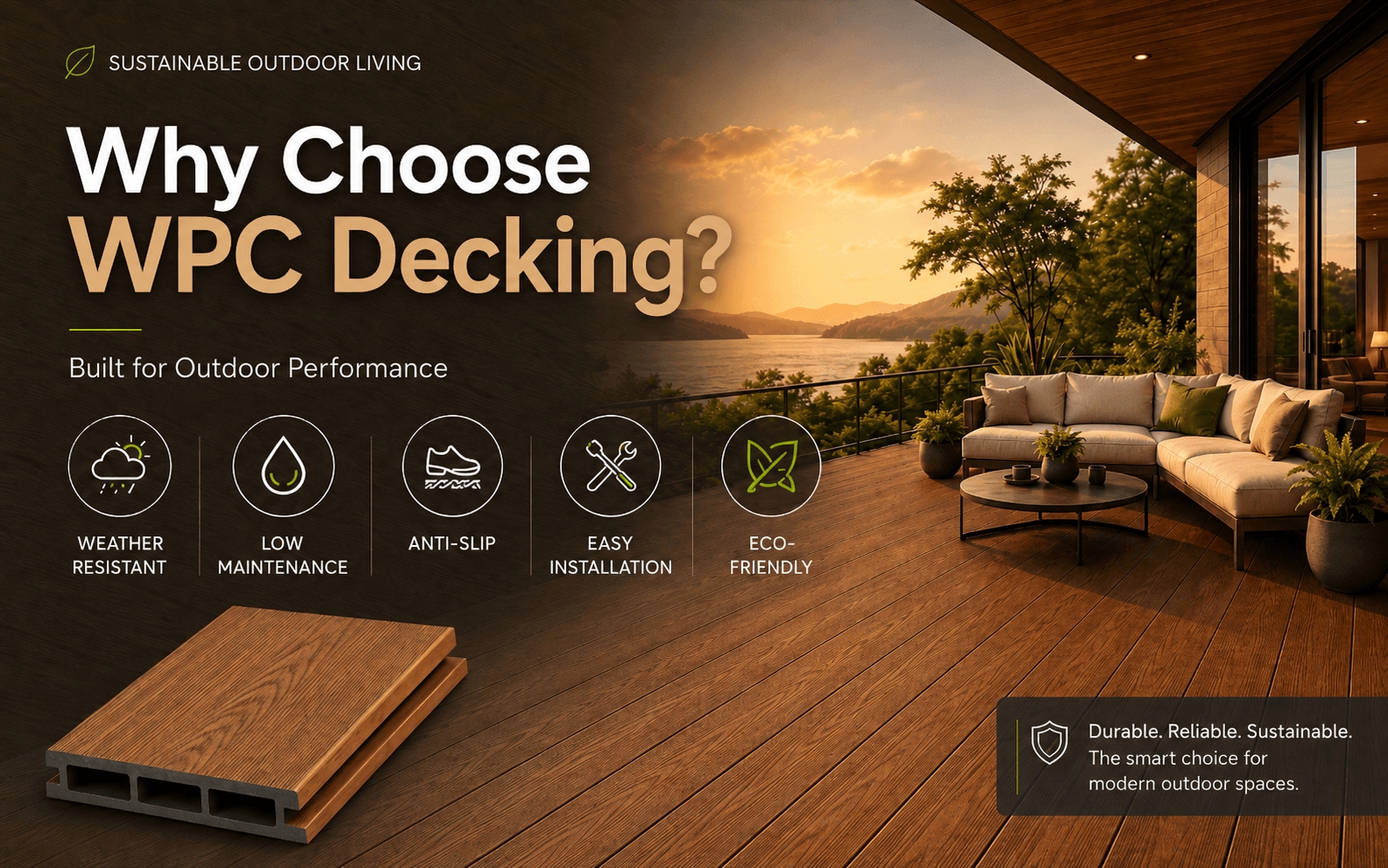
Its main advantages include low maintenance, weather resistance, multiple colors, anti-slip surface options, consistent production and easy installation.
It can be used for patios, gardens, balconies, pool areas, hotels, commercial terraces and landscaping projects.
For distributors, wholesalers, importers and contractors, choosing a reliable WPC decking manufacturer is essential. The supplier should provide stable product quality, different profile options, matching accessories, installation support and reliable container-order supply.
Looking for a WPC Decking Supplier?
INTCO Decor provides extrusion and co-extrusion WPC decking for distributors, wholesalers, importers, retailers and project contractors.
Our product range includes multiple profiles, wood-grain finishes, double-sided designs, matching accessories and complete installation solutions.