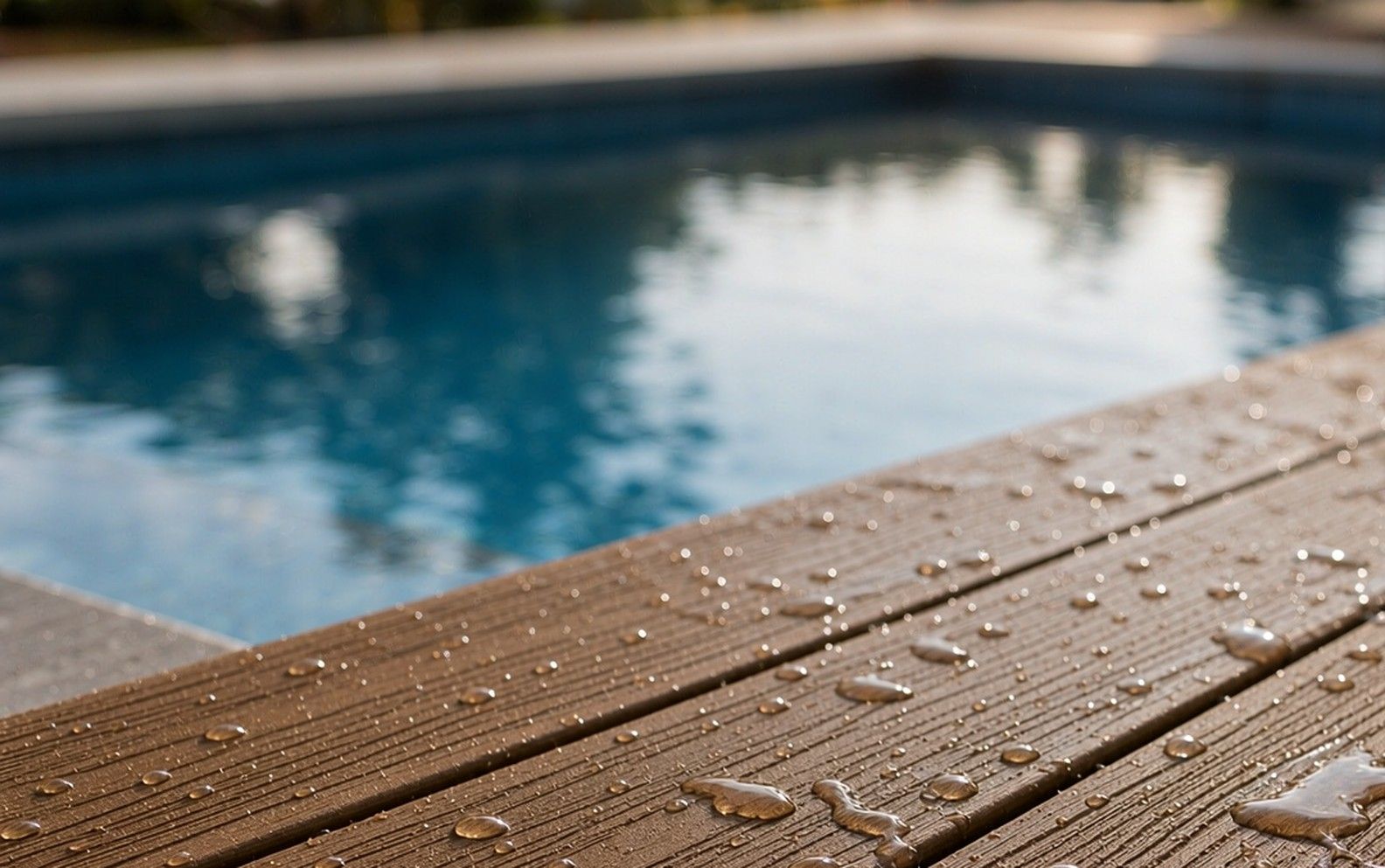
Is WPC Waterproof? The Honest Guide to Water Resistance in Composite Outdoor Materials
28th September, 2026Is WPC Waterproof? The Honest Guide to Water Resistance in Composite Outdoor Materials
It is the first question every buyer asks about wood-plastic composite: is WPC waterproof? The honest answer is more useful than a simple yes — quality WPC is waterproof at the material level in ways wood can never match, but "waterproof" also gets used loosely in this industry, and cheap composite boards fail in ways that surprise buyers. This guide explains exactly how water interacts with WPC, what the test numbers mean, and how to tell genuinely waterproof boards from marketing claims.
The Short Answer: Material-Level Waterproof, System-Level Design
Quality WPC does not absorb water. The polyethylene matrix in a well-formulated board surrounds every wood fiber in a polymer shield, so rain, pool splash, and humidity stay on the surface. That is why composite decking and cladding do not swell, warp, or rot the way unprotected wood does.
But a deck or facade is more than boards. Water interacts with the whole system — gaps, fasteners, substructure, and ventilation. So the complete answer every buyer should hold onto is:
- The board itself: waterproof. No sealing, no staining, no rot.
- The system around it: needs correct installation — drainage gaps, compatible fasteners, airflow behind cladding.
Boards that soak up water are a different material class: cheap, filler-heavy composites trade polymer content for cost, and the result is a porous surface that stains, grows mildew, and swells at the edges. The difference is invisible in a product photo and very visible after one winter.
What Happens to Water on a WPC Surface
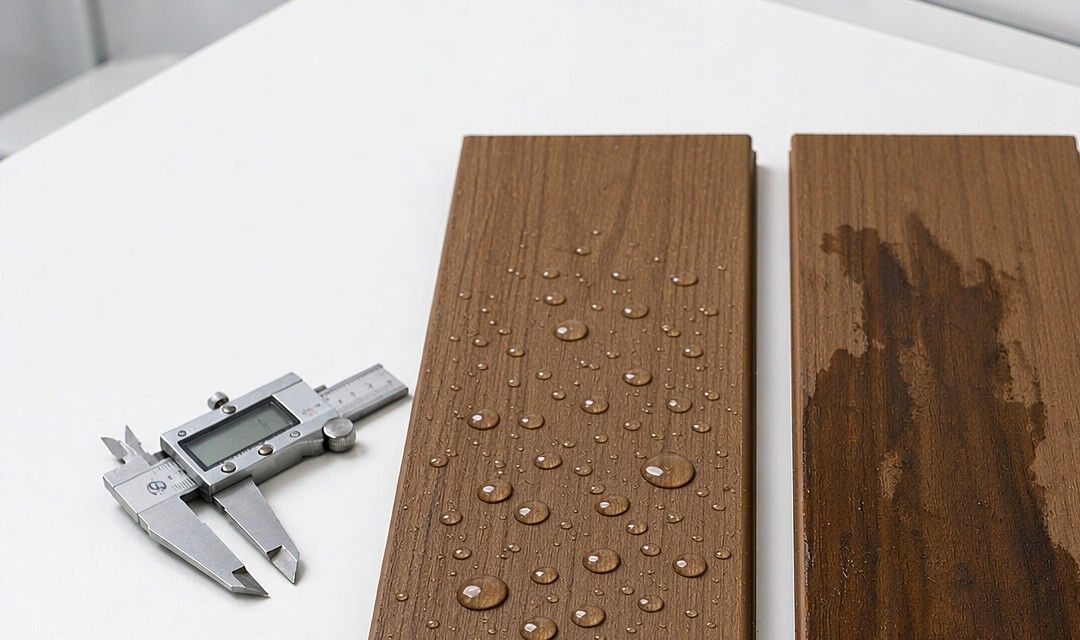
On a dense, well-extruded board, water behaves in three predictable ways:
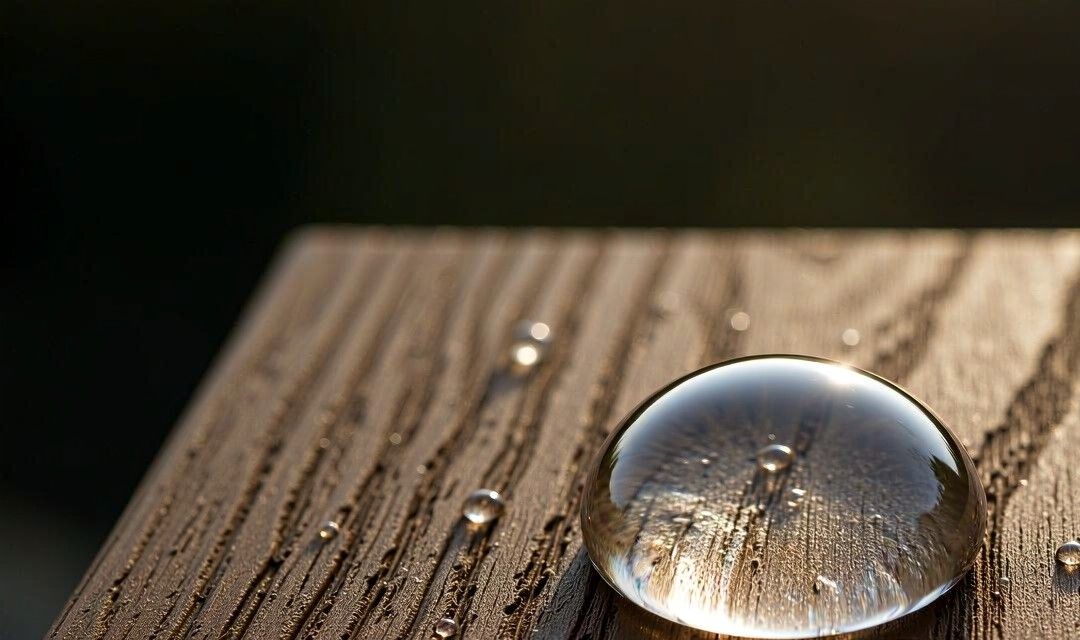
- Beading and runoff: droplets sit on the surface and drain away, carrying dust with them — which is why a rainstorm partially cleans a composite deck.
- No dimensional change: boards keep their length, width, and profile through wet-dry cycles. No swelling pressure on fasteners, no gaps that open and close with the seasons.
- No biological foothold: mold and rot need moisture inside the material to establish. A board that does not absorb water gives decay nothing to feed on.
Compare this to treated lumber, which repels water only as long as its chemical treatment and sealer last — typically a few seasons before absorption begins at cut ends, screw holes, and ground-contact points.
The Freeze-Thaw Test That Separates Materials
The harshest real-world water test is not rain — it is freezing. Water that has penetrated a material expands roughly nine percent when it freezes, and that force is what cracks concrete, splits wood, and destroys cheap composites.
Quality WPC passes this cycle by design:
- No internal water means no internal ice — nothing to expand.
- The polymer-wood bond stays stable across temperature swings, so profiles keep their shape through winters that crack porous materials.
This is why composite decking and cladding hold up in climates with hard freezes, and why the failure pattern for filler-heavy boards usually appears after the first winter: micro-cracks at the surface let water in, and each freeze-thaw cycle widens them.
Where "Waterproof" Needs Nuance: The Three Honest Caveats
A trustworthy guide has to include what marketing pages skip:
- Waterproof board ≠ waterproof deck. Standing water on any flat surface eventually works into gaps and fastener holes. Good installation — proper slope on decking, drainage detailing on cladding — is part of water management regardless of material.
- Stain resistance and water resistance are different properties. Wine, BBQ grease, and sunscreen interact with the surface chemistry, not the water absorption. Co-extruded (capped) boards add a stain shield on top of the waterproof core.
- Substructure and fasteners corrode before boards do. In pool and coastal environments, specify stainless steel (A4/316) hardware and aluminum or composite joists. The board outliving its screws is a real and avoidable failure mode.
Pool Decks, Coastal Sites, and Humid Climates: Where WPC Earns Its Reputation
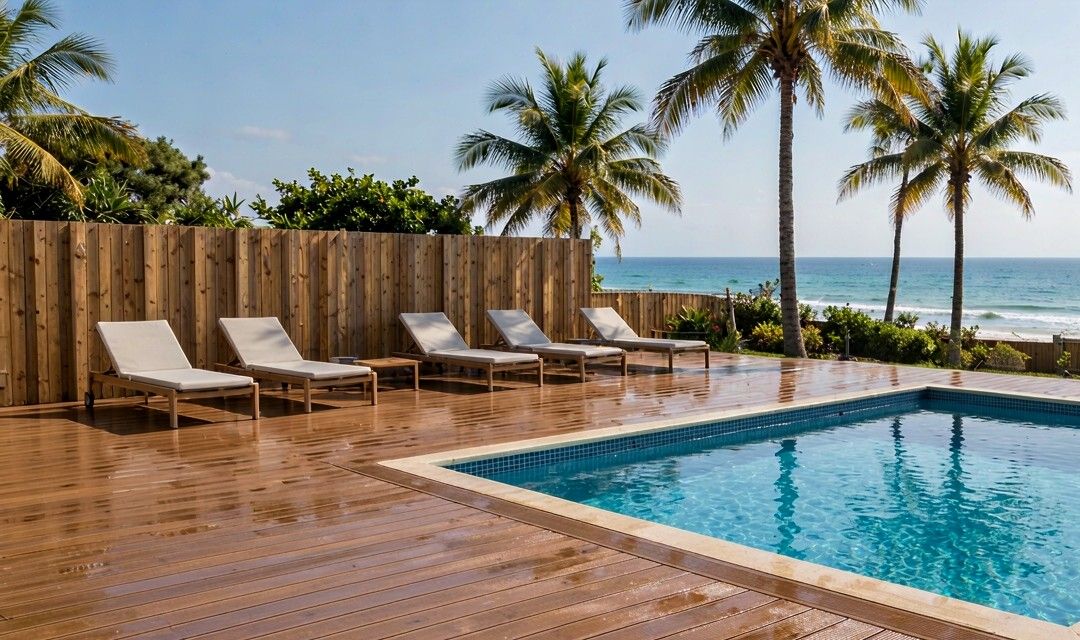
Chlorinated water, salt spray, and permanent humidity are the three environments where water-related failures are most common — and where composite materials have taken the most share from wood and uncapped alternatives.
- Pool surrounds: bare feet, chlorine splash, and constant wetting. Wood demands ongoing sealing; quality WPC shrugs it off with soap-and-water cleaning.
- Coastal projects: salt air attacks fasteners and dries out timber. Composite boards paired with stainless hardware handle marine exposure without a maintenance program.
- Humid tropics: mold pressure is relentless on any porous surface. Dense, non-absorbing boards remove the moisture source mold needs.
The pattern across all three: the projects that fail are rarely board failures — they are system failures from mismatched hardware or missing ventilation.
How to Verify Waterproof Claims Before Buying
Ask any supplier — including us — for evidence rather than adjectives. Four checks that matter:
- Water absorption figures from testing: dense quality boards sit well under one percent. Filler-heavy boards measure several times higher.
- Material composition disclosure: polymer grade and wood fiber ratio, documented, not described.
- Freeze-thaw cycling test results where the regional climate warrants them.
- Reference installations in climates similar to yours, visited or photographed over multiple seasons.
Manufacturers who run their own extrusion lines can produce all four without hesitation, because the numbers come from their own production. That transparency is itself a quality signal.
What About WPC vs Other "Waterproof" Options?
A quick positioning against the alternatives buyers usually compare:
- PVC boards: fully synthetic, waterproof, but lack wood fiber's texture, warmth, and dimensional stability under heat. Also a different sustainability profile.
- Capped composite (co-extruded WPC): waterproof core plus a polymer shield for stain and UV — the premium tier of WPC, standard spec for wet and high-traffic zones.
- Treated wood: water resistant only as long as treatments and sealers last; the only option on this list with a recurring maintenance cost.
- Concrete and stone: waterproof but heavy, cracking under freeze-thaw, and limited in warmth and design flexibility.
Frequently Asked Questions
Is WPC decking really waterproof?
Quality WPC boards do not absorb water — the polyethylene matrix seals each wood fiber. No swelling, warping, or rot. Cheap filler-heavy composites are the exception: they absorb moisture and fail visibly.
Can WPC be used around pools?
Yes — composite decking is a standard pool surround surface. Pair it with stainless (A4/316) fasteners and adequate drainage for a complete system.
Does WPC get moldy?
Mold needs internal moisture. Non-absorbing boards give it no foothold; surface dirt washes off with soap and water.
How do I know a board is truly waterproof?
Ask for water absorption test data (under one percent for quality boards), composition disclosure, and reference projects in your climate.
Is capped WPC more waterproof than uncapped?
The core of both is waterproof; the capped layer adds stain and UV protection on top. For poolside and food-and-drink zones, capping is the recommended tier.
The Bottom Line
Is WPC waterproof? In the way that matters — boards that never swell, rot, or feed mold — yes, and it is a structural property of the material, not a coating that wears out. Buy on evidence: absorption data, composition disclosure, and multi-season references. Install as a system: drainage, airflow, and the right hardware. Do those three things and water stops being a maintenance problem and becomes what it should be — something the deck simply sheds.
As an experienced WPC outdoor product manufacturer, NatureTough supplies waterproof composite decking, cladding, and fencing with documented test data for projects worldwide.