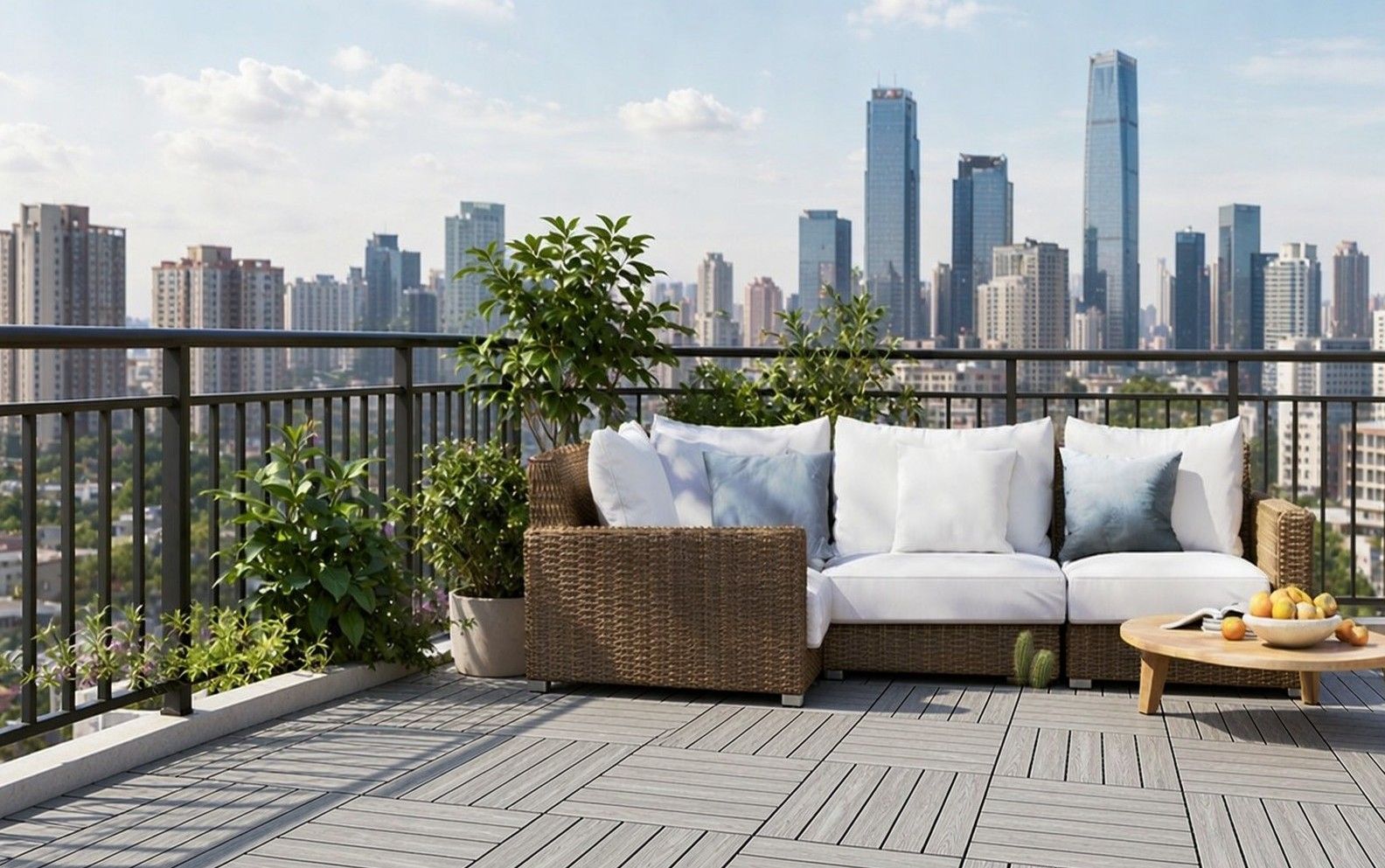
Interlocking Deck Tiles Supplier: Bulk Specs, Pricing Tiers, and Container Loading
26th November, 2026Interlocking Deck Tiles Supplier: Bulk Specs, Pricing Tiers, and Container Loading
Buying interlocking deck tiles by the pallet is a different decision from buying them by the box. Retail buyers care about shelf appeal and impulse price points; a bulk buyer is betting a full container on three things: that the tiles from batch one interlock perfectly with the tiles from batch three, that the price per square meter holds up against the specification, and that the container actually fits as many sellable units as the quote promised.
This guide is written for the bulk side of that decision — distributors, builders, property managers, and importers who order deck tiles by the container and need the specs, the pricing structure, and the loading math to line up before they sign.
Why Bulk Buying Changes the Specification
A retail box only has to survive the trip from shelf to balcony. A container-load of deck tiles has to survive:
- Compression — pallets stacked in a 40-foot container for weeks, tiles at the bottom carrying the weight of everything above
- Humidity swings — a container crossing the equator cycles through heat and condensation that can warp or swell poorly formulated composite
- Cross-batch assembly — your end customer lays tiles from one carton next to tiles from another, weeks apart, and expects a seamless checkerboard
That is why the bulk specification is not the retail specification with a bigger number. It is a different set of tolerances, and a different set of questions.
Bulk Specs: The Numbers Behind a Tile
Before you compare interlocking deck tiles suppliers, get every one of these on paper. A quote that does not state them is a price, not a specification.
The Core Spec Table
| Spec | Why It Matters for Bulk | What to Ask the Supplier |
|---|---|---|
| Tile dimensions | Determines coverage math and loading efficiency | Exact size in mm (e.g., 300×300) and the tolerance on it |
| Total tile thickness | Affects weight, feel, and carton stacking | Stated thickness with tolerance |
| Surface / wear layer | The part customers see and walk on | Wear-layer formulation and thickness |
| Core material | Drives weight, cost, and long-term stability | WPC composite core specification |
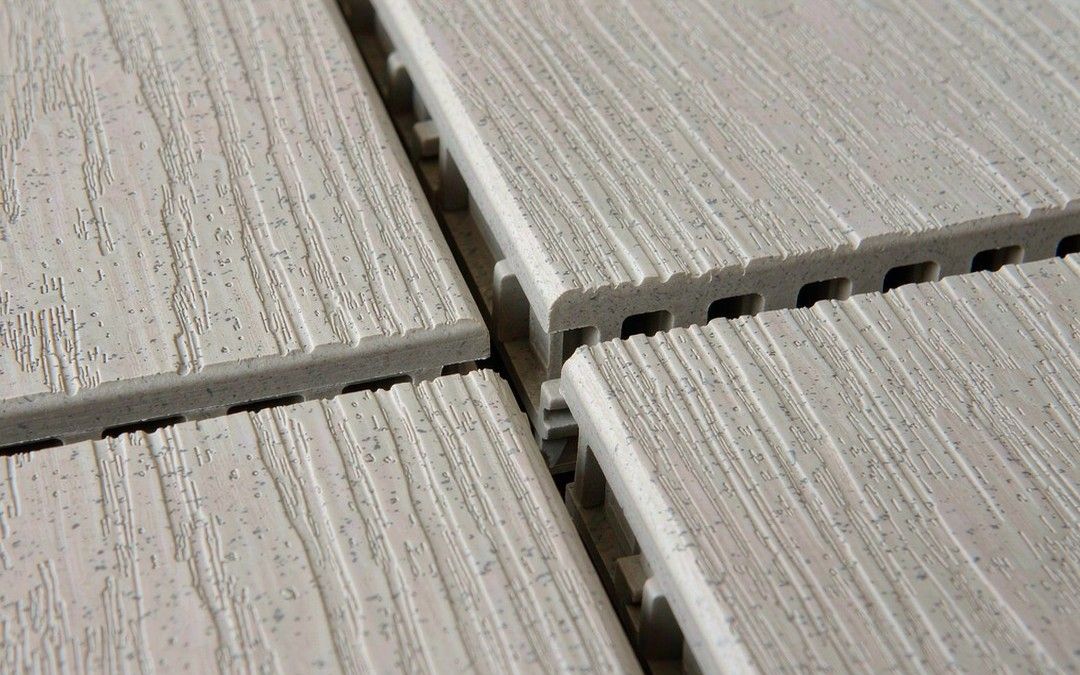
| Base / support grid | The drainage-and-interlock backbone under the tile | Grid material (e.g., PP) and its design for drainage |
| Weight per tile | Feeds the container-loading math below | Grams per tile, not "lightweight" |
| Anti-slip surface | Balconies and pool surrounds stay wet | Wet-condition slip test reference (e.g., PTV or equivalent) |
| UV / fade resistance | A checkerboard shows fade instantly | UV test method and rating |
The pattern matters more than any single number: a serious bulk supplier hands you a data sheet, not a brochure.
Batch Consistency Is the Real Spec
The most expensive defect in deck tiles is invisible until two cartons meet: a half-millimeter difference in interlock height or a shifted connector position, and the "click-together" promise turns into visible gaps. For a bulk order, demand:
- Cross-batch interlock testing — samples from different production runs that you can connect yourself
- A stated interlock tolerance — not "we control it," a number
- Single-run production for a full order — one continuous run, not tiles assembled from leftover batches
- Written color-matching commitment across reorders, ideally covering your reorder window
Pricing Tiers: How a Tile Quote Is Actually Built
Deck tile pricing is not one number per square meter. It is a ladder, and knowing the rungs is how you negotiate without giving away margin.
The Rungs That Move the Price
- Dimensions and thickness — the base rung; larger or thicker tiles carry more material cost
- Surface formulation — a richer wear layer and stronger UV package cost more and last longer
- Base grid type — a denser, higher-load grid raises cost but also raises the weight rating
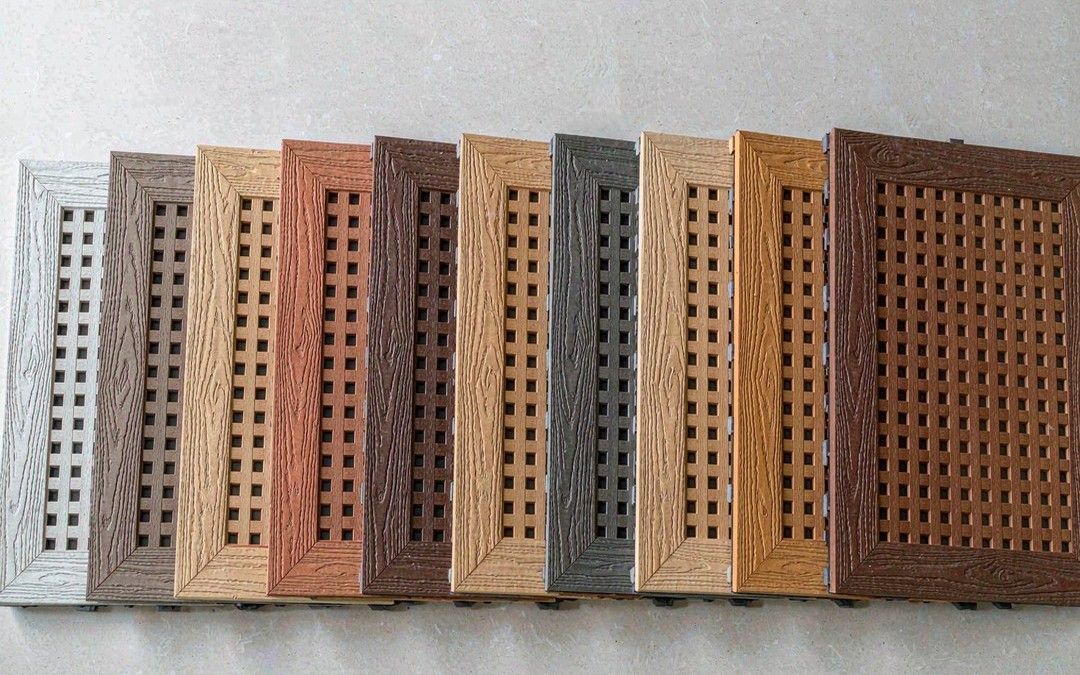
- Color — standard colors are one tier; custom or less-common colors often carry a premium and a higher MOQ
- Order volume — the classic step-down: price breaks at defined quantity thresholds
- Packaging — plain export cartons cost less than retail-ready, branded, or display packaging
How to Read a Quote
Ask the supplier to break the quote into layers instead of one blended price:
| Layer | What You Should See |
|---|---|
| Base price | Per square meter at a stated dimension and thickness |
| Color tier | Standard vs. custom color pricing |
| Volume breaks | The quantity at which the price steps down, clearly marked |
| Packaging tier | Export vs. retail vs. branded packaging cost |
| Freight-adjacent costs | Whether inland, loading, and documentation are included or separate |
A supplier who shows you the ladder is giving you room to optimize — for example, moving to standard colors or export packaging to hit a lower tier. A supplier who only gives one number has already decided where the margin goes.
Container Loading: Get the Math Right Before You Order
This is where bulk orders quietly lose money. Two suppliers can quote the same price per square meter and deliver very different value per container, because the loading math decides how many sellable units actually arrive.
The Loading Calculation
Work it in this order:
- Tiles per carton — confirm the count and the carton dimensions
- Cartons per pallet — confirm the stacking pattern and pallet height
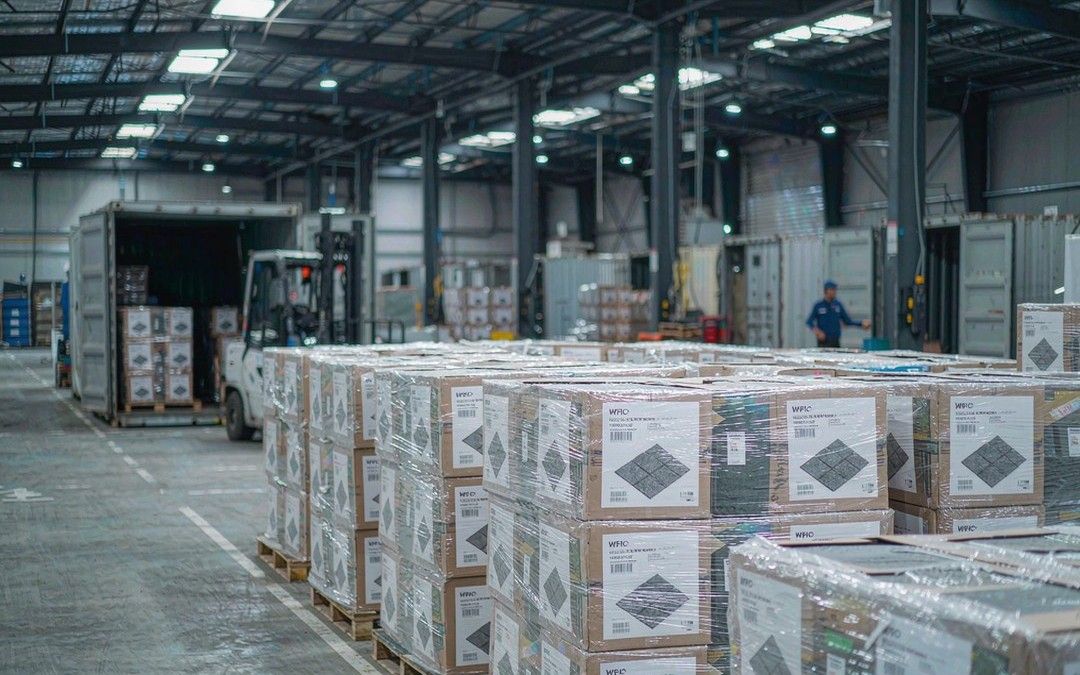
- Pallets per container — 20-foot vs. 40-foot vs. 40-foot high-cube, accounting for pallet height and any hand-stacking allowance
- Sellable square meters per container — the number that actually matters for your landed cost
The Checks
- Pallet height — a supplier that stacks higher fits more per container, but only if the bottom cartons survive compression. Confirm the tested stacking limit.
- Mixed loading — if you are combining deck tiles with fencing, decking boards, or garden beds in one container, get the mixed-loading plan in writing.
- Dunnage and protection — moisture barriers, corner protection, and strapping that keep the load stable across the ocean leg.
A container-loading plan with a packing list is the difference between a supplier who ships products and one who ships profitably.
Supplier Checks Before You Commit to a Container
Run this sequence on any interlocking deck tiles supplier before the order:
- Request cross-batch samples — connect tiles from at least two production runs yourself
- Get the full spec sheet — dimensions, tolerance, weight, base grid, slip and UV references
- Ask for the price ladder — base, color tier, volume breaks, packaging tier
- Demand the loading plan — cartons, pallets, container count, sellable square meters
- Verify certifications — any line-specific certifications and test reports that name the tile line, not the company
- Confirm reorder continuity — color and interlock matching commitments across your reorder window
- Check the accessory range — edge pieces, corner tiles, and reducers that finish the system, not improvised cut edges
MOQ and Mixed-Container Terms
Deck tiles are rarely a solo import. Most bulk buyers run them alongside other outdoor lines, so the terms around minimums matter as much as the tile itself:
- Per-color MOQ — a pilot program should let you test a few colors, not force you into full-SKU depth
- Mixed-container rights — the ability to combine tiles with decking, fencing, and garden beds in one load
- Lead-time table — standard colors versus custom runs, stated separately
These terms are where a vertically integrated manufacturer separates from a trading company that is assembling a catalog from other factories.
FAQ
Q1: What is the standard size for interlocking deck tiles?
300×300 mm is the most common module, but sizes vary by manufacturer and market. Confirm the exact dimensions and tolerance with your supplier — the dimension feeds both your coverage math and your container-loading calculation.
Q2: What should I check about interlocking deck tiles before a bulk order?
Cross-batch interlock consistency, full spec sheet (dimensions, tolerance, weight, base grid, slip and UV references), a clear pricing ladder, and a container-loading plan that states sellable square meters per container.
Q3: How many deck tiles fit in a container?
It depends entirely on carton dimensions, pallet stacking, and container type. Do not accept a one-line answer — ask the supplier for the carton count, pallet pattern, and pallets-per-container calculation in writing.
Q4: What drives the price of composite deck tiles?
Dimensions and thickness, surface and UV formulation, base grid density, color tier (standard vs. custom), order volume, and packaging level. A transparent supplier breaks these into a pricing ladder rather than one blended number.
Q5: What is the MOQ for deck tiles from a factory?
MOQs are usually set per color, and mixed-container programs let you combine deck tiles with other outdoor lines at moderate minimums. Confirm the per-color MOQ and mixed-container terms before finalizing a program.
Q6: Can I combine deck tiles with other products in one container?
Yes, with a supplier that offers mixed-container loading. Get the mixed-loading plan and packing list in writing so the combination ships safely and profitably.
The Bottom Line
Deck tiles look like the simplest product in an outdoor catalog and behave like one of the most demanding at container scale: small formats expose every tolerance, and the loading math decides your real landed cost. Choose a supplier who hands you a spec sheet, a pricing ladder, and a loading plan — not a brochure and a single number.
As an experienced WPC outdoor product manufacturer, NatureTough manufactures interlocking deck tiles with cross-batch interlock control, a complete accessory range, and mixed-container export programs — explore the deck tiles range, or see our retail buyer's guide to deck tiles for the stocking-side view.