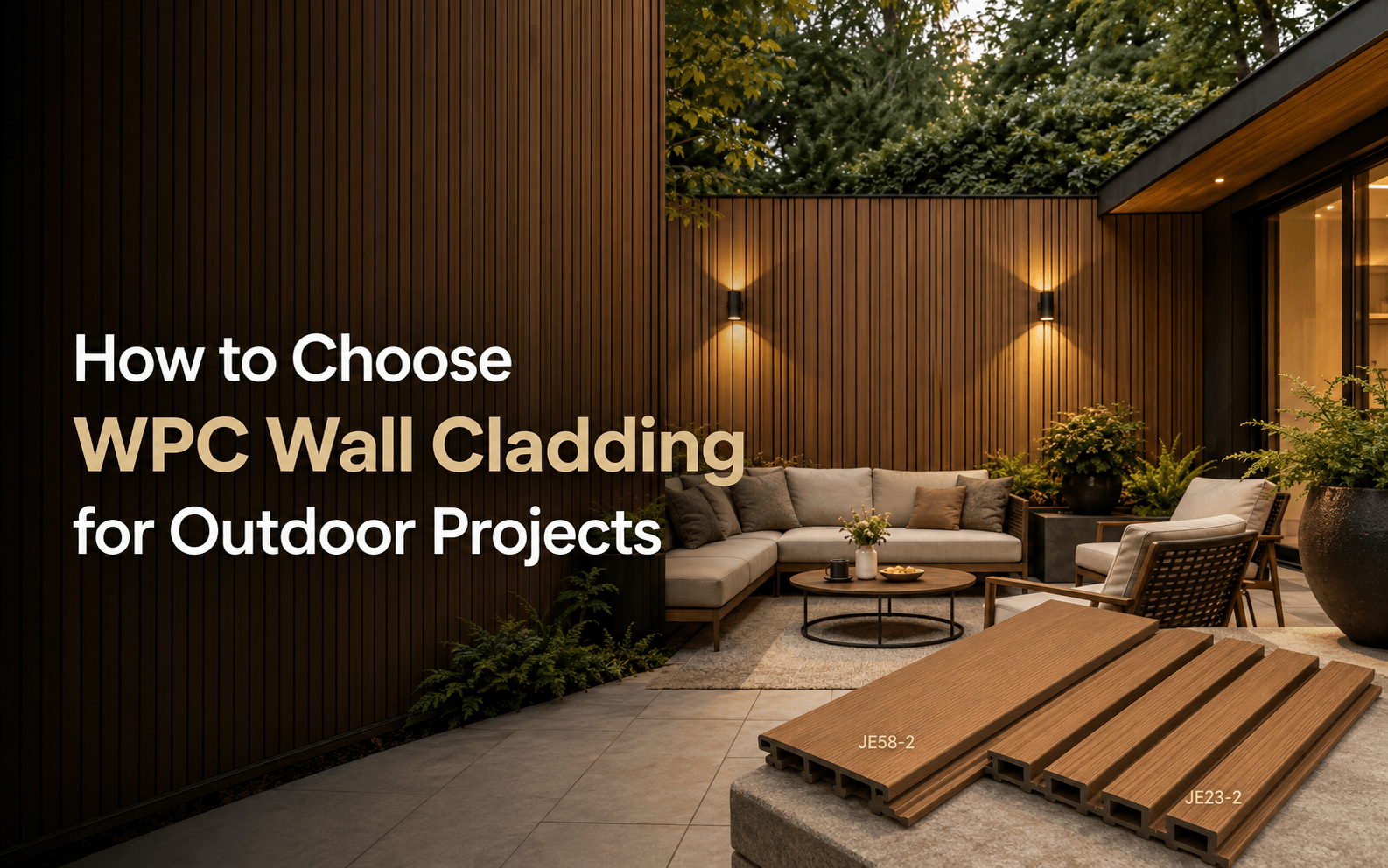
How to Choose WPC Wall Cladding for Outdoor Projects
27th August, 2026WPC wall cladding is widely used for exterior walls, garden structures, residential facades, hotel terraces, commercial buildings, and landscape projects.
It offers the natural appearance of wood with lower routine maintenance than traditional timber. However, not all WPC cladding products have the same structure, performance, or installation requirements.
For distributors, contractors, importers, and project buyers, choosing the right WPC wall cladding requires more than selecting a color. Product profile, outdoor performance, installation system, test reports, and supplier capability should all be considered.
What Is WPC Wall Cladding?
WPC stands for wood plastic composite. WPC wall cladding is generally manufactured from wood fibers, polymers, pigments, and performance additives.
It is designed to provide a wood-look decorative surface while improving resistance to common outdoor conditions such as moisture, insects, and changing temperatures.
Common applications include:
- Residential exterior walls
- Garden and patio walls
- Balcony and terrace areas
- Privacy walls
- Hotel and resort projects
- Retail and restaurant exteriors
- Commercial landscape structures
The correct product should be selected according to the climate, building structure, installation area, and local regulations.
1. Choose the Right Cladding Profile
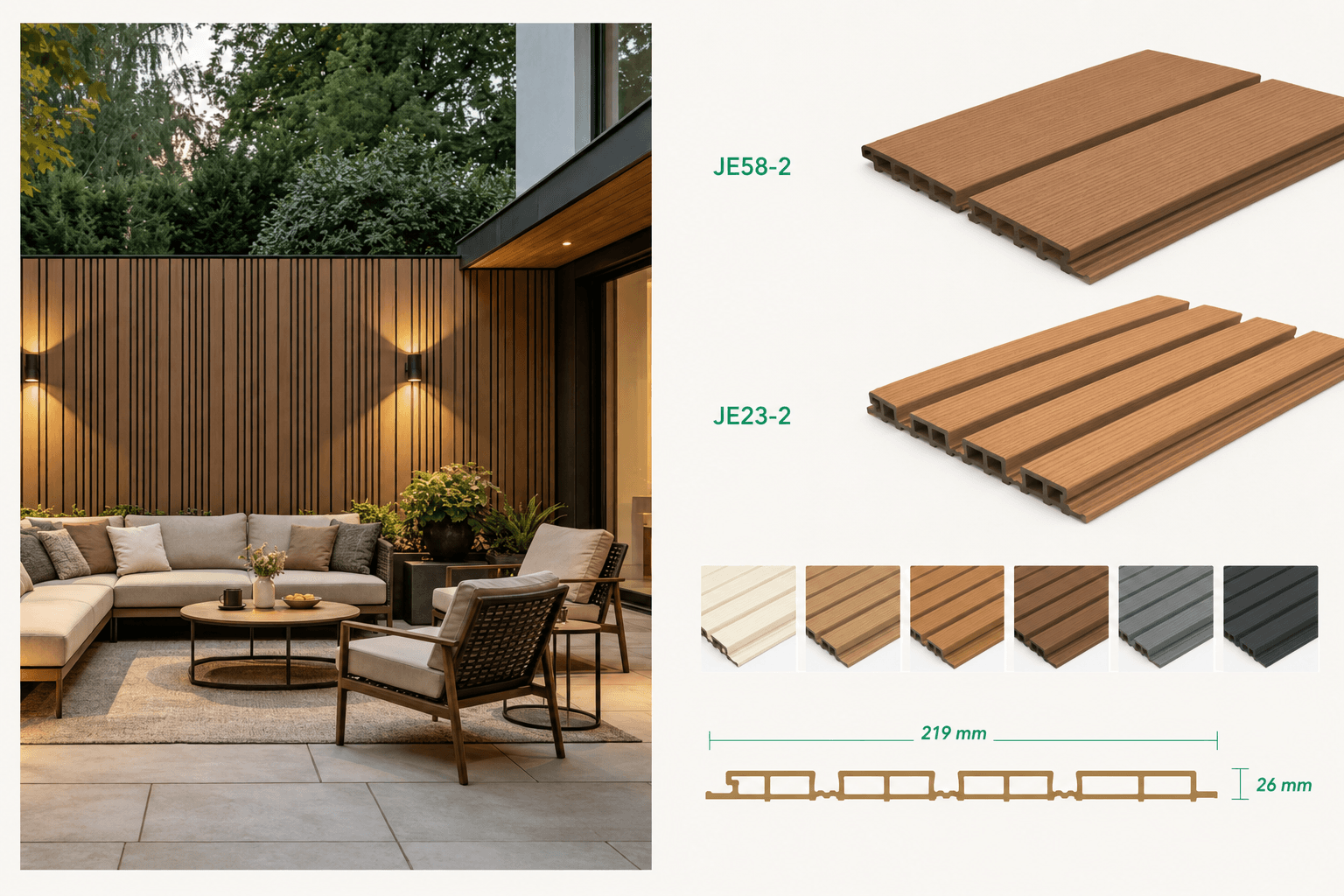
The panel profile affects appearance, installation, drainage, and material use.
Popular WPC wall cladding profiles include:
- Slatted wall panels
- Fluted cladding
- Flat wall boards
- Shiplap profiles
- Co-extruded cladding
- Decorative wood-grain panels
Slatted and fluted profiles create stronger shadows and a more architectural appearance. Flat profiles provide a simpler exterior surface, while co-extruded products include an additional protective layer for improved stain and weather resistance.
Before ordering, confirm the panel dimensions, effective coverage width, weight, joint design, and required accessories.
2. Evaluate Outdoor Performance
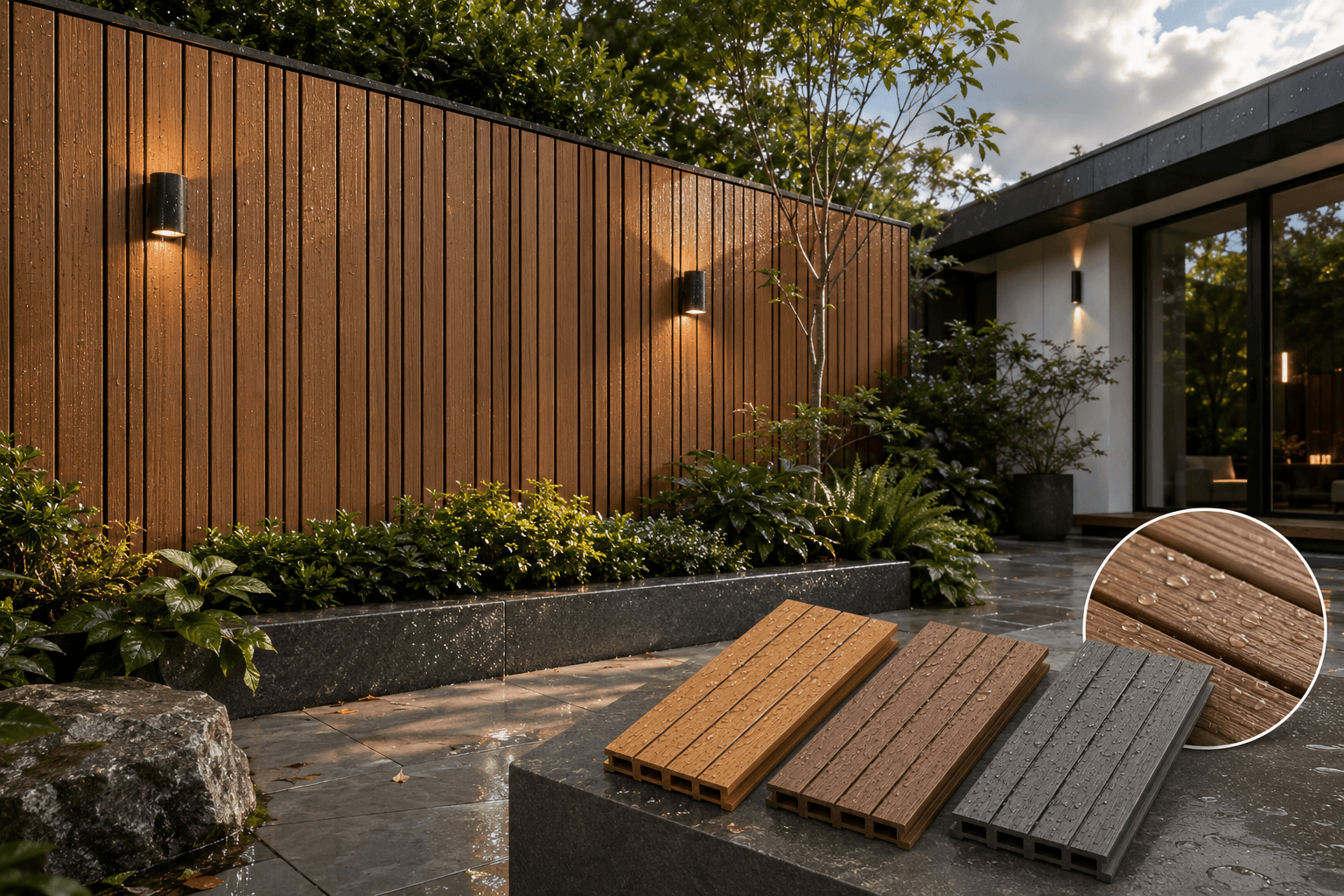
Exterior wall cladding is exposed to sunlight, rain, humidity, and temperature changes. Buyers should review relevant performance information instead of relying only on general claims such as “waterproof” or “weather-resistant.”
Important factors include:
- UV and color-fade resistance
- Water absorption
- Thermal expansion
- Impact resistance
- Surface durability
- Fire classification
- Resistance to mold and insects
Performance requirements vary by application. A shaded garden wall and a commercial facade in a hot coastal region may require different specifications.
Ask the supplier for available test reports and confirm whether the results apply to the exact product being purchased.
3. Compare Surface Finishes and Colors
WPC wall cladding is available in natural wood tones, modern greys, charcoal finishes, and customized colors.
Common options include:
- Oak
- Teak
- Walnut
- Cedar
- Light grey
- Charcoal
Color should be evaluated with physical samples whenever possible. Computer screens and product photos may not accurately show the grain, gloss level, texture, or appearance under natural light.
For large projects, buyers should also confirm color consistency between production batches and keep extra panels for future replacement.
4. Consider Maintenance Requirements
WPC wall cladding generally requires less maintenance than painted or stained timber. Most products do not need regular sanding, sealing, or repainting.
Routine maintenance usually includes:
- Removing surface dust and leaves
- Washing with clean water
- Using mild soap for visible dirt
- Keeping drainage areas clear
- Checking fasteners and trims
Avoid strong chemicals, metal brushes, and abrasive cleaning tools unless approved by the manufacturer.
Maintenance requirements may differ between uncapped and co-extruded WPC cladding, so buyers should follow the product-specific care instructions.
5. Review the Complete Product System
Buying wall panels without the correct trims and accessories can create installation delays and inconsistent results.
Before confirming an order, check whether the supplier provides:
- Matching corner trims
- Starter and finishing profiles
- Clips and fasteners
- Supporting battens
- Installation drawings
- Packaging suitable for export
- Replacement panels and accessories
A complete system is particularly important for distributors and project contractors because it simplifies installation, inventory planning, and after-sales support.
6. Assess the WPC Wall Cladding Supplier
For wholesale and project purchasing, supplier capability is as important as product appearance.
Consider asking:
- What is the production capacity?
- Which test reports are available?
- Can the supplier maintain color consistency?
- Are samples available before bulk ordering?
- Are OEM colors, lengths, profiles, and packaging supported?
- What is the minimum order quantity?
- Are matching accessories included?
- What quality-control procedures are used?
- Can the supplier provide installation support?
- What does the warranty cover?
Importers should also confirm lead time, loading quantity, packaging method, export experience, and product documentation before placing an order.
What to Look for in Outdoor Wall Panels
For more information about profiles, outdoor performance, installation systems, and supplier selection, read our guide on how to choose WPC wall cladding .
Final Thoughts
Choosing WPC wall cladding requires a balance of appearance, outdoor performance, installation compatibility, and reliable supply.
Start by identifying the project environment and required panel profile. Then compare technical data, installation systems, colors, accessories, test reports, and warranty terms.
For distributors, wholesalers, contractors, and commercial projects, working with a manufacturer that offers stable production, customization, technical support, and complete accessories can reduce purchasing and installation risks.
NatureTough supplies WPC wall cladding for residential, landscaping, wholesale, and commercial projects. Contact us to request product specifications, color samples, installation information, OEM options, and bulk pricing.
Frequently Asked Questions
Is WPC wall cladding suitable for exterior walls?
Yes. WPC wall cladding is designed for outdoor applications, but the selected product and installation system must match the climate and project requirements.
Does WPC wall cladding require painting?
Most WPC wall cladding does not require regular painting, staining, or sealing. Basic cleaning is usually sufficient.
What is the difference between standard and co-extruded WPC cladding?
Co-extruded WPC cladding has an additional protective surface layer that can improve resistance to stains, moisture, fading, and daily wear.
Can WPC wall cladding be customized?
Many manufacturers support customized colors, profiles, lengths, labels, and packaging for qualifying bulk orders.
What information should I request before ordering?
Request product specifications, physical samples, test reports, installation instructions, accessory details, MOQ, lead time, warranty terms, and packaging information.