How to Become a Composite Decking Distributor: Factory-Direct Sourcing, Wholesale Margins, and OEM Programs Explained
21st September, 2026How to Become a Composite Decking Distributor: Factory-Direct Sourcing, Wholesale Margins, and OEM Programs Explained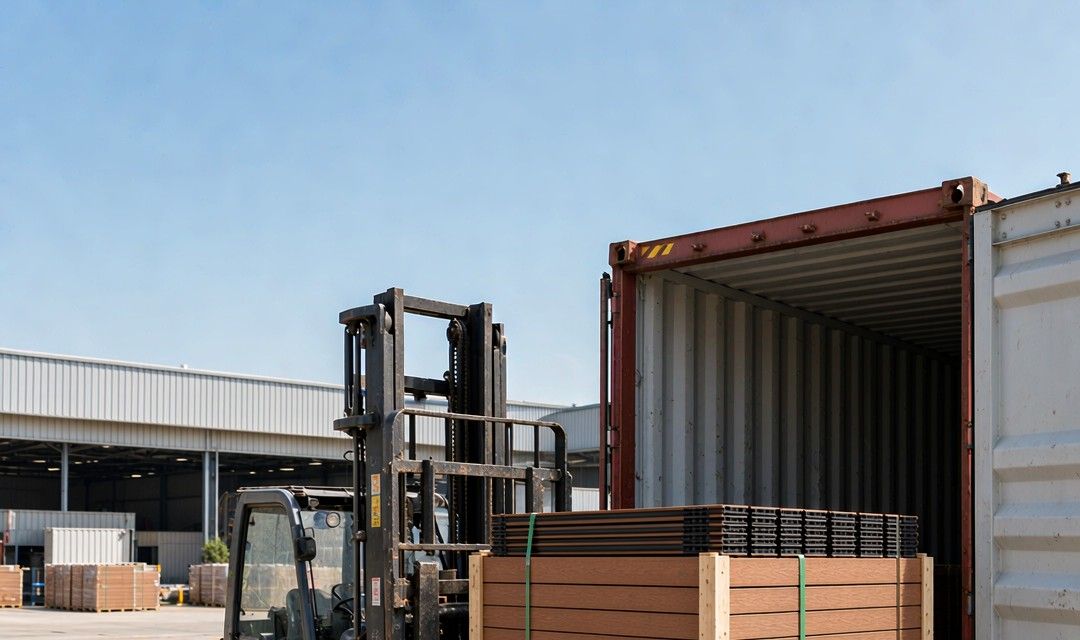
Meta Title: Become a Composite Decking Distributor | Factory Direct & OEM
Meta Description: Source waterproof, custom-size WPC decking wholesale from the manufacturer. Factory-direct pricing, OEM/private-label programs, packaging and lead-time commitments for distributors.
Composite decking has quietly become one of the most attractive categories in outdoor building materials. Homeowners want the wood look without the maintenance contract, contractors want fewer callbacks, and distributors are noticing that WPC decking lines move faster — and margin better — than many traditional lumber categories. If you are considering adding composite decking to your product portfolio, or becoming a regional outdoor building material distributor outright, this guide covers the market outlook, the economics, and — most importantly — how to choose a manufacturing partner you can build a multi-year business on.
Why the Composite Decking Market Keeps Growing
Three forces drive demand, and each matters to a distributor differently:
- Homeowner preference shift: decks are increasingly treated as outdoor living rooms, and buyers now expect low-maintenance surfaces. Composite boards deliver the wood aesthetic with soap-and-water upkeep, which shortens sales cycles for dealers.
- Contractor economics: fewer callbacks and no annual sealing program make composite decking easier to sell on lifetime cost, even at a higher upfront price. Installers who once resisted composites now ask for them by name.
- Sustainability requirements: boards made from recycled wood fiber and recyclable polyethylene help projects meet green building targets, opening specification-driven sales channels beyond retail.
The category has also matured technically. Co-extruded (capped) boards, deep wood-grain embossing, and improved structural profiles have narrowed the aesthetic gap with premium timber while extending service life — which is why the premium segment of the market is expanding fastest.
The Economics: Where Distributor Margins Come From
Composite decking rewards distributors who understand its cost structure. A few framing points:
- Price stability versus lumber: wood prices swing with timber markets and tariffs; WPC pricing is driven by polymer and wood fiber costs, which are more stable — making long-term quoting easier.
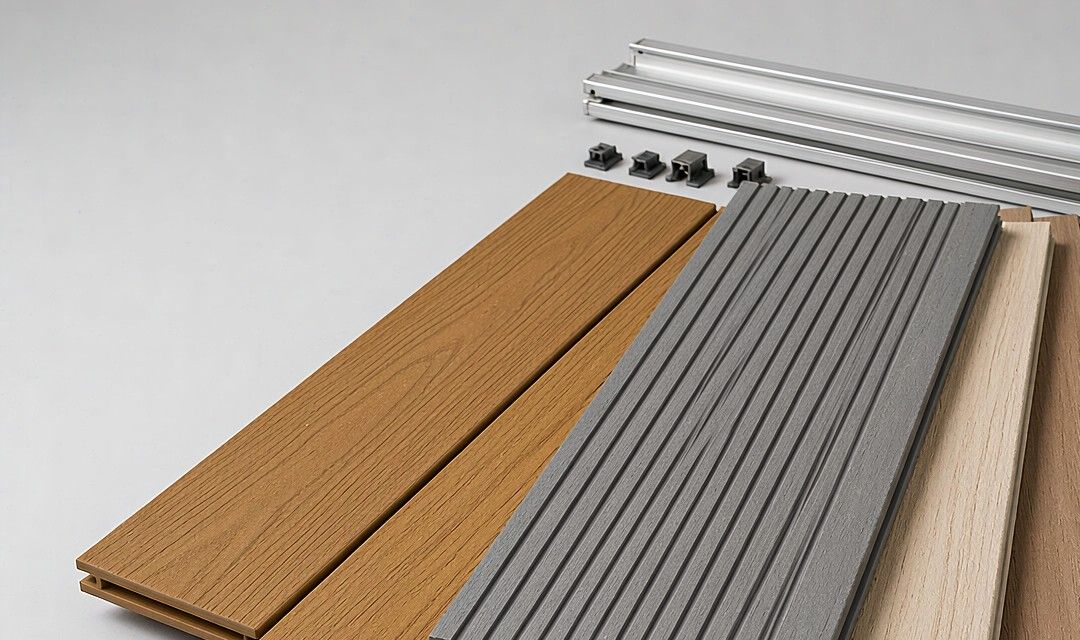
- Margin structure: composite boards typically carry healthier gross margins than commodity lumber, and accessories — clips, joists, fascia, end caps — add attach-rate revenue that pure lumber sellers leave on the table.
- Logistics advantage: WPC boards are heavier than wood but not perishable, not prone to insect quarantine rules, and tolerant of covered outdoor storage. Inventory management is simpler than timber.
- Repeat business: phased residential developments and commercial projects reorder the same profiles and colors, so batch reproduction capability directly translates into repeat purchase orders.
The distributors who struggle are usually those who treat composite decking like lumber — pricing it by board cost alone and ignoring the accessory ecosystem and project business. The ones who win build the full system sale.
What Makes a Good Manufacturing Partner
This is the decision that determines whether your decking line becomes an asset or a liability. Five criteria matter most, and each has a practical way to verify it:
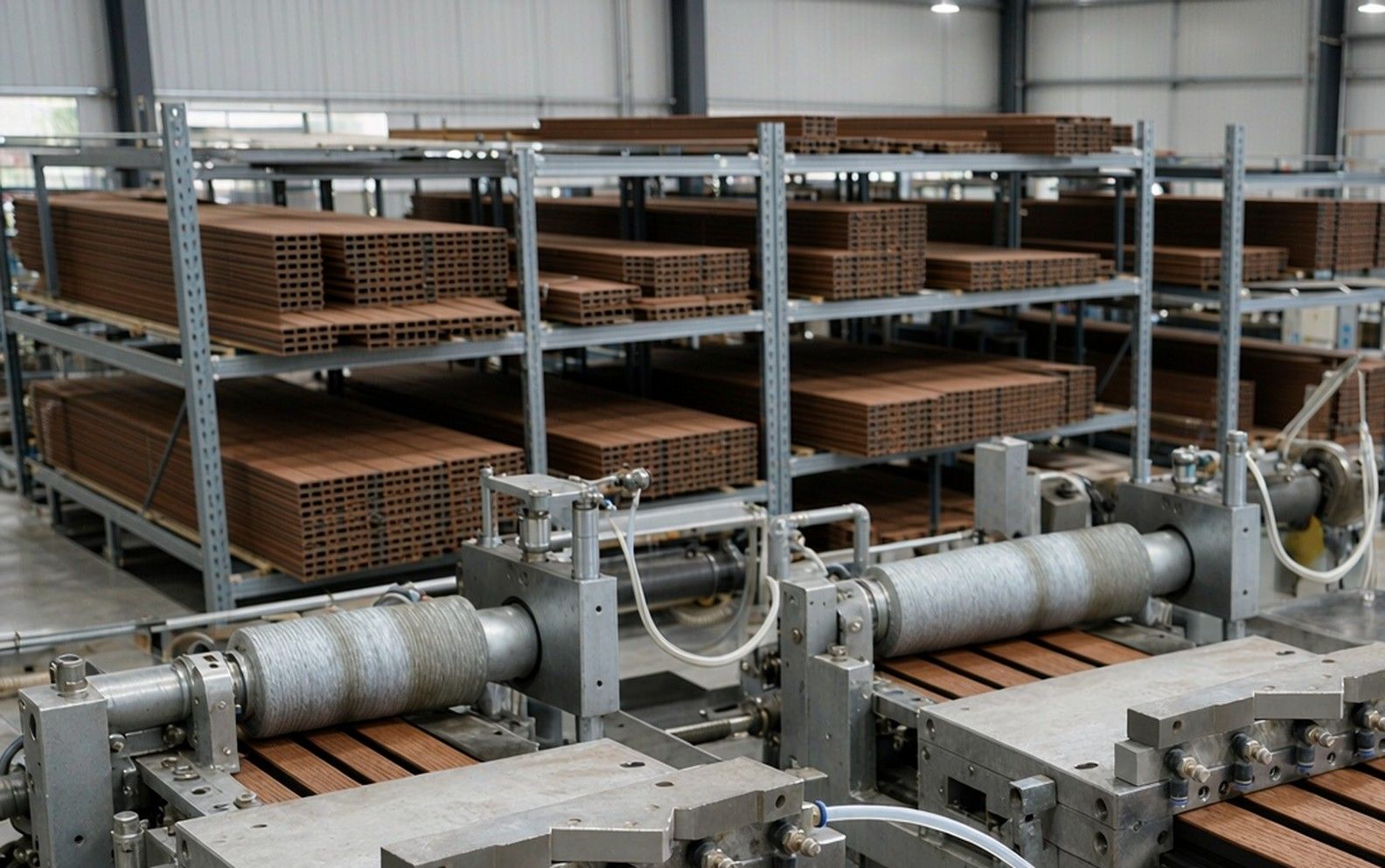
- Own extrusion production. Factories running their own closed-loop extrusion lines control density, profile tolerance, and batch color consistency. When a phased project needs matching boards eighteen months later, this capability is the difference between a reorder and a refund. Ask for a live production line tour or video — resellers cannot show you one.
- Documented formulation. Wood fiber ratio, polymer grade, UV stabilizer content: these should be documented with test reports, not marketed with adjectives. Poor formulations fade, warp, and generate the callbacks that kill dealer reputation.
- Certifications that match your market. CE marking for Europe, SGS or equivalent third-party test reports, and compliance documents for your region's building codes. Verify the certificates name the product line, not just the factory.
- Commercial project track record. Ask for reference installations in climates similar to yours — pool decks, hospitality, coastal builds — and talk to the distributors or contractors behind them.
- OEM and private-label capability. As your regional brand grows, the ability to get exclusive colors, embossing, branded packaging, and custom board dimensions from the same factory turns a supply relationship into a market moat.

Structuring the Partnership
Distribution agreements with WPC manufacturers vary, but the strongest ones usually include:
- Territory clarity: defined exclusivity or priority zones, with performance milestones rather than vague promises.
- Marketing and technical support: installation guides, sample programs, display materials, and responsive technical answers for your contractor customers.
- Flexible MOQ and mixed containers: the ability to start with mixed-product containers (decking plus fence plus cladding) reduces your inventory risk while you test the market.
- Batch consistency guarantees: written commitment to reproduce the same color and profile for reorders within an agreed window.
Supply Chain: What Factory Direct Actually Gets You
The term "factory direct" gets used loosely in this industry, so it is worth defining what a real manufacturing partnership delivers across the supply chain:
- Packaging standards: boards packed with edge protection, waterproof wrap, and export-grade crating or palletization — specified in writing, not discovered on arrival. Packaging quality is one of the clearest signals of how a factory runs its lines.
- Lead time commitments: standard profiles and colors move on production cycles; custom lengths, colors, and private-label packaging follow the factory's production calendar. A capable manufacturer gives you realistic windows for both and confirms them per order.
- Custom-size production: beyond standard board lengths, established lines support custom cuts, bespoke color matching, and OEM/private-label programs — branded packaging, exclusive profiles, and custom embossing that become your regional competitive moat.
- Wholesale economics: factory-direct pricing removes intermediary margins, and mixed containers (decking, fencing, cladding in one shipment) let distributors cover a full outdoor category without overstocking any single line.
The practical test: ask a prospective partner to walk you through their packaging spec, lead-time table, and custom-order process. Factories that control their own lines answer in specifics; intermediaries answer in estimates.
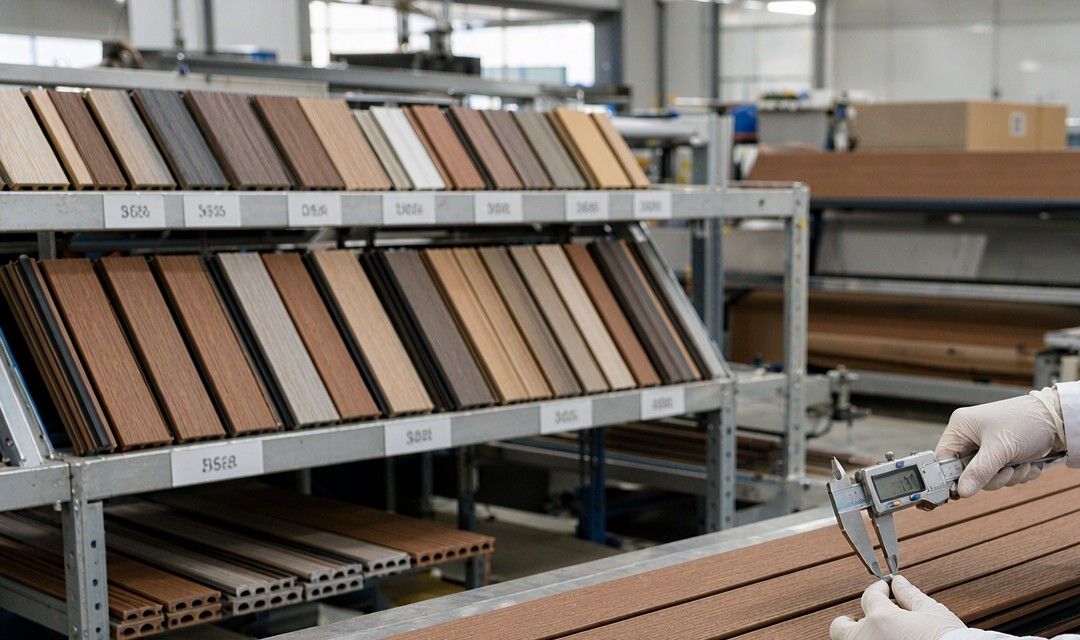
Manufacturers with their own production lines can commit to all of these because they control what ships. Trading companies can only pass along what their upstream allows — which is why partner depth matters more than headline price.
Common Entry Mistakes to Avoid
- Stocking only premium capped boards: carry a value tier and a premium tier; the value tier drives foot traffic and project volume while the premium tier drives margin.
- Ignoring the accessory ecosystem: clips, starters, and joists are where the system sale happens — and where competitors undercut if you leave the gap open.
- Underestimating display investment: composite decking sells through touch. A small sample wall outperforms a brochure rack many times over.
- Choosing partners on unit price alone: fading boards and inconsistent batches cost more in reputation than the discount saved.
Frequently Asked Questions
Is composite decking a growing market?
Yes — driven by homeowner preference for low-maintenance outdoor living, contractor demand for fewer callbacks, and sustainability requirements in commercial projects. Premium capped lines are the fastest-growing segment.
What margin can a composite decking distributor expect?
Gross margins are typically healthier than commodity lumber, with additional attach-rate revenue from clips, joists, and finishing accessories. Exact figures depend on region and channel; experienced suppliers can model this with you using real product cost structures.
How much inventory do I need to start?
Many new distributors begin with mixed containers covering one or two color lines plus accessories, then expand based on which profiles move. Flexible MOQ manufacturers make this low-risk entry possible.
What certifications should I look for?
CE marking for European markets, third-party test reports (SGS or equivalent), and regional compliance documents — verified for the specific product line.
Should I work with a manufacturer or a trading company?
Manufacturers offer batch consistency, OEM capability, technical depth, and factory transparency; trading companies add an intermediary margin for the same goods. For building a durable regional brand, direct manufacturing partnerships are the stronger foundation.
The Bottom Line
Composite decking rewards distribution partners who treat it as a system business — boards, accessories, technical support, and batch consistency — rather than a commodity trade. Choose a manufacturing partner with real production depth, verify everything through audits and documents, and structure the agreement around territories and reorder guarantees. Do that, and the category's demand growth works for you instead of passing you by.
As an experienced WPC outdoor product manufacturer, NatureTough partners with distributors worldwide — offering own-line extrusion, documented formulations, OEM/private-label programs, and long-term supply for decking, fencing, and cladding.